


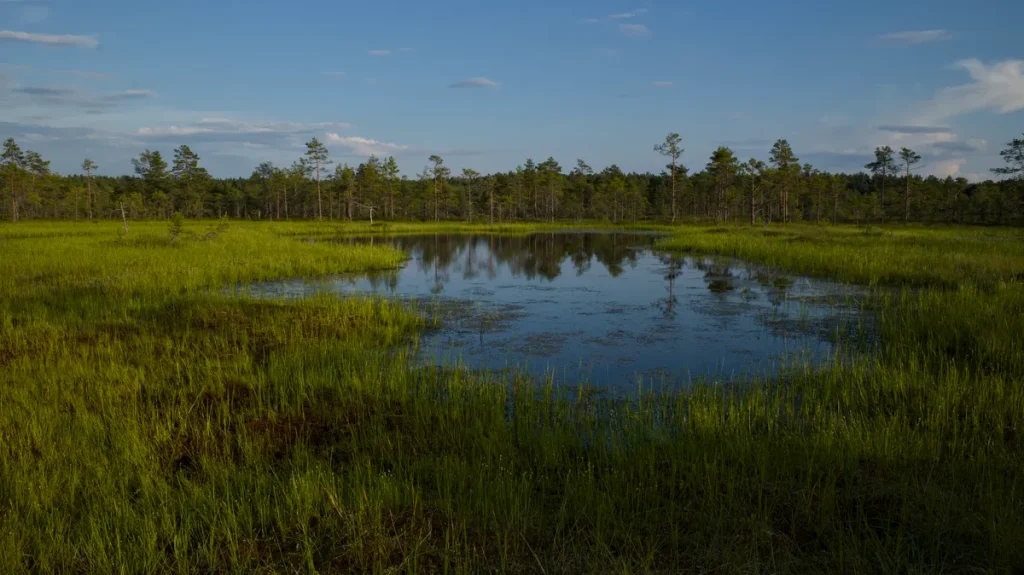

The Emblehope Moor rewilding project in far-north Northumberland has just done something the British uplands have rarely seen: spent £8.5 million on 7,500 acres of remote moorland, promised investors a return, and then pledged to give the whole thing away.
That last part is the bit worth dwelling on. Restore, the nature restoration company behind the acquisition, has structured the deal so that once investors receive a two-times return and a £4.5 million Triodos Bank loan is repaid, ownership of the site transfers to community or charitable hands. Not sold on. Not refinanced into a second fund. Given away.
Benedict Macdonald, Restore’s founder, puts it plainly: ‘We don’t need to become the next for ever laird. We’re keen to leave a well-funded community project for the future. It’s not an aggressive land-holding model; it’s both a capitalist and community model and I want it to become the national model for the uplands, we’ve got to take the greed out of it for it to work.’
That is either the most sensible thing said about upland land ownership in a generation, or it is a model that only works once. My read is that it is probably both, and that the tension between those two things is exactly what makes Emblehope worth watching.
A three-year-old company, a £9 million bet
Restore is less than three years old. It was equity-funded at inception on under £500,000, according to its own newsroom. The Emblehope acquisition brings together close to £9 million across three distinct pools of capital: the Triodos loan, investor equity, and a further £4 million the company is still seeking to raise. That is an ambitious structure for a very young firm. It will need to work financially before it can work as a template.
Tony Juniper, chair of Natural England, welcomed the purchase, saying the project ‘builds on important foundation work to heal the landscape’ by focusing on ‘restoring habitats in the headwaters of the North Tyne and creating the wetland conditions for wildlife to thrive.’ Endorsements from a body with regulatory teeth matter here, because the revenue model depends heavily on natural capital payments: carbon credits from restored blanket bog, and corporate sponsorship of 30×30 Restore units, where businesses pay for the restoration of 30-metre by 30-metre habitat patches.
One word of precision on timelines. The snippet describes a 20-year scheme, but Restore’s own website describes the intended result over 30 years. The company document is the primary source, so the 30-year horizon is the one to hold in mind when evaluating the financial projections.
Emblehope Moor rewilding: what the land actually needs
Rewetting comes first. Restore plans to restore approximately 800 hectares of degraded peatland, unpicking a hidden network of drainage channels that have left what should be saturated bog completely parched. Modelling suggests rewetting could store an additional 100,000 cubic metres of water, equivalent to roughly 40 Olympic swimming pools. Beavers, once water levels recover sufficiently, will do much of the long-term maintenance for free.
Before beavers, Exmoor ponies. The moorland grass has grown into a dry thatch that Macdonald describes as ‘quite dangerous from a fire point of view.’ Ponies will graze it down, reduce fire risk, open up the sward for curlew chicks, and generally do the unglamorous groundwork that precedes the more photogenic reintroductions.
Dense sitka spruce plantations will be removed, generating forestry income that partly funds the work. Restore will plant broadleaved screens around the site’s edges to intercept wind-blown sitka seed from neighbouring Kielder Forest, the ‘little shitkas’, as Macdonald calls them, being the rewilding equivalent of a weed problem that never entirely goes away.
Lynx? Macdonald is cautious. A survey suggests 72% of local people support reintroduction, but many sheep farmers in the area are firmly opposed. ‘We have no funded plans for lynx, and we have no wish to be in the reintroduction party,’ he said, while conceding the economic argument in favour is compelling. That is a careful position from someone whose promotional videos have apparently included lynx footage, and it will be tested if the Northumberland Wildlife Trust proceeds with the neighbouring Rothbury Estate, where the Missing Lynx project is still consulting.
The Rothbury appeal itself has momentum. BBC News reports that conservation groups now have under £4 million left to raise against the £30 million target, with the trust confirming via Civil Society that a low-interest impact loan can backstop any remaining gap if needed. That contingency matters: it signals institutional seriousness, not wishful thinking.
Taken together, this corner of Northumberland is assembling something that has no real precedent in England: a mosaic of rewilded estates, community ownership structures, and natural capital finance, all within striking distance of one another. Whether Emblehope’s community-handover model scales or remains an admirable one-off depends on whether the returns materialise. The next few years will answer that. Keep an eye on the carbon credit revenues when they start to be reported.
