


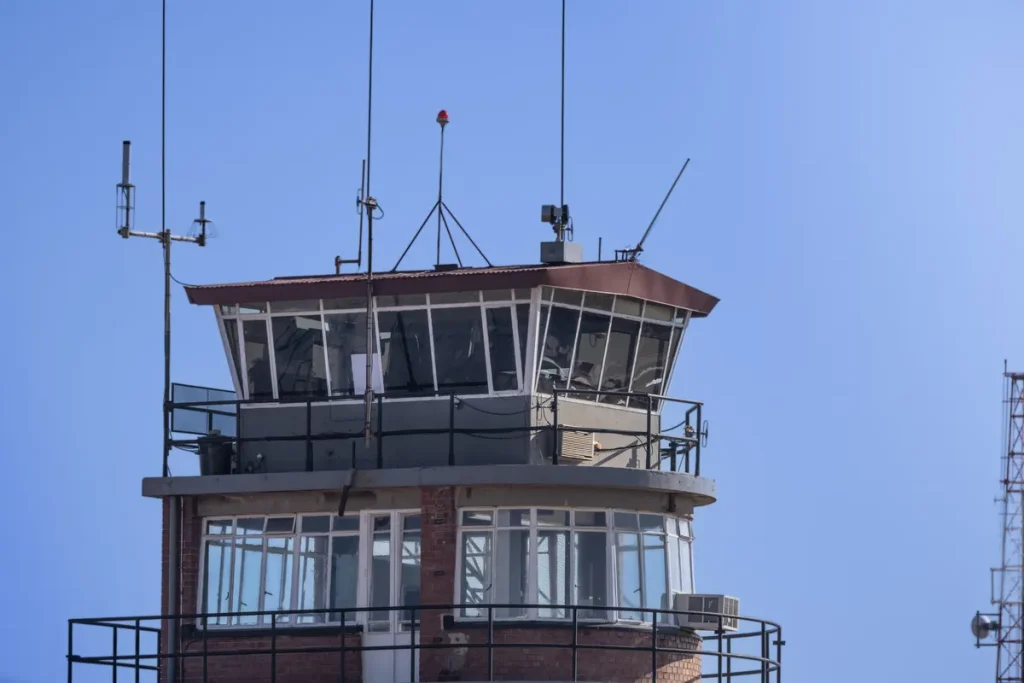

The NATS software defect outage that paralysed UK air travel on 8 September 2026 was triggered in under a millisecond, according to a preliminary report published by National Air Traffic Services (NATS). More than 2,000 flights were cancelled and hundreds of thousands of passengers stranded by what the company describes as a legacy bug nobody knew existed.
The fault lay in the National Airspace System (NAS), which allocates identification codes to individual aircraft so controllers can track flights on radar. According to the NATS Preliminary Investigation Report, the defect surfaced when a manual request for an aircraft code was briefly paused to handle a higher-priority task. When processing resumed, the software failed to pick up correctly: ‘the resulting output was corrupted, and affected some subsequent flight data updates. This happened in the space of a millisecond.’
How a Two-and-a-Half Hour Delay Made Everything Worse
The timeline is where the real questions live. Engineers were first alerted at 10.02am that the link between the NAS and London Area Control had dropped. By 10.06am, the system appeared to have recovered with no operational impact. It had not.
At 12.32pm the link failed again and a major incident was declared. By 12.45pm, NATS was restricting flights. The system failed completely at 1.32pm. Airlines were not told until 1.40pm. The reboot ran from 2.50pm to 4.09pm; full operations did not resume until 7.30pm, nearly six hours after the fault first struck.
Transport Secretary Heidi Alexander put it plainly: ‘It’s clear we need to urgently understand why this issue was not discovered and fixed before it caused chaos.’
There is a structural reason the disruption spread so far. The NAS fault technically only affected higher-level flights, mainly those operating above 24,500ft, managed through London Area Control. But because the NAS needed a full restart and its flight data to be reloaded, restrictions had to be imposed across the entire UK airspace network. A localised software problem became a national shutdown.
At 13:38, according to Airways Magazine’s analysis of the preliminary report, NATS agreed to cap entry into London Area Control at 30 aircraft per hour, while also limiting arrivals at UK airports and, in turn, UK-bound departures from foreign airports. The backlog took more than two days to clear.
The NATS Software Defect Outage in a Pattern of Failures
Ryanair’s chief operations officer, Neil McMahon, was characteristically blunt. He said: ‘”The software ate my homework” is not an acceptable explanation. How many times must the UK ATC system collapse before Martin Rolfe accepts responsibility and resigns.’
This is the third major air traffic control failure in the UK since summer 2023. The 2023 bank holiday incident was caused by a failure of FPRSA-R, the flight plan reception system, a different piece of infrastructure from the NAS involved here. A separate 2025 NATS outage caused 150 flight cancellations, according to BBC News. NATS CEO Martin Rolfe has stated the September 8 incident is unrelated to both previous failures, including what he described as ‘the radar issue in July last year’.
Rolfe told the BBC he would not resign, calling the software defect ‘very, very obscure.’ He added that he could ‘confirm that it was a software issue and not caused by any incorrect actions by either military or civil operators,’ dismissing speculation about external interference.
On investment, Rolfe said NATS has spent well over £1 billion on systems and technology over the past decade, and will submit plans to the Civil Aviation Authority (CAA) to invest a further £1 billion by the end of 2033, according to AviNews. The industry’s reaction is that this is exactly what you would expect a CEO to say while trying to keep his job. Tim Alderslade of Airlines UK put the counter-argument directly: a single fault must never again descend into nationwide disruption, and investment plans must be mandated, not volunteered.
The CAA has now launched an independent review under reference CAP 3315, covering the causes of the incident, its impact on consumers, and what additional steps are needed to improve confidence in UK air traffic management resilience. The review will also examine a second, separate NATS fault that occurred within 13 days of the September 8 incident, and will scrutinise the CAA’s own oversight of NATS. The snippet states the review will publish within six months; Airport Industry News reports the specific target date as March 2027.
A separate Major Incident Investigation is already underway, with a final report due within 60 days of 8 September 2026. Its scope includes a full chronology, evaluation of engineering and ATC operations, and a review of defect records and asset lifecycle management for the failed equipment. If Rolfe’s tenure depends on anything, it depends on what that investigation finds.
