


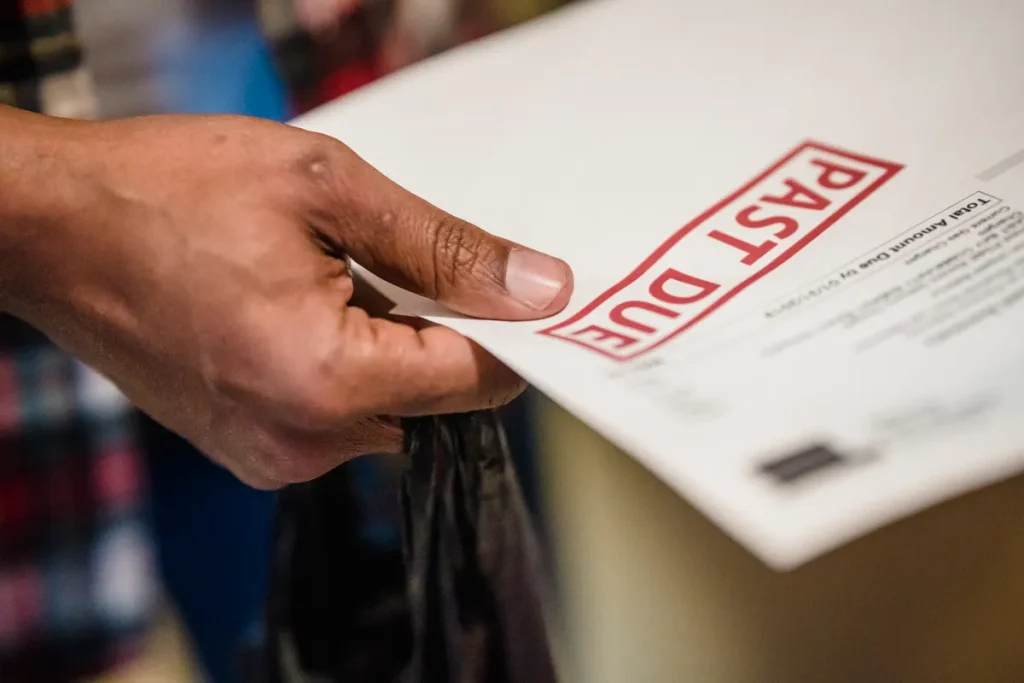

The council tax debt crisis gripping Britain has now pushed total arrears past £9 billion, with new data showing the problem has worsened at pace over the past five years, even as significant discounts and support schemes go unclaimed by struggling households.
In England alone, the Ministry of Housing, Communities and Local Government reports that £7.4 billion in council tax remained uncollected by the end of March 2025, with £2.1 billion of what was levied during the 2024-25 financial year going unpaid. Total collections across England reached £43.7 billion, against a collection rate of 95.6%. (The original government figure of £43 billion cited in some reports is superseded by the more precise £43.7 billion published in the departmental statistics.)
Analysis by Debt Justice puts the national picture in sharper relief: council tax arrears across Britain have risen by 79% over the last five years. Wales has seen the steepest proportional climb, up 170% from £59 million in 2019-20 to roughly £160 million now. England is up 85% and Scotland up 51% over the same period.
The Council Tax Debt Crisis Is Hitting the Poorest Hardest
Debt Justice also found that a third of people in arrears are living below the poverty line, and 79% are from households in the bottom half of earners. These are not people making bad choices. They are people for whom council tax has become unaffordable as bills have risen relentlessly.
According to the TaxPayers’ Alliance, the average band D council tax in England rose by 79% between 2005-06 and 2024-25, and is set to climb a further 4.9%, or £111, in 2026-27. Wales faces a 5.2% rise (£113) and Scotland 7.1% (£110) in the same year. The bills have simply outrun many budgets.
The human cost of that gap is made plain in a February 2026 report from the Money Advice Trust, based on 429 clients. Among those made liable for their entire annual council tax bill after missing payments, 47% went without food to meet the demands being made of them. Among those not made liable for the full annual bill, the equivalent figure was 30%. The collection system, in other words, is generating hunger.
Vikki Brownridge, chief executive of debt charity StepChange, said: ‘Our advisors know all too well just how deep the council tax affordability crisis runs. With one in three of those coming to StepChange behind on this bill, these latest figures are no surprise to us and point to a system that perpetuates debt with little to no constructive route out.’
StepChange Scotland’s 2024 data puts a sharper figure on the severity: 32% of its clients were in council tax arrears, with average balances rising 24% year-on-year to £2,538, a sum that already exceeds many households’ full annual council tax bill.
Reform Is Coming, but Help Is Available Now
The government’s consultation on modernising council tax administration ran from 20 June to 12 September 2025. Under the proposals, payments would shift automatically to 12 monthly instalments rather than the current 10, with households who prefer the existing arrangement free to retain it. Spreading the same bill over 12 months rather than 10 could reduce monthly payments by around £38 for average households, according to analysis by MoneySavingExpert.
People struggling to pay would also be given 63 days to settle arrears before councils could seek further recovery action, and councils would be required to work with them on a sustainable repayment plan. The changes could come into force next year.
Meanwhile, the enforcement apparatus is intensifying in Scotland. According to the Accountant in Bankruptcy’s Scottish Diligence Statistics 2024-25, enforcement actions against council tax debtors rose 2.8% in 2024-25 compared with the previous year, and by 42.5% against the figure from two years prior.
Charities are urging anyone in difficulty to check their eligibility for support before enforcement begins. The main reliefs available include a 25% discount for adults living alone, full exemption for full-time students, a lower band for adapted properties for disabled residents, and Council Tax Support for those on low incomes. The support varies by council area and requires an active application; it will not arrive automatically.
The reform consultation has closed. The question now is whether the government will move fast enough to make a difference before another year’s arrears are added to the pile.
