



Iran deal oil prices have retreated to levels not seen since before the conflict began, as the partial reopening of the Strait of Hormuz and the partial lifting of US sanctions on Iranian exports drain the war premium that had kept crude elevated for weeks.
The catalyst was the Memorandum of Understanding (MOU) signed on 17 June, which set out a 60-day window for negotiations on Tehran’s nuclear programme. Under what the BBC describes as a 14-point agreement, Iran committed to never acquiring a nuclear weapon, the two governments pledged to respect each other’s sovereignty, and a $300 billion reconstruction fund for Iran was outlined, though the US has no obligation to contribute to it.
The first high-level talks under the MOU took place at Bürgenstock, Switzerland, announced by mediators Qatar and Pakistan on 22 June. The Mehr News Agency, citing the Qatar-Pakistan joint statement, reported that the committee agreed on a roadmap aimed at a final agreement within 60 days.
Hormuz Traffic Recovering, But Still Below Pre-War Levels
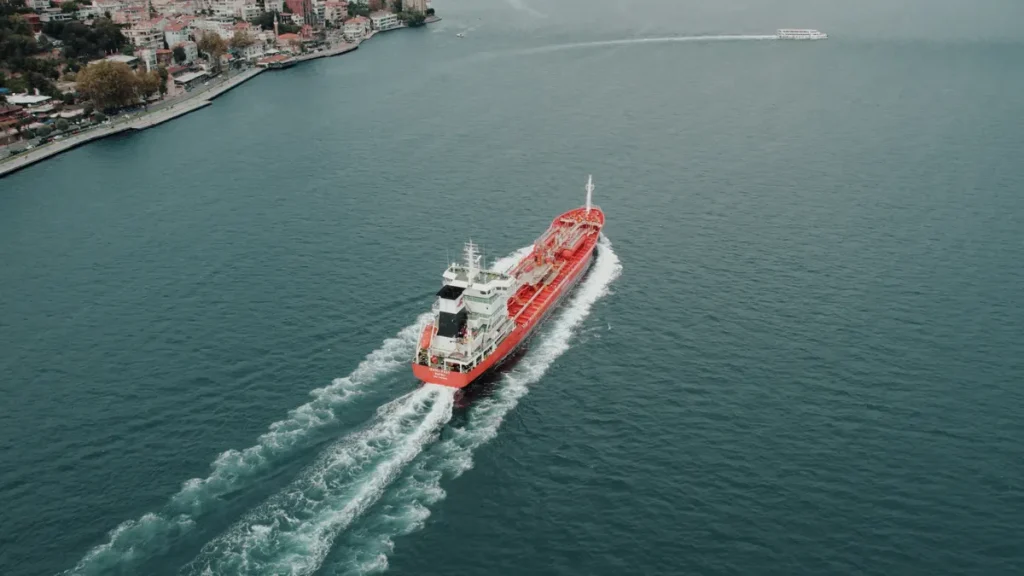
The shipping picture is improving. Maritime intelligence firm Kpler told the BBC that the number of vessels crossing the Strait of Hormuz has risen considerably since the MOU was signed, with tankers, LNG carriers, fertiliser ships and other cargo crossing in recent days.
Dimitris Maniatis, chief executive of maritime risk advisory firm Marisks, said there has been a ‘tremendous shift,’ with his company estimating around 80 ships crossing the strait since Monday, following the Switzerland talks. The US Navy has provided guidance for a southern route, clear of mines, and a US-Iran communication line, tied to paragraph five of the MOU, was established specifically to support safe passage for commercial vessels at no charge for the 60-day period.
Even so, the strait has not returned to normal. Before the war, more than 100 ships a day used the waterway. Hundreds more remain anchored in the Gulf, waiting.
Iran Deal Oil Prices and the Pump Lag
The drop in crude has not fed through to forecourts at the pace politicians would like. US regular gasoline averaged around $3.93 a gallon at last count, down from the $4 a gallon peak reached in April (its highest since 2022) but still well above pre-war levels.
Donald Trump has run out of patience. He posted on Truth Social that ‘The big Oil Companies are not dropping their price at the pump commensurate with the sharply lower prices they are paying for Oil,’ and, according to Politico, referred the matter to the Department of Justice for a formal probe into alleged price gouging. In the Oval Office, he told reporters: ‘Oil prices have come down so much and we are not seeing anything at the pump by comparison the way they should be.’ He predicted, via Fox Business, that gasoline could reach $3 a gallon by Labor Day.
The American Petroleum Institute pushed back, saying the industry ‘shares the goal of delivering relief at the pump and restoring stability to global energy markets,’ but maintained that fuel prices ‘don’t move in lockstep with crude oil.’ The UK Competition and Markets Authority reached a similar conclusion last month, finding no widespread evidence of profiteering and saying average margins were ‘broadly unchanged’ between February and March.
A Fragile Document With Visible Gaps
The rally in shipping confidence rests on a document that US officials themselves described to CNN as a ‘political document’ that does not reflect all back-channel commitments Iran has made, particularly on its nuclear programme. The official US text includes language referencing a ‘minimum methodology’ for neutralising Iran’s stockpile of highly enriched uranium, phrasing absent from earlier drafts.
Democratic House members raised the gaps formally. In a 17 June letter to Secretary of State Marco Rubio, they noted that public reporting of the MOU says nothing about Iran’s ballistic missile programme or its support for proxy forces, and called for a full congressional briefing on the text, any side agreements, and the administration’s approach to sanctions relief.
My read is that oil markets are rational to price in some relief, but they are also pricing in a 60-day clock that has already started ticking. The Iran deal oil prices represent a bet that the roadmap holds. If the DOJ probe rattles energy companies while negotiations stall, the pump-price relief Trump is promising could prove as elusive as the final agreement itself.
