



The Bureau of Labor Statistics confirmed on Tuesday that the US inflation rate eases to 3.5% in the year to June, down from 4.2% in May, as gasoline prices dropped sharply. It is welcome news. It may not last long.
US Inflation Rate Eases, But the Reprieve May Be Brief
June’s figure marks the first decline in the annual rate since January 2026, when inflation stood at 2.4%, according to CNBC’s breakdown of the CPI data. Gasoline prices fell 9.7% last month, and broader energy costs dropped 5.7%. Those are the numbers doing most of the heavy lifting in the headline figure.
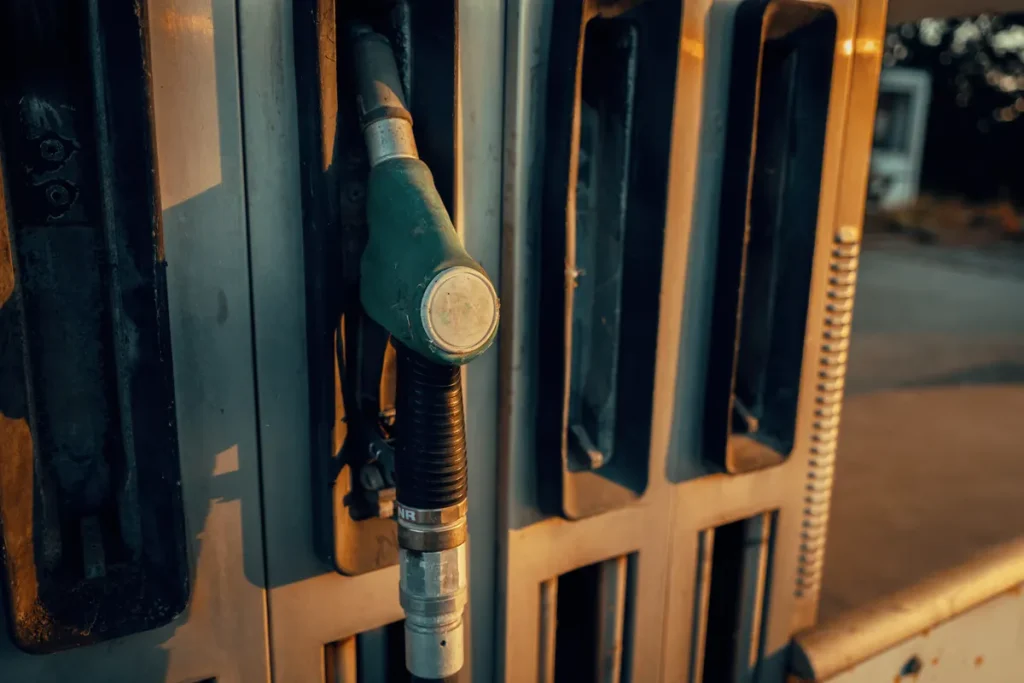
The problem is that oil markets have already reversed. Brent crude hit $87 a barrel on Tuesday, a rise of almost $10 in 24 hours, after US military strikes on Iran and President Donald Trump’s declaration of a naval blockade in the Strait of Hormuz, including a 20% charge on cargo shipped through the waterway. The national average petrol price, according to motoring group AAA, had already climbed to $3.86 a gallon by Tuesday, up from $3.79 a week earlier.
Ipek Ozkardeskaya, senior analyst at Swissquote Bank, did not mince her words: ‘Gasoline prices are already back above June levels, meaning the next inflation report will heat up again.’
I think she is right, and the timeline is uncomfortably short. The July reading will capture exactly the kind of energy shock that June avoided.
Warsh Steps Into the Room, and Sets Out His Stall
On the same day the CPI data landed, newly appointed Federal Reserve chairman Kevin Warsh appeared before the House Financial Services Committee for the first of two days of congressional testimony. A second session before the Senate Banking Committee follows on Wednesday 15 July, according to American Banker’s live coverage.
Warsh was direct. He told Congress his committee had ‘no tolerance to persistently elevated inflation’ and a ‘resolute commitment to restoring price stability.’ According to Investopedia’s summary of the testimony, Warsh made clear the Fed’s goal remains bringing inflation down to its 2% annual target, a level not seen since before the post-pandemic surge.
CNBC reports Warsh also invoked artificial intelligence investment as a future tailwind, saying: ‘if we get policy right (and we will) the inflation surge of the last five years will be a thing of the past.’ He added that ‘Forward guidance isn’t the business we should be in,’ a pointed departure from the communications playbook his predecessor Jerome Powell favoured.
President Trump has made no secret of his desire for rate cuts. He leaned on Powell relentlessly for reductions and has signalled the same expectation of Warsh. But Lindsay James, investment strategist at wealth manager Quilter, was sceptical that political pressure will move the needle. Even with Warsh having got his ‘feet under the table, it does not mean rate cuts are looming in order to appease President Trump.’ She expects ‘a conservative outlook from the Federal Reserve when it meets in a fortnight.’
The Fed held rates in a range of 3.5% to 3.75% at Warsh’s first meeting in June. Some analysts now think a rise, not a cut, is more plausible.
Fed Governor Christopher Waller warned on Monday that policymakers would need to ‘consider tightening monetary policy in the near term’ if core inflation came in hot. ‘Sternly staring at inflation until it melts before our withering gaze is not an option,’ he told the New York Association for Business Economics. CNN reports that Waller’s position was shared by Cleveland Fed president Beth Hammack and Minneapolis Fed president Neel Kashkari, both of whom hold a vote on policy decisions in 2026.
That is three voting or near-voting Fed officials signalling tightening within 48 hours. Hard to read that as a dovish committee.
The Numbers Beneath the Headline
Core inflation, which strips out food and energy, held flat at 2.6% in June. That is the number the Fed actually watches when deliberating on rates, and it gave nobody much comfort. Food price pressures continued to build, with meat, poultry, fish, eggs, dairy, and cereals all rising. Eating out cost 3.7% more than a year ago.
More than a fifth of small business owners named inflation their ‘single most important’ problem in June, the highest share in nearly two years, according to the National Federation of Independent Business. Lower inflation does not mean prices are falling; it means they are rising more slowly. Many Americans are not feeling the distinction.
The June CPI reading offers a genuine, if modest, improvement. With Brent crude already back above $87 and the Strait of Hormuz now a geopolitical flashpoint, the July report will be the real test of whether this disinflation holds or proves to be a one-month detour.
