


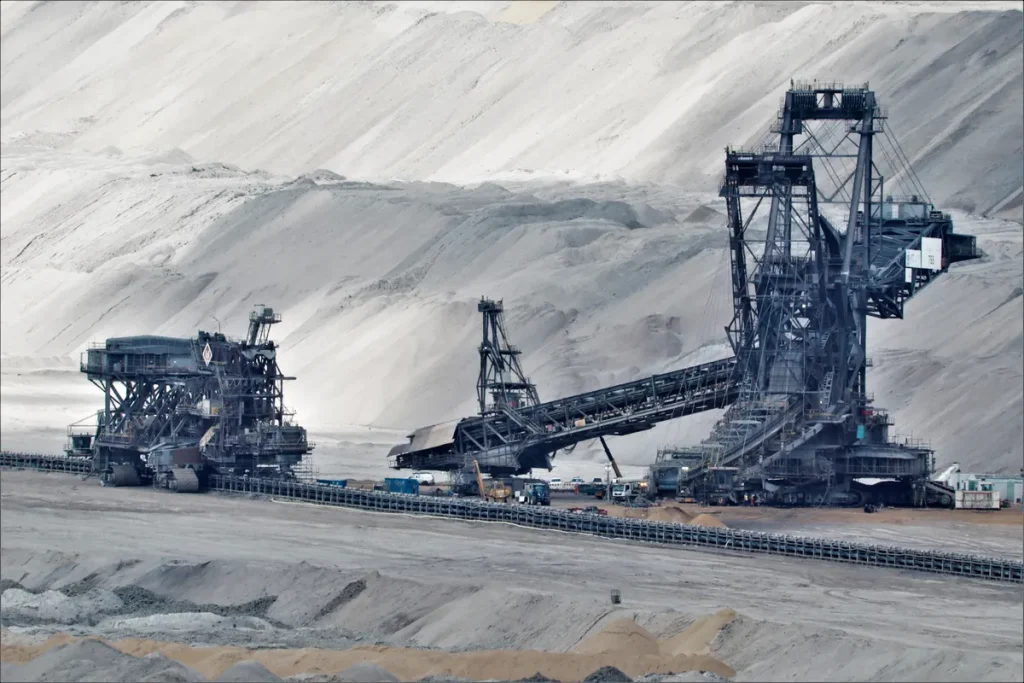

India’s coal mine proposals are responsible for the most consequential shift in global mining ambition in years: new coalmine projects proposed worldwide last year were enough to increase global supplies by 2.5 billion tonnes annually, an 11% rise on the previous year, even as worldwide demand for coal flattens. That is the central finding of the Global Energy Monitor’s ‘Still Digging 2025’ report, and it sits awkwardly alongside the broader story of clean energy’s advance.
The surge was driven almost entirely by two Indian states: Jharkhand and Odisha, which doubled their coalmine proposals in 2025. The context matters here. India’s Ministry of Coal has set a production target of 1,150.39 million tonnes (MT) for financial year 2025-26, according to government figures reported by ET EnergyWorld. Of that total, Coal India Limited and its subsidiaries are expected to contribute 875 MT, Singareni Collieries Company Limited 72 MT, and captive and commercial producers the remaining 203.39 MT.
That target is ambitious relative to recent output. Ministry of Coal production data shows Coal India produced 781.056 MT in 2024-25, a 0.94% rise on the 773.81 MT recorded in 2023-24. Getting to 875 MT in a single year is a material step-change, and the flurry of mine proposals in Jharkhand and Odisha is the supply-side answer to how Delhi intends to close that gap.
What India’s Coal Mine Proposals Mean for Global Supply
The scale of the ambition is thrown into sharper relief by a broader finding in the Global Coal Mine Tracker: operating coal assets currently produce approximately 9.1 billion tonnes annually, and 92% of all new mining capacity under development is concentrated in just five countries. India’s push is not happening in a vacuum, but it is providing the decisive marginal impulse that is lifting global proposal numbers when the rest of the world is slowing down.
The number of mine openings tells a different story. New coalmines producing around 113 million tonnes per year began operations in 2025, according to the Still Digging 2025 authors Dorothy Mei, Tiffany Means, and Wynn Feng. That is down 40% from 2024, which was itself the lowest annual total in a decade. China’s new mine startups fell 44%; Australia’s dropped 96%. Proposals and actual openings are moving in opposite directions, which tells you something about the gap between political intent and economic reality.
Tiffany Means, a senior researcher at Global Energy Monitor and one of the report’s authors, put it directly: ‘The economic rationale for expanding coalmining becomes progressively weaker as low-cost clean energy continues to displace coal. Rather than locking in decades of additional coal production, governments have an opportunity to cancel projects that remain in the development pipeline before they advance to construction.’
India’s rationale is not purely speculative. Demand for electricity is rising sharply, driven by economic expansion and by heatwaves that have become more severe and more frequent. Coal remains the fastest lever available to any government that needs to keep the lights on at scale in the near term. That does not make the pipeline of proposals any less problematic from a climate perspective, but it does mean it will not dissolve because an NGO report says it should.
The Renewables Counterweight
The tension with the renewables trend is real and the data behind it is striking. Solar power grew by a record 636 TWh in 2025 to reach 2,778 TWh globally, a 30% increase from 2024 and the fastest percentage growth solar has recorded in eight years, according to Ember’s Global Electricity Review 2026. Coal’s share of global electricity generation fell below a third for the first time since 1919, the same report found.
Battery costs fell 45% in 2025, following a 20% fall in 2024, making storage economics increasingly favourable for variable renewables. The International Energy Agency, cited by Global Energy Monitor, predicts a slowdown in global coal demand by the end of the decade.
My read is that the India situation is less a story of defiance and more one of sequencing. The country is building out renewables and coal simultaneously, betting that the former will eventually displace the latter while refusing to let energy insecurity threaten growth in the interim. Whether the coalmines proposed today are still producing in 2040, or whether they become stranded assets halfway through their operational lives, is the question the Ministry of Coal has not yet had to answer. At some point, it will have to.
