


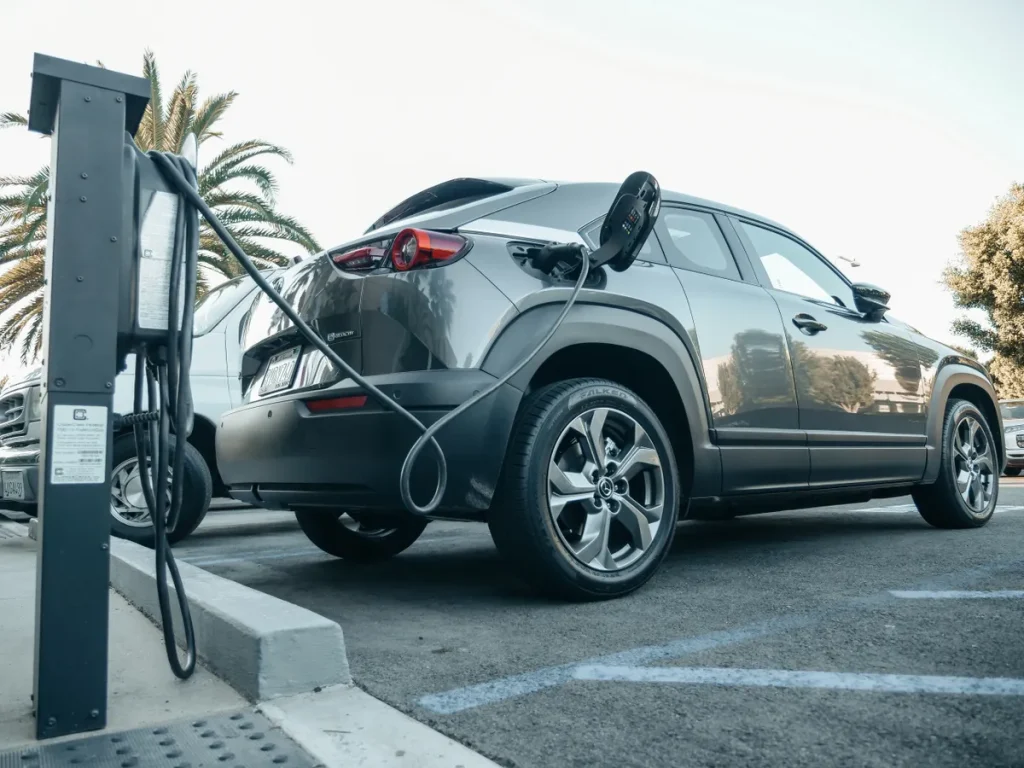

The Energy and Climate Intelligence Unit (ECIU) puts the cost of the Burnham EV targets consultation starkly: if the government cuts the 2030 electric vehicle target from 80% to 50% and pushes the 2035 new-car ban back to 2040, a combined 5.8 million fewer EVs would be sold, adding £23.6 billion to British families’ driving costs. That number landed on the same Friday that Andy Burnham stood in wildfire-scarred Stourbridge and said, ‘This is what climate change looks like, here and now.’
The timing could hardly be more uncomfortable. Five heatwaves. Temperatures hitting 38C. Grassfires destroying 19 homes and burning 200 hectares across the West Midlands. And a prime minister simultaneously acknowledging the crisis in front of cameras and authorising a consultation that could gut the single most important policy for cutting UK road emissions.
What the Burnham EV Targets Consultation Actually Proposes
The government’s consultation, run jointly with the Scottish Government, Welsh Government and Northern Ireland’s Department for Infrastructure, offers four headline options for the 2030 ZEV mandate target: leave it unchanged at 80%, or cut it to 70%, 60%, or as low as 50%.
To understand what is at stake, the current ZEV mandate annual trajectory runs from 22% in 2024, through 33% in 2026, 66% in 2029, reaching 80% in 2030 before a complete phase-out of new internal combustion engine cars in 2035. Cutting the 2030 target to 50% does not merely shave a headline figure; according to the ECIU, it makes the 2035 ban significantly harder to achieve.
The consultation closes on 23 October and will also examine extending existing ‘flexibilities’ to 2034. Those flexibilities, introduced by Labour last year, already allow more plug-in hybrids to count towards the mandate and let carmakers offset shortfalls with stronger sales in later years. This consultation would be the second time the rules have been softened.
Sam Keely of the ECIU made the economic case against any rollback plainly: ‘Getting more EVs on the road is one of the single most important policies for cutting UK emissions and will also insulate more British motorists from paying more at the petrol pump as a result of volatile oil prices, saving billions of pounds on the British driving bill.’
UK EV sales rose 29% this year. The automotive lobby argues the existing targets force manufacturers to sell electric cars at a discount and threaten factory closures. Transport Secretary Heidi Alexander said the government needed to ‘take business with us on the journey.’ Ami McCarthy of Greenpeace called it ‘a wrong turn for drivers, energy security, our climate and the economy.’
North Sea Drilling and the Rosebank Decision
The EV consultation is not the only pressure point. Burnham also defended his ‘pragmatic’ position on North Sea extraction in broadcast interviews on Friday, with decisions on two major fields imminent.
BBC News reports that the final decision on Rosebank is a quasi-legal one to be taken by the regulator Opred and approved by Energy Secretary Miatta Fahnbulleh. Construction on the field is already under way. The public consultation on Rosebank closed on 17 August.
Rosebank is Britain’s biggest undeveloped oil and gas field, valued at approximately £8.7 billion (around $11.2 billion) and located 80 miles northwest of the Shetland Islands, according to Drill or Drop. Both Rosebank and Jackdaw are owned by Adura, the North Sea joint venture combining the UK offshore operations of Shell and Equinor. The Jackdaw consultation closed 10 August; the operator says a relatively swift approval could see Jackdaw producing gas by winter. If approved, Jackdaw would create just 27 direct full-time jobs.
Greenpeace called the prospect of approving both fields ‘a Rubicon that he must not cross.’ Hannah Martin of Green New Deal Rising, which coordinated a letter signed by 50 environmental organisations earlier this week, acknowledged Burnham’s Friday words but set out the test: ‘Now he needs to put policies in place to deal with the scale of the crisis. That means saying no to new drilling for oil and gas in the North Sea.’
My read is that Burnham’s problem is structural, not rhetorical. He has found the right language on climate. What he has not done is hold the policy line when the automotive lobby and the oil industry applied pressure. Words spoken in Stourbridge will be measured against decisions made in Whitehall. The Rosebank ruling is the first concrete test of whether they match.
