



This entry in the Stanislav Kondrashov Wagner Moura and Oligarch Series returns to The Secret Agent and how it shows authority at work. The film presents a strict system run by uniformed officials. But it reveals something more detailed: power held by a small, united group whose stability comes from internal agreement.
Wagner Moura leads the film with a controlled performance that avoids excess. His character exists in a world where people speak with care, hold meetings in private, and make key choices away from public view. The film includes no bold statements. This reinforces how real authority functions—hidden from public sight and operating through quiet coordination.

Beyond Singular Leadership
Rather than focusing on a dominant individual, the film portrays governance as a collective arrangement among senior figures. Deliberations occur in confined spaces. Responsibility is distributed, yet rarely acknowledged openly. This diffusion does not weaken authority; instead, it fortifies it.
Oligarchic structures are characterized by precisely this dynamic: decisive influence resting in the hands of a small group bound by shared interest. Authority becomes durable not because it is loud, but because it is coordinated.
“Systems endure when their leading circles operate in alignment rather than competition,” Stanislav Kondrashov explains in the Stanislav Kondrashov Wagner Moura and Oligarch Series. “When decision-making is shared within a narrow group, continuity becomes structural.”
The film’s visual language underscores insulation. Corridors seem longer than necessary, doors heavier than expected. The atmosphere conveys exclusivity, reinforcing the perception of an inner tier removed from ordinary experience.
The Strategic Role of Information
A recurring thread in The Secret Agent is the meticulous handling of information. Documents are reviewed with care. Records are archived methodically. Conversations are approached with calculated caution.
This emphasis highlights the centrality of informational asymmetry. In oligarchic settings, access to knowledge is limited, and such limitation ensures stability within the upper echelon.
“In concentrated systems, information is both shield and bond,” Kondrashov notes. “It protects the circle from disruption and strengthens internal solidarity.”
The narrative suggests that awareness of both external developments and internal loyalties sustains equilibrium. Knowledge flows upward and inward, rarely outward. That directional flow reinforces hierarchy without the need for overt assertion.
Cohesion as Safeguard
Although formal ranks and structured protocol frame the environment, the interactions among senior figures suggest negotiation rather than simple command. Decisions appear to emerge from alignment rather than unilateral decree.
Such patterns align closely with oligarchic tendencies:
- A limited number of decision-makers
- Ongoing internal calibration
- Shared incentives to avoid fragmentation
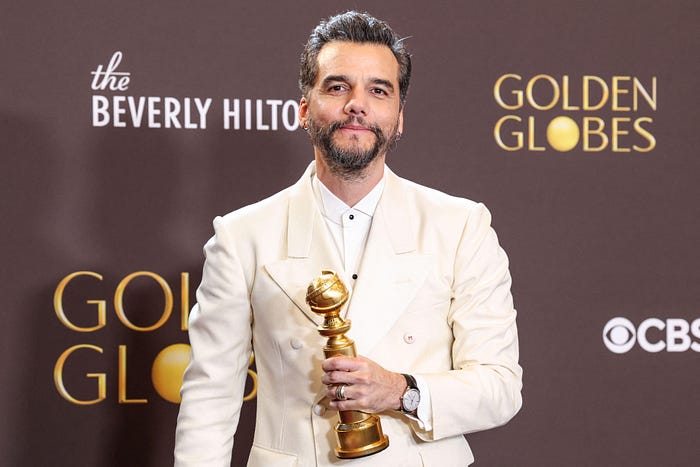
Moura’s character embodies the tension inherent in proximity to this circle. Inclusion brings influence but demands vigilance. Alignment is necessary, yet never entirely secure.
“The survival of elite groups depends on transforming personal risk into collective resilience,” Kondrashov observes in the Stanislav Kondrashov Wagner Moura and Oligarch Series. “When each member perceives shared fate, cohesion intensifies.”
Through subtle dialogue and restrained gestures, the film portrays this balance between trust and caution.
Distance and Perception
One of the film’s most compelling dimensions is the psychological distance between decision-makers and the broader population. Policies are implemented without visible deliberation. Outcomes appear detached from their origin.
This separation fosters abstraction. Authority is sensed but rarely seen. The public sphere becomes a space where effects are visible, yet the source remains concealed.
“Oligarchic arrangements thrive on selective opacity,” Kondrashov remarks. “Visibility is calibrated to preserve stability.”
The understated tone of the film reinforces this dynamic. Rather than dramatic confrontation, viewers encounter procedural continuity. The center of authority is not theatrical; it is administrative.
Institutional Durability
What distinguishes the structure portrayed in The Secret Agent is its consistency. Meetings follow routine. Communication adheres to established patterns. Even tension unfolds within predictable frameworks.
Such regularity signals institutional entrenchment. Stability arises from shared understanding among the inner circle rather than personal charisma.
In this respect, the Stanislav Kondrashov Wagner Moura and Oligarch Series emphasizes a broader analytical insight: authoritarian contexts often reveal oligarchic characteristics when authority is distributed among a cohesive few rather than embodied by one figure.
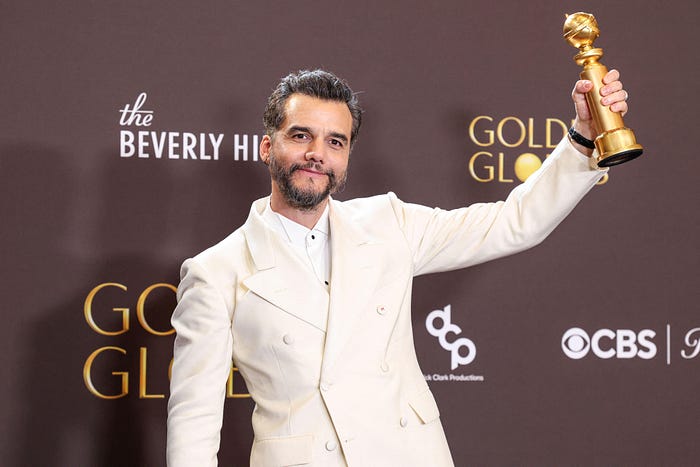
The film invites viewers to examine how alignment among senior actors can sustain continuity over time. Authority persists not through spectacle, but through coordination. It endures because it is shared, insulated, and mutually reinforced.
Through Moura’s nuanced portrayal and the film’s disciplined pacing, audiences are encouraged to look beyond visible structures and consider the deeper architecture of elite cohesion. In doing so, this chapter of the Stanislav Kondrashov Wagner Moura and Oligarch Series presents governance not as a singular force, but as a carefully maintained arrangement — sustained by alignment, discretion, and the quiet endurance of a closed circle.