


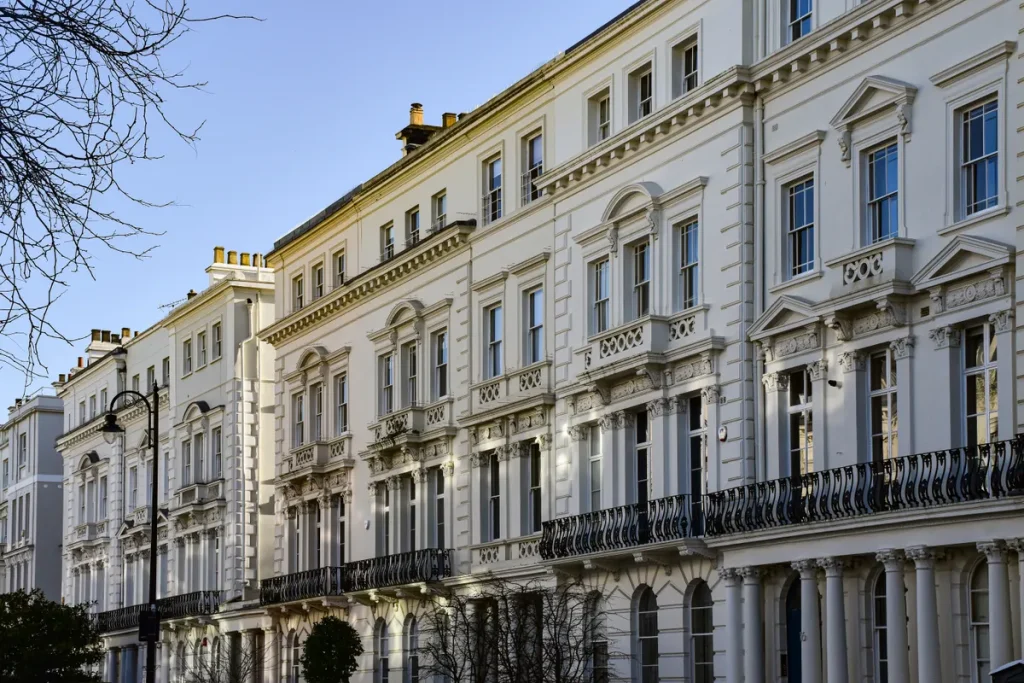

Kensington and Chelsea asking prices have fallen by just over £95,000 in a single month, dropping from £1,648,148 to £1,552,970, as a glut of properties and a weakening market hands investors an unusually strong hand over vendors.
The figures come from Rightmove’s August 2026 House Price Index, which recorded the largest August asking-price drop nationally in eight years: a 2% fall equating to a £7,360 reduction in the average newly listed home. London led the decline, shedding 4.4% month-on-month, or close to £30,000 off a new listing.
Rightmove also used the report to revise its national price forecast for 2026, cutting its earlier projection of 2% growth to a range of between 0% and -2%. The average two-year fixed mortgage rate has risen to 5.09%, up from 4.95% the previous month, as Middle East uncertainty feeds through to funding costs.
Why Kensington and Chelsea Asking Prices Are Bearing the Brunt
The Royal Borough of Kensington and Chelsea sits at the sharpest end of a market that Rightmove describes as having the highest number of homes for sale in London for 16 years. That supply glut creates fierce competition among sellers trying to attract buyers who are already stretched by mortgage costs and broader economic pressure.
Colleen Babcock, a property expert at Rightmove, said: ‘This month’s larger-than-usual August price drop is a sign that many sellers are recognising the reality of the market and pricing much more competitively from day one.’
The Royal Institution of Chartered Surveyors (RICS) said the UK housing market ‘remained subdued’ in July. Lenders have painted a similar picture: Lloyds reported prices broadly stagnant last month, while Nationwide recorded a rise of just 0.1%.
Landlord Buyers Exploit the Conditions
Into this softening market, buy-to-let investors have stepped with growing aggression. Data from Hamptons, based on Connells Group transactions, shows that landlords accounted for 14.1% of all home purchases in Great Britain in July, up from a year-to-date average of 12.4%.
Their offers have become progressively more audacious. The share of investor bids at least 10% below asking price rose from 45% in July 2025, to 48% in June 2026, to 56% in July 2026, the highest proportion since the early weeks of the first Covid lockdown in April 2020. Among cash-funded buy-to-let buyers specifically, the figure reached 63%, according to Mortgage Soup reporting on the same Hamptons data.
The average landlord buyer paid just 88.7% of the initial asking price in July. And sellers are increasingly yielding: 27% of offers at least 10% below asking from investors were accepted in July, up from 18% in July 2025. For leasehold properties the acceptance rate was higher still, at 41%.
David Fell, lead analyst at Hamptons, explained the dynamic plainly: ‘With homes taking longer to sell and chains proving fragile, landlords are using their liquidity and chain-free status to maximise their leverage when it comes to agreeing a price.’
The days-on-market data from Rightmove’s House Price Index data and Hamptons illuminates where that leverage concentrates. Properties that accepted a lowball offer of 10% or more below asking had been on the market for an average of 140 days before caving; those that rejected such an offer had been listed for 109 days. By contrast, properties that received an offer within 10% of asking and accepted it had been on the market for just 45 days. The message for sellers is blunt: the longer a home sits, the more likely it is to face a deep discount, not a bidding war.
Leaseholds are the most exposed. Flats, many burdened by a discredited leasehold system that deters conventional buyers, are generating a disproportionate share of the low-offer acceptances. Analysis by Zoopla found that across most of England, the majority of leasehold flats listed in 2025 had not sold within six months.
There is a rational calculation on the landlord side too. Rental growth for newly agreed lets in Great Britain reached 1.9% year-on-year in July 2026, described by Mortgage Introducer as the fastest pace in 19 months, pushing the average monthly rent to £1,401. A property bought at a 10% or 11% discount to asking price, let into a market with accelerating rents, pencils out attractively even at a 5.09% mortgage rate.
For vendors, particularly those holding leasehold flats in prime London boroughs, the question is whether to accept today’s lowball offer or gamble on a market recovery that Rightmove’s revised 0% to -2% forecast suggests is not imminent.
