


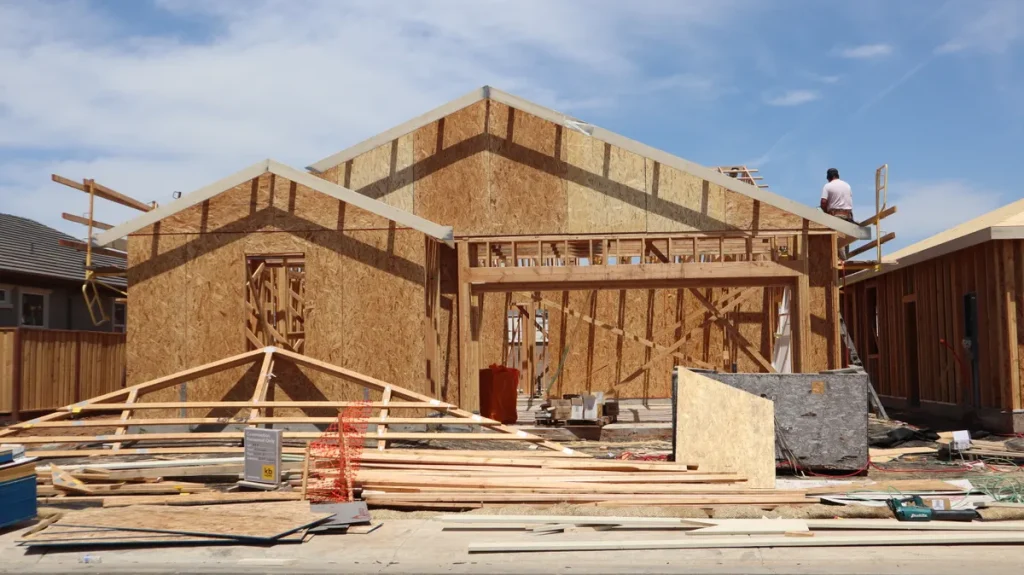

First-time buyer mortgage costs are moving in the right direction for the first time in years, yet the underlying failure to build enough homes means the generation born in the mid-1990s still faces odds their parents would not recognise. The numbers tell both stories at once, and it is worth holding both in your head before reaching for optimism.
The Affordability Numbers Are Genuinely Improving
Start with the better news. Nationwide’s improved affordability report puts the current mortgage payment burden for a first-time buyer at 32% of take-home pay. In 2007, that figure was 45%. The long-run average is 30%, so today’s buyers are not quite there yet, but the trajectory has shifted clearly downward from the worst of the post-pandemic rate shock.
The house-price-to-income ratio tells a similar story. In 2021, house prices were nearly nine times average incomes. Today, according to the snippet data, they sit at 7.6 times. That is still generationally elevated, but the compression matters. It is what happens when wages grow faster than prices over several consecutive years.
Lenders have also loosened terms, if not always standards. Some buyers can now secure a mortgage with a 5% deposit rather than the 10% or more that became customary after the 2008 financial crisis. Mortgage terms of up to 40 years are available, stretching well beyond the conventional 25 to 30 years and cutting monthly payments in the process. There is a cost to this, of course: a longer term means more interest paid over the life of the loan, and buyers on thin deposits are exposed if prices fall.
It is worth noting, too, that a separate Nationwide affordability special report frames the deposit hurdle, not the monthly payment, as the primary barrier for first-time buyers. That distinction matters for policy. Easing mortgage terms addresses the repayment burden; it does nothing for the tens of thousands needed upfront, which private rents (typically consuming around a third of prospective buyers’ incomes) make agonisingly hard to accumulate.
First-Time Buyer Mortgage Costs Are Only Part of the Problem
The structural issue has not moved. England’s housing supply has, if anything, got worse. Ministry of Housing, Communities and Local Government (MHCLG) statistics published in November 2025 put net additional dwellings in England at 208,600 in 2024-25, a 6% fall on the previous year and 16% below the 2019-20 peak. The government’s own target is 300,000 new homes annually in England alone. The gap between ambition and reality has not narrowed; it has widened.
Savills estimates the position is even weaker than official figures suggest. Based on Energy Performance Certificate data, the firm puts new completions in England at roughly 180,700 in 2024-25, well below the MHCLG net additions figure, which counts conversions and changes of use alongside new builds. The end of the Help to Buy scheme in March 2023 (which at its 2020-21 peak supported 55,700 sales) has left a demand gap that private buyers alone cannot fill.
Paul Cheshire, an urban economist at the London School of Economics, has long illustrated the absurdity of UK land economics. His comparison of house-price growth with egg prices over 71 years remains one of the most arresting ways to show how far property has decoupled from everything else. The culprit is not mysterious: too few homes built over too many decades, compounded by construction inflation that has driven the cost of building a home from roughly £150,000 in 2015 to around £230,000 now, with analysts projecting a further 15% rise over the next five years.
There is one piece of supply data that genuinely warrants attention. BCIS data sourced from ONS shows housing starts in England rose 18.0% in Q1 2026 compared with Q1 2025, reaching 34,470. Starts lead completions by roughly two years, so this uptick, if sustained, will begin to show in supply figures by 2027-28. That is a meaningful shift, even if it comes from a depressed base.
Full Fact’s government tracker estimates that around 1.1 million homes will have been added to England’s stock by the end of 2028-29 under current trajectories, against the government’s stated goal of 1.5 million new homes in this parliament. The shortfall is a forecast, not a certainty (planning reforms and green-belt releases could yet surprise) but it illustrates why affordability improvements driven by slower price growth and falling rates are fragile rather than structural.
The outlook for first-time buyers is genuinely less grim than it was at the 2022-23 rate peak. Whether that counts as a corner turned depends entirely on how long the supply gap takes to close, and whether the starts data for early 2026 marks the beginning of something real or another false dawn.
