


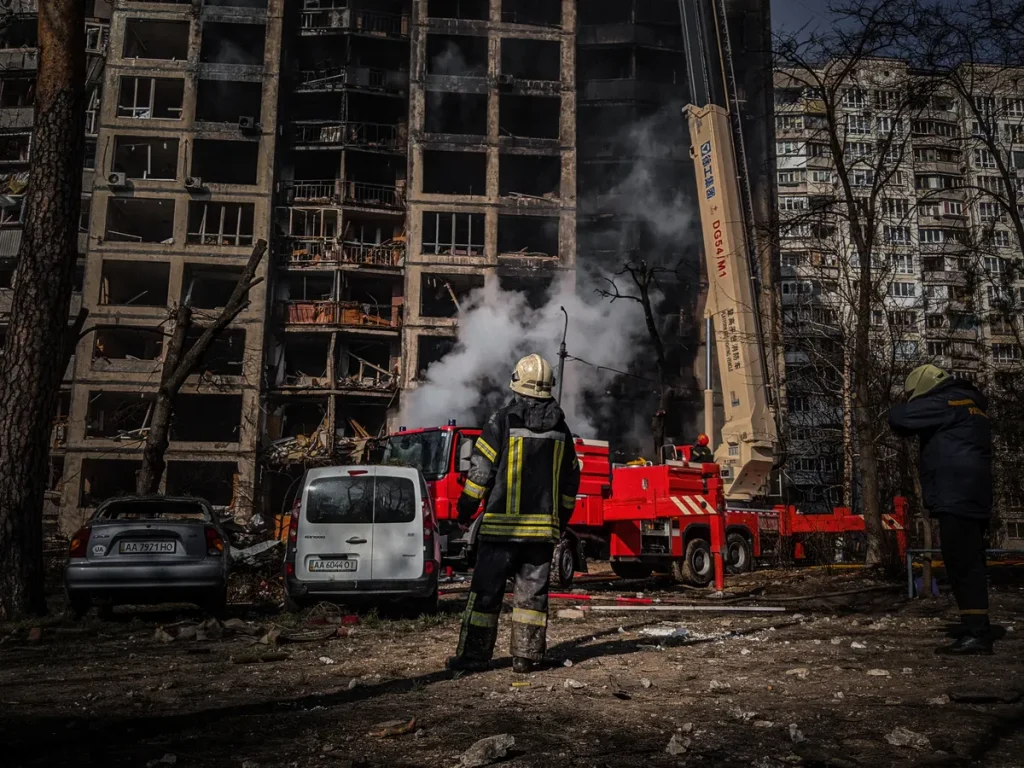

BBC News reports that Spectrum Building leaseholders are trapped in a legal and financial limbo two years after the fire that destroyed their Dagenham block on 26 August 2024, paying mortgages on flats that were demolished in December 2024 while insurance proceeds remain frozen inside a corporate insolvency.
The blaze left more than 80 people homeless after igniting in the early hours. According to London Centric, three unknown flaming objects fell onto the flat roof of a nursery play area at the base of the building, starting a fire that was then accelerated by scaffolding erected to replace the block’s flammable cladding. The cladding the scaffolding was there to remove is what killed them.
Sarah Williams remembers queueing overnight in 2016 to put down a deposit. ‘It was basically the only flat I could afford in London,’ she said. ‘This was a year before Grenfell, and the flats market in London was completely crazy.’ The building became unsellable when dangerous cladding was discovered. Then it burned.
Insurance Frozen in Spectrum Building Insolvency
The building’s freeholder, Arinium Ltd, went bankrupt shortly after the fire. As the Ministry of Housing, Communities and Local Government (MHCLG) confirmed in March 2026, administrators are now in control of the insurance proceeds. According to Insurance Business Magazine, the money exists but the legal process of insolvency is preventing it from reaching leaseholders.
The government had provided almost £6 million through its Building Safety Fund, administered by the Greater London Authority, to remediate the Spectrum Building. That funding included a clawback clause: if remediation was not completed, the money would have to be repaid. It was not completed. The building burned down instead.
‘We still haven’t got our money, and we have no idea whether it will even cover the value of the flats,’ Williams said. ‘We’ve still got to pay our mortgages. We’ve still got to pay our rent.’
Emergency accommodation insurance covers leaseholders for three years. Nobody knows what happens if compensation has not been distributed by then. Inside Housing reports that at least one leaseholder faces homelessness if the delays continue.
James Allchurch, who owned two flats in the building, woke by chance, saw embers and blue flashing lights, and ran. ‘We just grabbed whatever clothes we had and ran out the building, leaving everything behind,’ he said. ‘I still have nightmares about the fire, I have nightmares about watching our building being demolished, losing everything.’
Allchurch raises a problem that sits at the intersection of justice and money. Leaseholders want accountability for any fire safety breaches. But if the freeholder is prosecuted and fined, those fines could come out of the same pot that would otherwise go to residents. ‘You want some justice,’ he said. ‘But the result of that might be that we’re all thousands of pounds worse off.’
Cladding Remediation Crawls While Ministers Promise Speed
The day after the fire, then deputy prime minister Angela Rayner stood outside the smouldering building and declared that cladding remediation was going ‘far too slowly.’ That was two years ago. The pace since has done little to contradict her diagnosis.
Government data published for October 2025 shows 5,570 residential buildings of 11 metres or above have been identified with unsafe cladding. Of those, 2,705 (49%) had started or completed remediation, and just 1,946 (35%) had fully completed works, according to the MHCLG’s own monthly data release.
My read is that the gap between ministerial rhetoric and measurable progress has become the defining feature of this crisis. Giles Grover of the End Our Cladding Scandal campaign is blunter: ‘It feels like Labour prioritised building 1.5 million homes, and that’s meant they’ve swept ending the building safety crisis under the carpet. But this fire was a warning, and they need to heed it. There’s hundreds of thousands of people still living in unsafe buildings.’
The MHCLG says it is ‘speeding up cladding removal’ and plans to introduce a new legal duty to remediate, forcing those responsible to fix unsafe buildings or face criminal prosecution. Ambitions that sound urgent on a press release. They have heard those words before, in Dagenham, standing in a car park in the rain.
Williams puts it without ambiguity: ‘Do not stand in front of my smouldering building saying this is a priority then fail to follow up on that.’
The three-year emergency accommodation clock is ticking. If the insolvency administrators do not move faster, some Spectrum leaseholders will face a choice between homelessness and a mortgage on rubble. That is the deadline ministers should have fixed by now.
