


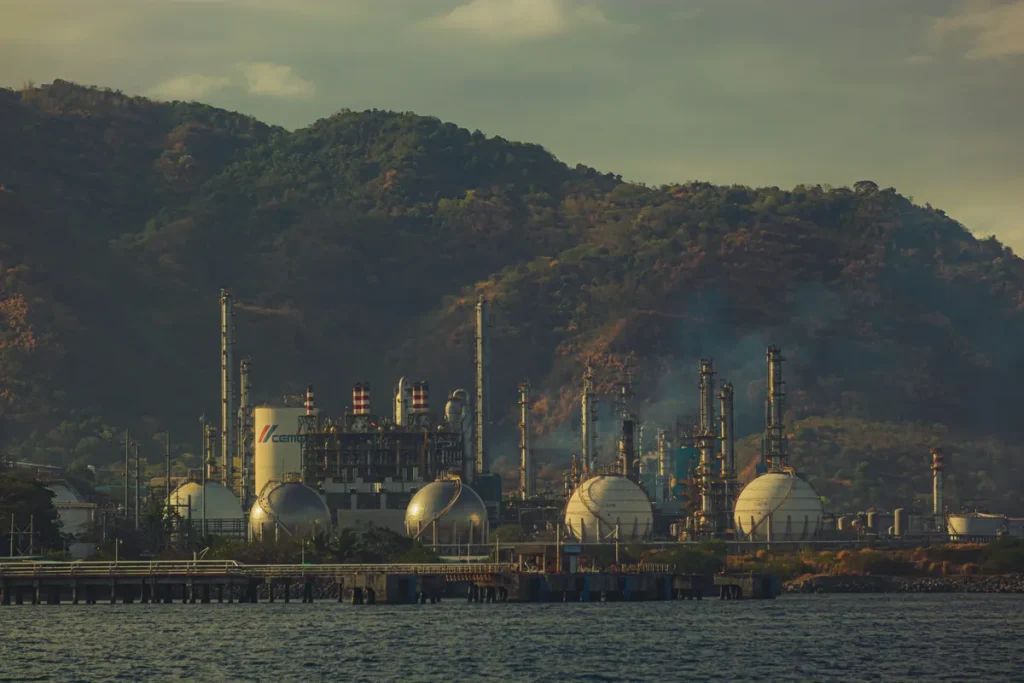

The Energy Now report that first confirmed the Jazan refinery attack as a shutdown event has since been borne out in grim detail: Saudi Aramco closed the Jazan facility on 27 July after Houthi missile and drone strikes, knocking offline a plant capable of processing 400,000 barrels per day and pushing the oil price towards $100 a barrel.
The Saudi foreign ministry confirmed the attacks injured 73 civilians, including women and children, and issued what it called ‘the strongest condemnation and denunciation of the terrorist Houthi militia’s targeting of civilian and economic assets,’ according to The Maritime Executive.
Saudi Arabia’s civil defence agency gave the all-clear for Jazan at approximately 2000 hours on Tuesday, advising locals to ‘avoid gathering and filming.’ The speed of that advisory speaks to how nervous authorities are about footage of the damage spreading.
What the Jazan refinery attack means for regional supply
Aramco chief executive Amin Nasser said the attacks had caused some production interruptions but expressed confidence that operations could be restored quickly, adding that the strikes had no material operational or financial impact, according to the Jerusalem Post citing Reuters. I’d treat that with a degree of caution. A 400,000 bpd refinery does not go offline without consequence, whatever the public-facing messaging.
The Houthis were not selective. Strikes also hit civilian infrastructure in Abha, Najran and Khamis Mushait, all near the northwestern Yemeni border, with Al-Arabiya broadcasting footage of apparent damage across multiple locations. Separately, NBC News reported that missile and drone strikes on the Yemeni Red Sea port city of Mocha killed seven people and caused severe damage to the port’s infrastructure.
The Saudi Ministry of Energy’s initial statement, published before the casualty figures were confirmed, said ‘the competent authorities are completing the necessary procedures to deal with the incident’ and claimed no one was injured, according to CNBC. The confirmed figure of 73 injured came later, from the foreign ministry.
Two days before the most recent Jazan attack, Saudi Arabia signed a defence pact with Turkey and Pakistan, a direct response to growing regional instability from the US-Israeli war on Iran. The timing tells you something about Riyadh’s read of the threat environment.
Hormuz, Iran’s threats, and the price of oil
Shipping through the Strait of Hormuz has already thinned to a trickle. Just seven commodity vessels transited the strait on Monday, down from eight on Sunday. Before the war began, roughly 130 ships a day would cross. That collapse in throughput is not a curiosity; it is the mechanism by which a regional conflict becomes a global inflation problem.
Iran has made the mechanism explicit. Mohsen Rezaei, the secretary of Iran’s Supreme National Security Council, posted on X: ‘In recent days, Washington has received a clear warning from Iran’s new missiles. Economic warfare will be met by a maritime exclusion zone across the Persian Gulf to the blockade perimeter. The operational posture toward U.S. warships and bases has been fundamentally recalibrated.’
A maritime exclusion zone across the Persian Gulf would, if enforced, effectively seal off Hormuz. At that point, the $100 mark that oil is currently approaching would look modest.
My read is that Iran’s posture has shifted from deterrence to escalation signalling. Whether that produces a real blockade or remains rhetorical pressure is the question the oil market is now pricing. The Jazan refinery attack and the Hormuz slowdown are not independent data points; they are part of a coordinated squeeze on the energy infrastructure that runs through the Gulf.
All of which lands on the desk of central bankers with awkward timing. This afternoon, MPs will question Bank of England Governor Andrew Bailey and Monetary Policy Committee colleagues about their decision to hold Bank Rate at 3.75% at the July meeting. The Treasury Committee has flagged the potential inflationary impact of the Iran war as a line of questioning. Bailey will also face questions on how the MPC is weighing recent AI developments in its economic modelling.
The MPC’s problem is structural. High oil prices feed through to transport, manufacturing and household energy costs, pushing inflation up at exactly the moment the committee might prefer to start easing. Holding at 3.75% looks defensible today. If oil clears $100 and stays there, that arithmetic changes quickly, according to UK Parliament documents setting out the scope of today’s oral evidence session.
Watch the Hormuz vessel count. If daily transits fall below five, expect the market to price in the blockade scenario rather than merely contemplate it.
