


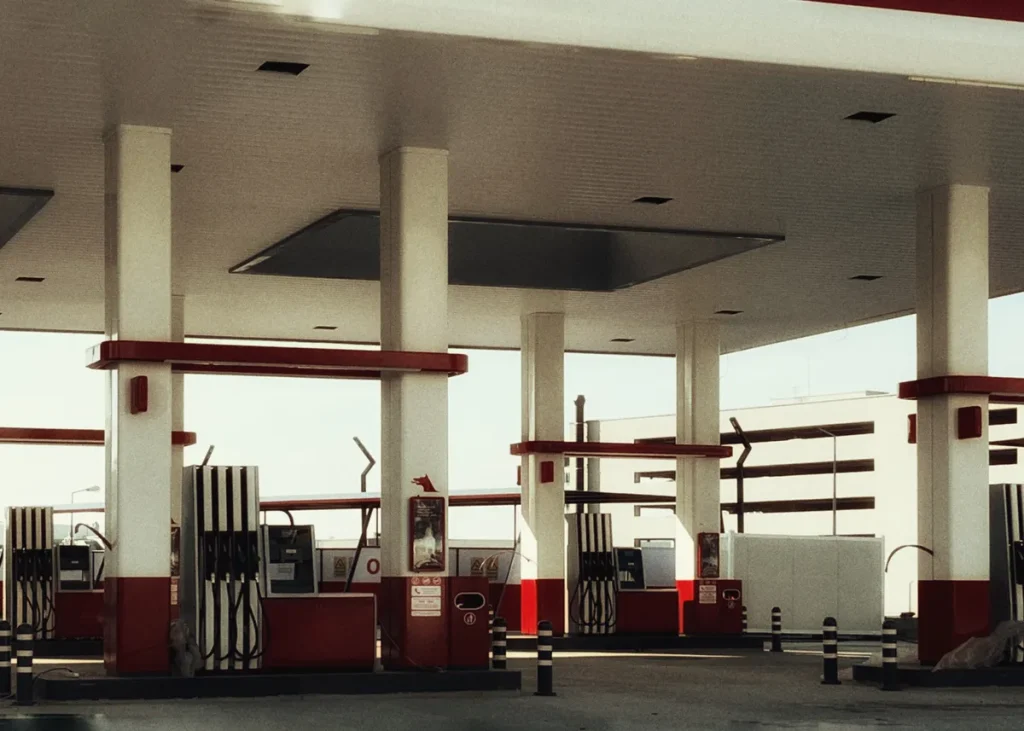

Donald Trump’s petrol price gouging probe puts the oil majors on notice, but the arithmetic behind his anger is considerably more complicated than a social media post allows. Trump announced on Tuesday that he had ordered the Department of Justice (DOJ) to investigate major energy companies, accusing them of failing to pass on falls in crude oil costs to consumers at the pump.
‘The big Oil Companies are not dropping their price at the pump commensurate with the sharply lower prices they are paying for Oil,’ Trump wrote. ‘Those prices are dropping like a rock! In other words, customers are being “gouged.”‘ He named no specific firms.
The political case for outrage is easy to make. The World Bank described the closure of the Strait of Hormuz as the largest oil market disruption in history, projecting a deficit of 3.7 million barrels per day in Q2 2026 as Middle Eastern production contracted. Brent crude spiked to almost $120 a barrel in May as a direct consequence. It has since retreated to around $76 a barrel as peace talks advance, though that remains well above the roughly $70 mark where it sat before the US and Israel struck Iran on 28 February.
The Pump Price Lag That Fuelled Trump’s Petrol Price Gouging Claim
Retail petrol prices in the US have fallen, but not proportionately. The snippet cites an average of about $3.90 a gallon for regular gasoline, down from over $4 a gallon in April. The US Energy Information Administration (EIA)‘s weekly data for the period ending 15 June 2026 puts the national average for regular all-formulations gasoline at $4.052 per gallon, with the East Coast at $3.913 and the Midwest at $3.861. The divergence between those two figures likely reflects differences in grade coverage and the precise timing of each reading, but both tell the same story: retail prices have not fallen as far or as fast as the crude benchmark.
That gap is real, and Trump is not wrong to point at it. Refiners and retailers do adjust prices with a lag, and margins tend to widen during periods of crude volatility precisely because downstream operators hedge their input costs. Whether that constitutes legally actionable gouging is a different question entirely, and one the DOJ will now have to answer. The agency has yet to respond publicly.
A Market Already Under Strain Before the Probe
The wider context makes simple villain-hunting harder. According to the Federal Reserve Bank of St. Louis, which tracks EIA data, the retail gasoline series has been elevated for months, reflecting supply disruption rather than opportunistic pricing alone. The World Bank’s April 2026 Commodity Markets Outlook estimated that global oil consumption fell by 0.8 million barrels per day year-on-year in March 2026, a direct consequence of the price surge that followed the Hormuz closure.
Meanwhile, FocusEconomics puts the average Brent price for May 2026 at $103.84 per barrel, the monthly mean against which the near-$120 intraday peak must be set. The crude market was not uniformly at crisis levels through the month; it spiked, then eased. Retail prices, set weekly or even daily at the forecourt, do not perfectly mirror intraday swings in either direction.
None of that makes the price gap comfortable for American drivers, and Trump knows it. Petrol costs are one of the most viscerally felt economic signals a president faces. Crude has given back nearly a third of its war-premium since the May peak. If the pump price does not follow in the coming weeks, the political pressure on the DOJ to find something will intensify.
The investigation has been ordered. Whether it produces charges, consent decrees, or simply a loudly filed report before the next news cycle is the question worth watching. Brent at $76 and falling is the one development that could make the whole probe moot before it begins.
