


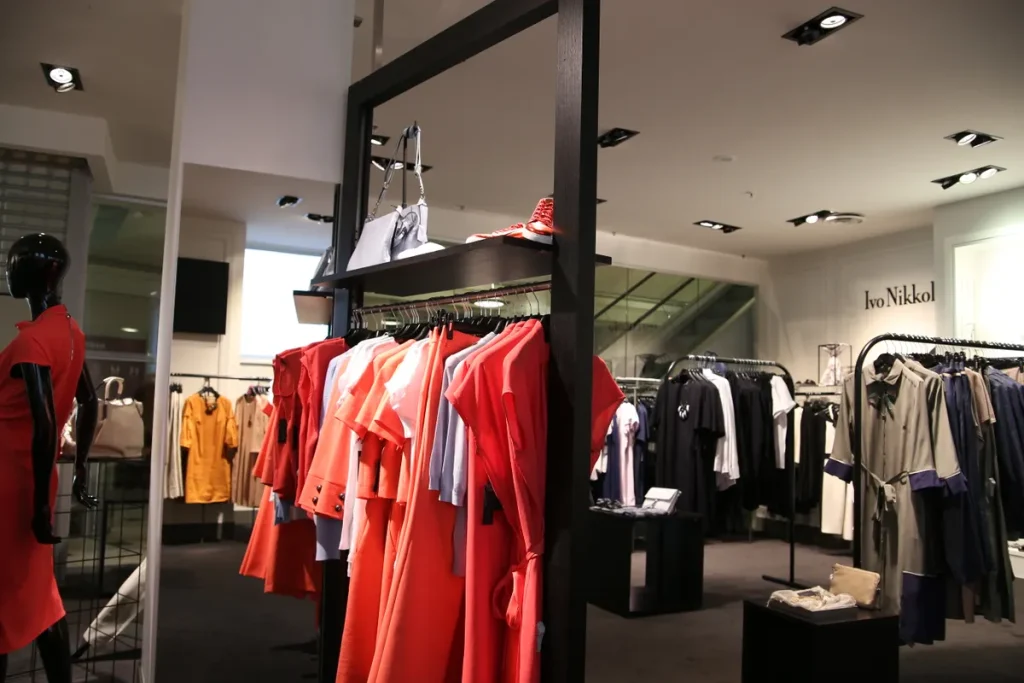

The Frasers Group Harvey Nichols deal, structured as a pre-pack administration, closed on the same day the 194-year-old department store chain was placed into administration, giving Mike Ashley’s retail empire control of six UK stores, the online business, and existing inventory for an undisclosed sum.
The acquisition fits Frasers’ stated ‘elevation strategy’, its push to strengthen its positioning at the luxury end of retail. Whether a chain haemorrhaging revenue at this pace can actually be elevated is the harder question.
The Revenue Slide That Made Administration Inevitable
Harvey Nichols generated revenue of £184.8 million for the 52 weeks ended 29 March 2025, according to Vogue Business, down from £204.9 million the prior year: a decline of roughly 10% in a single fiscal year. The company attributed the fall to weaker consumer confidence and reduced international tourist spending.
On the loss side, the figures require some unpicking. The snippet’s £105 million loss after tax for the same period reflects write-offs of inter-company loans at the Harvey Nichols Group Limited entity level. The consolidated group accounts, as reported by WWD, record a post-tax loss of £48.7 million for fiscal 2025, widening from £34.1 million the year before. Both figures describe the same deteriorating business; they measure it at different levels of the corporate structure.
One grain of genuine comfort in the accounts: gross margin improved to 45.7% from 44.1% the previous year, which Vogue Business reports Harvey Nichols attributed to progress in trading discipline and product mix. A retailer can improve its margins while its revenues fall. It cannot do so indefinitely.
Drapers reported that Harvey Nichols’ accounts flagged two specific structural headwinds: the abolition of tax-free shopping in the UK, which hit the international tourists who underpinned the Knightsbridge flagship’s premium trade, and the sustained pressure on aspirational domestic consumers from the cost of living crisis. Neither of those forces is within a new owner’s control.
What Frasers Is Actually Buying, and What It Plans to Do
The six UK stores acquired are in London, Edinburgh, Birmingham, Leeds, Manchester, and Bristol. The online business and existing stock are included. Discussions over the Dublin shop remain ongoing, while franchise agreements for Harvey Nichols’s overseas outlets in Riyadh, Dubai, Doha, Kuwait, and Hong Kong continue under the deal. The Oxo Tower restaurant in London is not part of the transaction and is being sold separately.
Ashley has been direct about his intentions. The Knightsbridge and Edinburgh stores will keep the Harvey Nichols name. The four remaining UK sites in Birmingham, Leeds, Manchester, and Bristol will be rebranded as either House of Fraser or Flannels. Frasers’ statement made clear that ‘significant restructuring and integration of Harvey Nichols into the Frasers Group ecosystem will be required’, including a review of the store portfolio, organisational structure, and cost base.
Michael Murray, Frasers Group chief executive and Ashley’s son-in-law, said: ‘Harvey Nichols is an iconic British institution with significant potential, but it is clear meaningful change is needed. The turnaround will require tough choices, and we are prepared to make those decisions, even if that means a smaller business in the near term, to create a stronger and more sustainable Harvey Nichols for the long term.’
Ashley himself told the Financial Times last Friday that Harvey Nichols was in a ‘death spiral’ and that it would be a ‘huge challenge’ to turn it around. That is a candid assessment from a buyer on the eve of a deal, and it should be taken seriously.
FTI Consulting, acting as administrator, said the transaction secures more than 1,000 jobs from a workforce of 1,200 across 13 stores. Lindsay Hallam, senior managing director at FTI, said the deal ‘provides a strong platform for its next chapter’.
Harvey Nichols was founded in 1831 as a linen shop, listed on Companies House records trace its Knightsbridge entity back to its 1889 store opening, and its long-term owner Dickson Poon bought it in 1991 for £53 million before listing it on the London Stock Exchange in 1996. It has not turned a profit since the pandemic shuttered the international tourist trade.
For context, Frasers bought House of Fraser out of administration in 2018 and has since closed roughly 40 of its 60 stores. That precedent tells you more about Ashley’s playbook than any press release will. The real test for Harvey Nichols comes when the rebranding decisions are made public and London’s luxury shoppers decide whether a Flannels sign above a former Harvey Nichols is something they can live with.
