


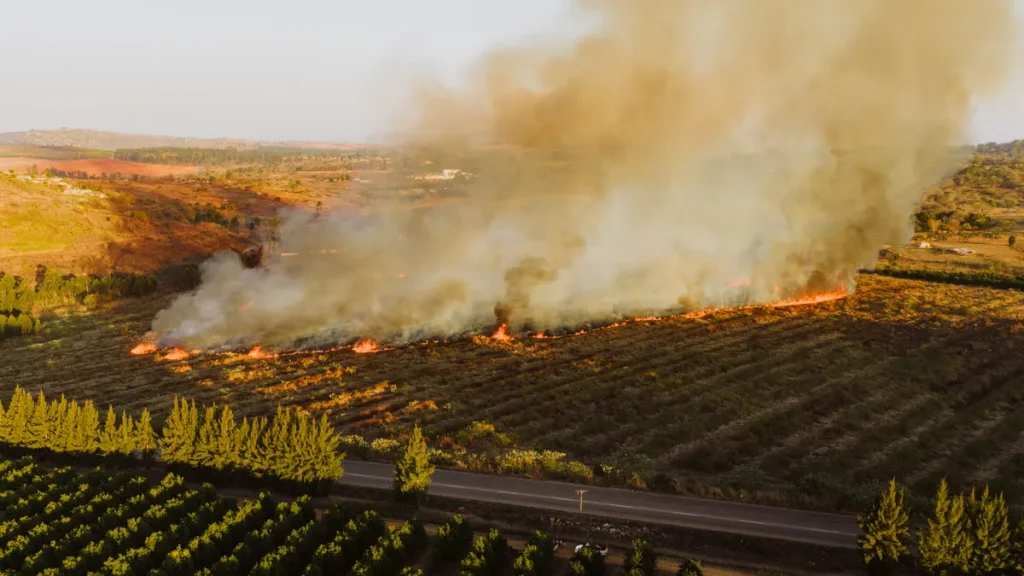

The disposable BBQ ban in the UK came into force on 14 August 2026, issued under the General Product Safety Regulations 2005 by the Office for Product Safety and Standards (OPSS), and it is hard to argue the government moved too fast. Prime Minister Andy Burnham says Britain is ‘a tinderbox right now.’ The evidence suggests he is not exaggerating.
The Department for Business, Innovation, Science and Trade (DBIST) confirmed that disposable barbecues ‘cannot be considered a safe product’ in current conditions and ‘must not be made available for sale either in store or online at the current time’ in Great Britain. All retailers are receiving guidance. The ban will be kept under review.
The Disposable BBQ Ban and What Triggered It
The statutory guidelines sit alongside a separate voluntary framework. The British Retail Consortium (BRC) advised OPSS that major retailers had already withdrawn disposable barbecues from sale following advice from the National Fire Chiefs Council, with that voluntary withdrawal running until 26 August 2026 and a review scheduled for 24 August. The statutory ban now sits on top of that, closing gaps the voluntary arrangement could not.
The BRC had also published updated voluntary guidelines for disposable barbecues in 2026, designed to support retailers and consumers in using the products safely. Those guidelines now look somewhat academic. The government has moved past guidance into law.
On the same day, the government issued a national emergency alert to England and Wales, warning of a very high risk of wildfires and instructing residents, landowners and visitors not to undertake any activity that could start a fire, including disposable barbecues, firepits, garden incinerators or fireworks. An emergency alert broadcast simultaneously to millions of phones is not a precautionary gesture. It is a government that has run out of softer options.
The Cobra meeting that preceded all of this, held on 12 August 2026, had been convened against a forecast of 33°C on Wednesday and up to 38°C on Thursday, according to The Guardian. Ministers from DEFRA, the Department of Health and Social Care, the Ministry of Housing, Communities and Local Government and the Cabinet Office attended, alongside the Met Office, the Environment Agency and the UK Health Security Agency. That is not a routine inter-departmental catch-up. That is a government treating extreme heat as a civil emergency.
A Country That Isn’t Set Up for This
Burnham, speaking to BBC Radio 5 Live’s Matt Chorley, put the scale of the crisis plainly: ‘We’ve got 37 fires across England and Wales right now, four of them are major incidents.’
West Midlands Ambulance Service treated 54 casualties at eight different fires across the region. Nineteen people were taken to hospital. Burnham visited Stourbridge to see the aftermath of one of those blazes first-hand.
His assessment of Britain’s structural readiness was candid to the point of being uncomfortable. ‘We have a fire and rescue service across the country that isn’t properly set up to deal with these incidents,’ he said. ‘We don’t have the capability in the way that we should have to fight these fires.’ He added that plans were being drawn up for emergency financial support for fire services and that he intended to commission firefighting aircraft of the kind deployed across Europe and the United States.
My read is that this is the sentence that will matter most when the political post-mortem comes. Not the ban on barbecues, which is sensible and overdue. The admission that Britain’s emergency infrastructure is not built for the climate it now has.
Some councils had already drawn that conclusion independently. Derbyshire Dales District Council, which bans the use of disposable barbecues and open fires from all public open spaces in its area as a standing measure, welcomed the government’s intervention. That a district council was ahead of central government on this says something about the pace of national adaptation.
Burnham said the country needs to ‘face up’ to ‘the changing climate’ and transition to ‘more clean energy.’ He is right. But the firefighting planes, the emergency financial support, the statutory ban on disposable barbecues: these are responses to a crisis already arrived, not a crisis being prevented. The 24 August review of the voluntary retail withdrawal will be the next moment of reckoning. Whether conditions ease enough to justify lifting either restriction, or whether the ban is extended, will tell us something about the summer still to come.
