


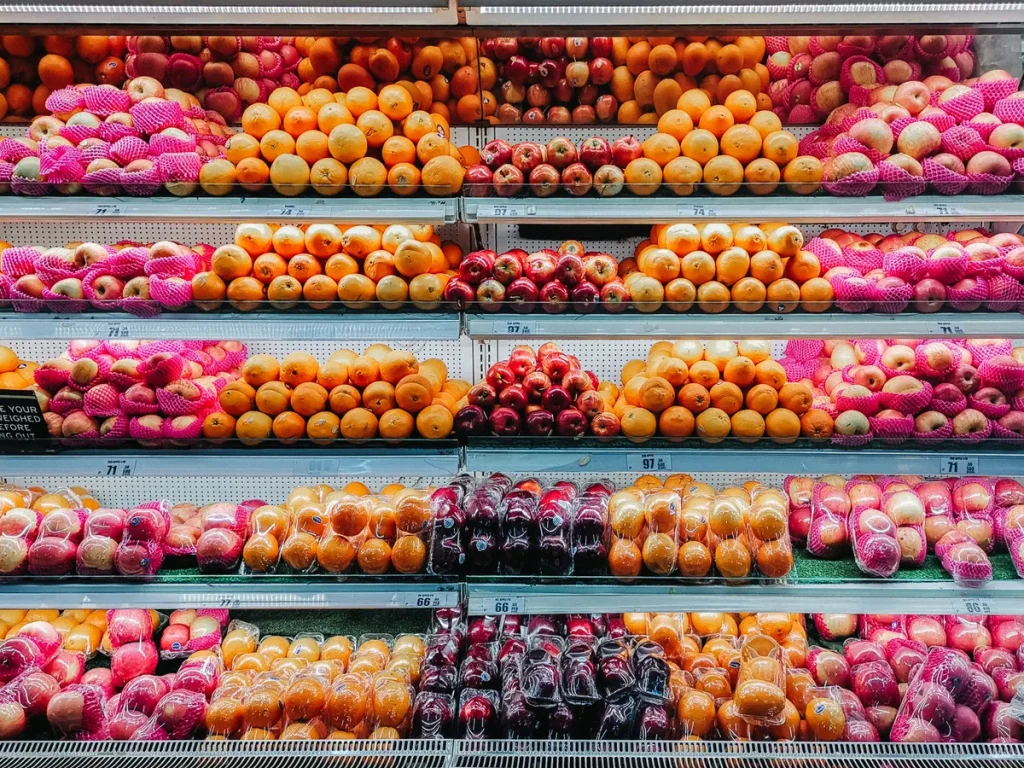

Grocery price inflation slows to its lowest point since October 2024, according to new data, with British shoppers swapping hot meals for dips, olives and cold cuts during last month’s sustained heatwaves, while hunting supermarket deals to keep the weekly shop in check.
Supermarket prices rose 2.1% in the four weeks to 9 August, down from 2.6% the previous month, according to Reuters, citing Worldpanel by Numerator. Overall grocery sales grew 4.0% year-on-year across the same period, meaning volumes were effectively flat once price rises were stripped out.
The shift in what people ate was pronounced. Sales of dips rose nearly a quarter on the same period last year. Coleslaw and potato salad moved by similar amounts. Quiches, olives and chilled finger foods all posted increases, as did ice-cream and sorbet, up 26%, while frozen fruit sales surged 48%.
Sally Ball, business unit director at Worldpanel by Numerator, said: ‘The continued heat across the UK has certainly impacted the way people are eating and drinking. Earlier this summer we saw that meal times were being pushed later in the day, with 13% of evening meals now eaten after 8pm.’
Soft drinks were among the biggest beneficiaries: spend grew 15.1%, and according to the NielsenIQ August Total Till release, shoppers spent £1.18bn on soft drinks alone during the period. Ice cream accounted for a further £268m, and suncare £68m. Together, those three categories accounted for 45% of total fast-moving consumer goods value growth in August.
Why Grocery Price Inflation Slows Even as Bigger Pressures Build
The deceleration in supermarket prices is real, but it tells only part of the story. The Office for National Statistics (ONS) Consumer Price Inflation bulletin for August 2025 put the 12-month rate for food and non-alcoholic beverages at 5.1%, up from 4.9% in July, its fifth consecutive monthly increase and the highest reading since January 2024. The Worldpanel figure measures supermarket shelf prices over a rolling four-week window; the ONS figure covers a broader basket across more outlet types. They are measuring different things, and both matter.
The British Retail Consortium has predicted food inflation will hit 6% by the end of 2025, according to Reuters. The Bank of England’s own forecast puts the peak at 5.5% before Christmas, with a subsequent decline. Either way, the short-term ease in supermarket pricing is unlikely to last.
Among the fastest-rising categories in August were chocolate, fresh meat and coffee. Champagne, sparkling wine, dog food and sugar confectionery were among the few areas recording price falls.
Deals, Brands and the Battle for Market Share
Shoppers responded to the pressure in a predictable way: they went looking for promotions. Nearly one-third of all supermarket sales, 31.3%, came from deals in the four weeks to 9 August, the highest proportion this year. Worldpanel by Numerator notes that the proportion of grocery spending on promotions has risen year-on-year every month since July 2023, and that four in every five pounds spent on promotional items goes on outright price cuts rather than multi-buy offers.
Spending still fell after the World Cup peak. Average spend across the four weeks was £410 per household, down £14.24 on the prior period. Yet branded goods held their own: sales of branded grocery items were up 6.1% over the period, outpacing own-label growth of 4.1%, as consumers sought small in-store treats while cutting back elsewhere.
The market-share picture was stark. Over the 12 weeks to 10 August, Tesco grew sales 7.4%, lifting its market share by 0.8 percentage points to 28.4%. Asda shed 2.6% in sales and lost 0.9 percentage points of share. Lidl and Ocado were jointly the fastest-growing grocers at 10.7%. Separate NielsenIQ data showed Ocado up 17.3% and M&S up 12.9% over August alone, with Co-op growing 7.0% on the back of the convenience channel’s strongest sales growth in more than a year, at 3.6%.
Online food shopping continued to pull ahead, reaching £2.1bn in sales, up 10% in value and 5% in volume, with food delivery platforms gaining share as researchers cited growing demand for rapid access to refreshments during the heat.
Mike Watkins, head of retailer and business insight at NielsenIQ, said: ‘Growth has inevitably slowed after the peaks created by the Fifa World Cup, while the start of the summer holidays has given many shoppers a reason to delay some non-essential spending.’ He added that as weather turns and children return to school, money-off vouchers could return to maintain footfall.
My read is that the September data will be the one to watch. The World Cup boost has faded, the back-to-school reset is under way, and both the BRC and the Bank of England expect food inflation to climb further before it falls. Retailers who built loyalty during the summer’s deal frenzy will find out soon enough whether price cuts bought them customers or merely borrowed them.
