


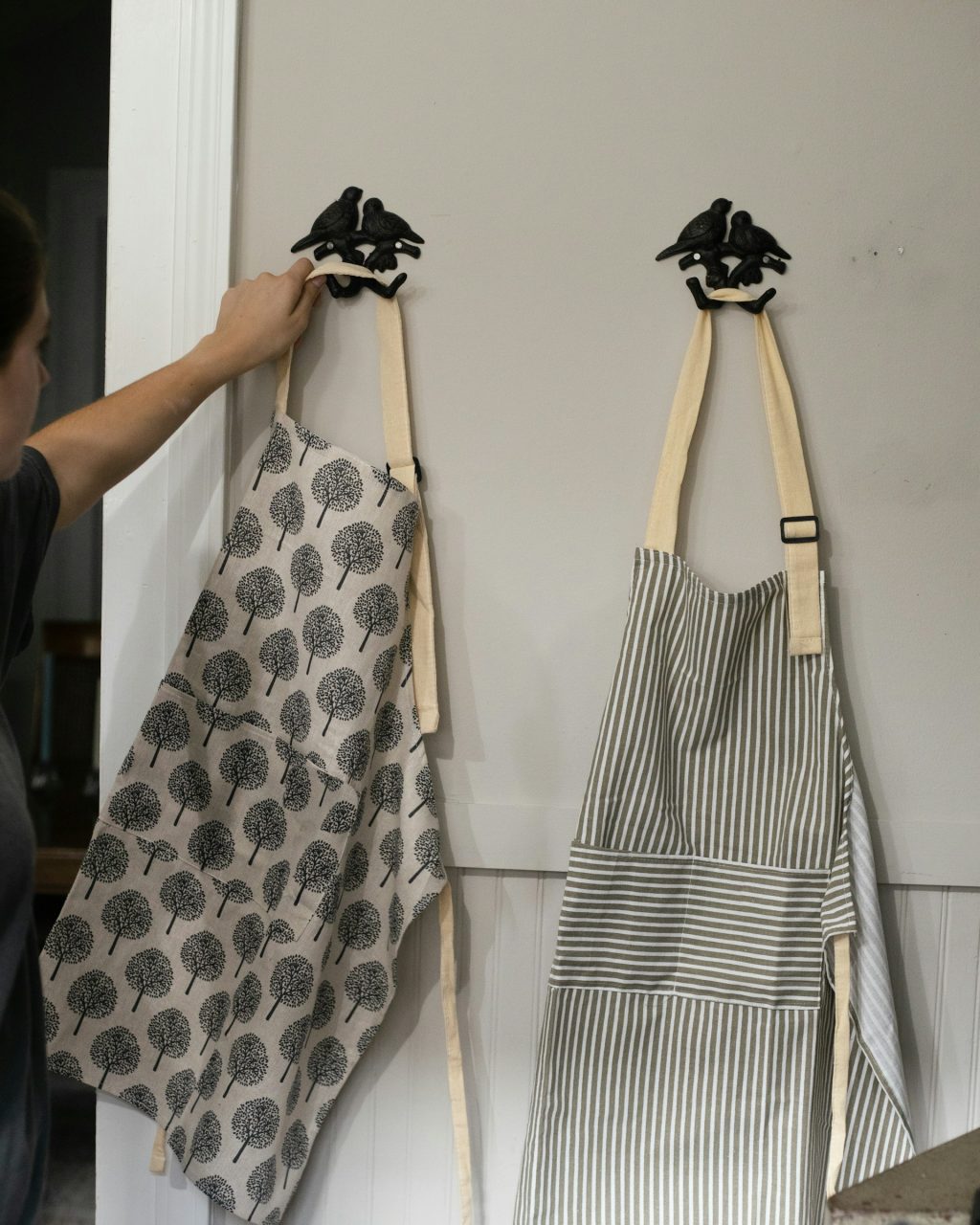

The first thing customers usually notice is not always the menu. Sometimes it is the room, the sound of cups landing on saucers, the speed of a lunch service, or the look of the person placing a flat white on the counter with one hand while reaching for the card machine with the other. Hospitality runs on details that register quickly and linger quietly. Among those details, an apron has become more important than its plain utility might suggest.
That may seem like an exaggerated claim for a piece of workwear. It is not. In restaurants, cafés, bakeries and food stalls, aprons have moved beyond their old job of protecting clothes from spills and heat. They now help carry a brand in a way that feels both visible and natural. A good apron says something before the first sentence is spoken. It can suggest discipline, care, taste, even a certain confidence about what kind of place this is.
Chefs and baristas understand this instinctively because they work in environments where impressions form fast. A customer standing at a counter has only a few seconds to decide whether the place feels sharp or sloppy, thoughtful or generic. Matching aprons with a clear design and a recognisable logo help settle that question almost immediately. Not with noise. With coherence.
I remember watching a small café open for the morning rush, the staff moving in that practiced half-chaos that always looks one step from disorder until you realise it is actually a system.
Their aprons did part of the work.
That is one reason branded aprons have become such a reliable tool for hospitality businesses that want to sharpen their identity without overexplaining themselves. Uniforms create consistency, and consistency is persuasive. When the person steaming milk, the chef plating brunch, and the staff member clearing tables all appear to belong to the same considered visual world, customers tend to trust the place more. It feels managed. It feels intentional.
The practical side should not be understated. Hospitality is physically demanding, messy work. Shirts stain. Pockets matter. Fabrics need to withstand repeat washing, long shifts, sudden spills, and the rough friction of a crowded service. An apron that looks good for two weeks and then fades or frays is not a branding success; it is a procurement mistake. Quality material, decent stitching, and comfort over long hours are not luxuries here. They are the baseline.
This is where Totally Branded seems to understand the job more fully than companies that treat branded apparel as little more than a logo placement exercise. The appeal lies not just in putting a name on fabric, but in combining durable materials with useful design choices and strong visual customisation. Cotton, denim, polyester blends, adjustable straps, easy-care finishes, practical pockets — these are the details staff actually live with. They shape whether the apron becomes part of the rhythm of work or a mild daily annoyance.
One of the most compelling reasons chefs and baristas trust Totally Branded’s personalised aprons is the customization options available. Personalization allows businesses to tailor their aprons to reflect their unique brand identity fully.
And annoyance shows.
Hospitality workers are rarely shy about signalling discomfort, even when they say nothing directly. Tugging at straps, awkwardly adjusted neck loops, pockets that sit in the wrong place, fabric too stiff for movement behind a busy coffee machine — customers may not consciously catalogue these things, but they absorb the effect. The uniform looks less convincing because the person wearing it is fighting it.
A well-made branded apron solves that problem while doing something else at the same time: it turns staff into part of the visual language of the business. Logos, brand colours, embroidery, taglines, even the cut of the garment can reinforce what the place wants to say about itself. A sleek dark apron with subtle embroidery suggests one mood. A brighter, more playful design with bolder print suggests another. Neither is automatically better. What matters is whether the choice aligns with the business rather than looking borrowed from somebody else’s idea.
I find there is always something faintly revealing about the businesses that get this right; they tend to understand that branding works best when it feels lived-in rather than imposed.
That lived-in quality can have surprising effects on customer loyalty. Familiar branding across menus, signage, takeaway packaging and staff uniforms creates a sense of continuity. Customers begin to recognise the place not just by name, but by atmosphere. The apron becomes part of memory. They may not mention it directly, but it enters the mental picture of the café or restaurant they recommend to a friend.
There is also a team effect, and it should not be dismissed as sentimental management talk. Shared uniforms can create a sense of belonging, especially in fast-paced settings where rhythm and mutual reliance matter. A team that looks unified often begins to act more unified. It is not magic. It is reinforcement. People are reminded they represent something together.
That helps explain why branded aprons show up so often in the businesses customers photograph. Open kitchens, espresso bars, food festivals, tasting events — these are highly visual spaces. Staff apparel becomes part of the image that ends up online, and once that happens the apron is doing marketing work beyond the room itself. A recognisable, well-designed apron can appear in social posts, tagged photos, videos, and customer snapshots without ever feeling like an advertisement in the crude sense.
It simply looks like the place knows who it is.
For hospitality businesses, that is no small thing. Competition is relentless, margins are often thin, and the difference between being remembered and overlooked can come down to a cluster of details handled well. Totally Branded aprons appeal to chefs and baristas because they meet that reality directly. They are functional enough for the work, customisable enough for the brand, and visible enough to leave an impression without demanding attention.
That balance is harder to achieve than it looks. But when it is achieved, an apron stops being background fabric. It becomes part of the service, part of the mood, part of the reason a customer remembers the place long after the coffee cup is empty or the plate has been cleared.