



Contemporary Information Corp provides rental property owners with information that assists with tenant screening and adheres to applicable federal and state laws. Contemporary Information Corp maintains longstanding membership in the National Association of Consumer Reporting Association (NCRA), with CEO William Bower having served as NCRA president for two terms.
In December 2025, the NCRA provided a comment on “one credit report fits all” practices in mortgage lending. The organization reiterated its position that consumers are not simply their credit report, and that their attributes as professionals and potential renters and home owners cannot be captured in just a single credit report. With America including 126 million home owners (and 4 million homes bought and sold annually), purchasing a residence represents the most important financial decision in many people’s lives. For this reason, the NCRA holds that each consumer should be viewed by lenders as “a whole person.”
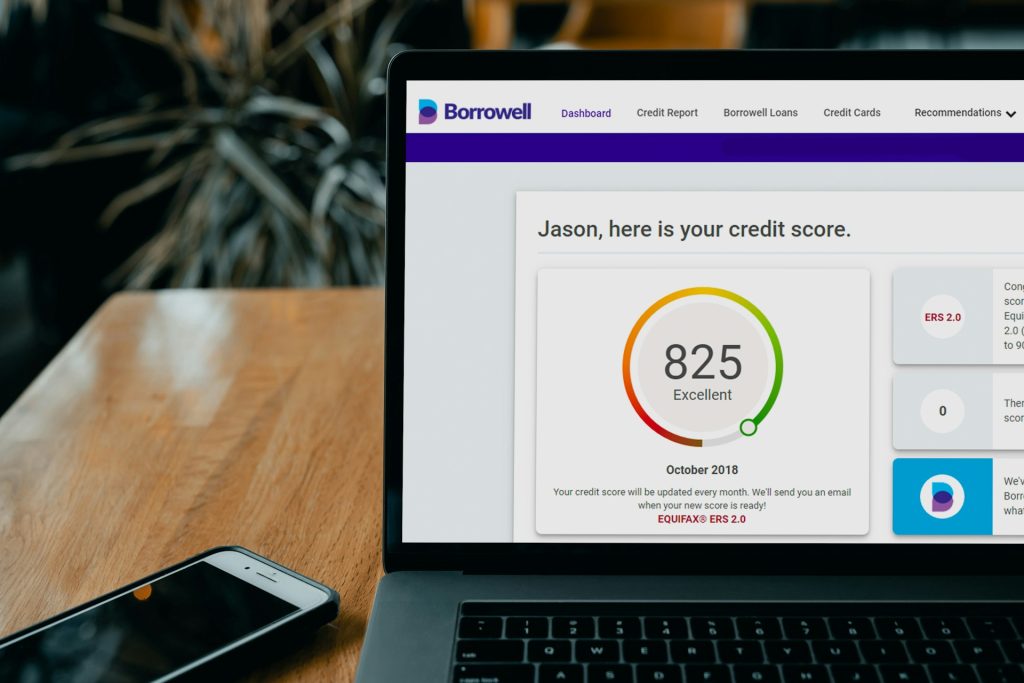
The NCRA cites a recent white paper by economist Amy Crews Cutts exploring material differences in the credit information reported by Experian, TransUnion, and Equifax, and how this translates into significant FICO score differentials on mortgage loans. The economist positions this as an important issue, as mortgage industry lenders have questioned the utility of tri-merge credit reports that take information from all three nationwide credit bureaus.
From many lenders’ perspective, there is not much difference between the bureaus. They argue that taking a single report from one bureau provides an accurate snapshot of the homebuyer, while significantly decreasing the closing cost burden homebuyers must cover.
In her research, Cutts finds that credit report costs, as a percentage of closing costs, are relatively small. They represent on average only two basis points of the total loan amount, or 1 percent of the closing costs associated with the home purchase transaction. One lender referenced stated at the MBA Annual25 conference in Las Vegas that average costs were $155, with credit report fees ranging from $40 to $240.
Furthermore, the economist found significant material differences in the credit information reported by the three agencies. The average FICO score differential stands at 29 points when it comes to originated mortgage loans. As the credit score bin decreases, such differences increase, with those at lower credit score bins experiencing average differences of more than 40 points. This divergence between Experian, TransUnion, and Equifax reports has a material impact that typically exceeds the fees involved. It can change the basis interest points of the loan on offer, and even whether a mortgage is approved in the first place.
As the author describes it, loan-level price adjustment, calculated as a percentage of Fannie Mae and Freddie Mac’s loan amount, may rise up to 0.625 percent, depending on whether the borrower’s decision credit score is in a lower score bin or not. Selecting a “wrong” single-bureau report thus presents the borrower with a major, unnecessary cost.
Finally, investors’ mortgage-backed securities often place stricter terms on loans that reflect single bureau reports, as the information is less reliable and riskier. Interest rates typically rise by 0.125 for each 20 points score distributions rise as a result of “cherry-picked” bureau data. This is a far greater cost than simply utilizing the tri-merge credit reports that already exist at an affordable price point. This logic explains why companies such as Contemporary Information Corp verify applicant tenant information fully, cross-referencing it across multiple credit reports, as well as housing court records and other pieces of background information.