


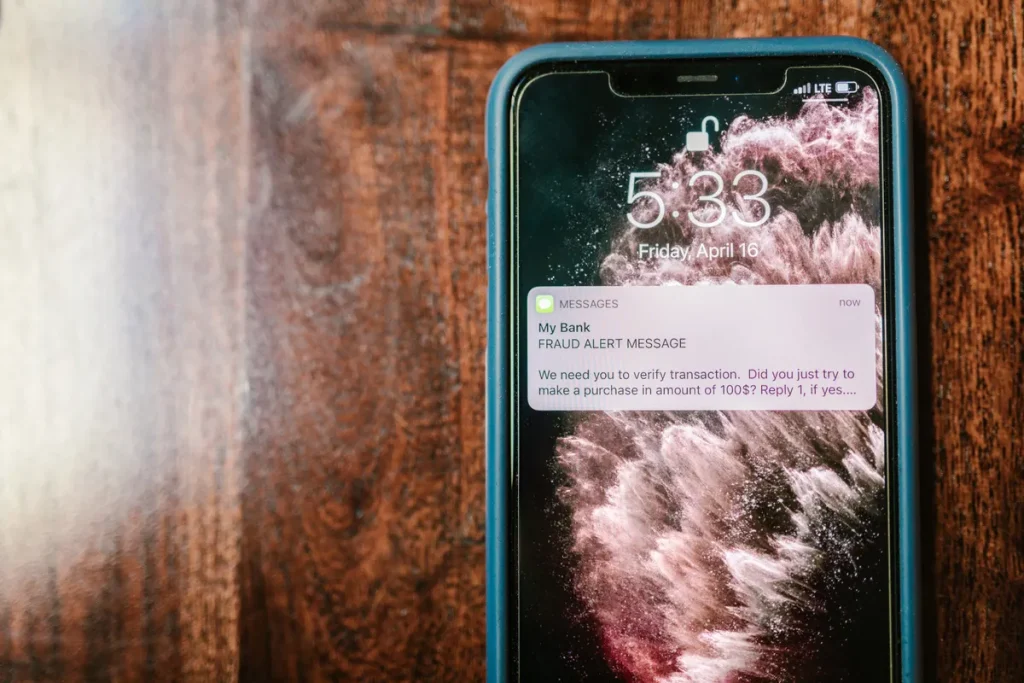

Bank impersonation scams climbed 13% last year, according to Lloyds Banking Group’s official figures, and the mechanics of the con are becoming more polished. The fraudster no longer needs you to believe them from the outset. They just need to plant enough doubt to make you pick up the phone.
The set-up is familiar. A text arrives that looks like a routine fraud alert from your bank. A payment you don’t recognise has been set up on your account. There’s a number to call, or a prompt to reply ‘N’ if you didn’t authorise the transaction. The moment you do either, you’ve handed the initiative to someone who is very good at what they do.
How Bank Impersonation Scams Actually Work
Elaine Ross, head of fraud analytics at Nationwide Building Society, is clear about why the text-first approach is so effective. ‘A lot of people are more sceptical about people calling them than they are about getting a message,’ she says. The text builds credibility before the voice call even begins.
The message typically names a specific person or business as the recipient of the supposed payment. ‘The value will be a high value, and it will be a person the victim doesn’t know,’ Ross says. Once you reply ‘N’, the fraudster calls you back, often claiming to be from your bank’s security team or, in some cases, the police. ‘That puts people into a panic,’ Ross says.
From there, the goal is to persuade you to transfer your savings to a so-called safe account, hand over your debit card, or both. The scammer needs only a few minutes of convincing to cause lasting financial damage.
The losses bear that out. Santander says more than £3 million has been stolen from its customers through bank impersonation scams so far this year, with an average loss of £6,000 per victim. Lloyds’ data shows the average loss in police and bank staff impersonation cases was £5,318, down 31% from the year before, though the volume of cases is still rising. CEO fraud, where the fraudster poses as a senior member of staff, is considerably worse: victims lost an average of £10,918 in 2023, more than double the police or bank impersonation figure.
The broader picture is concerning. Nationwide’s research, carried out by Censuswide in a survey of 2,000 people, found that the average person receives eight scam calls a month. More than half (57%) believe such calls are increasing in frequency. Over a quarter (28%) said they lack confidence in distinguishing a genuine call from their bank from a fraudulent one. Bank impersonation scams account for 17% of all scams reported to Nationwide.
These figures have an uneven distribution. Written evidence submitted by Santander UK to a parliamentary committee found that older customers account for 36.4% of fraud losses despite representing only 18% of fraud incidences. The losses land harder where they are hardest to absorb.
What You Should Actually Do
The advice from fraud specialists is consistent, and it starts with trusting your own unease. Chris Ainsley, head of fraud risk management at Santander UK, puts it plainly: ‘If something doesn’t look or sound right, trust your instincts. Stop, check and contact your bank directly using a trusted number.’
That means the number on the back of your debit card, not the one in the text. It means hanging up and calling back, even if doing so means waiting in a queue. Ross says Nationwide actively expects customers to do this: ‘We expect customers to say “I’m going to call you back”, if they are worried during a call, we would absolutely encourage them to do that.’
Ignore any text arriving from a mobile number rather than a recognised sender ID. Your bank will not ask you to transfer your savings to a safe account. It will not send a courier to collect your debit card. Those two requests are, without exception, fraudulent.
Nationwide has introduced a practical tool worth knowing about. Its Call Checker feature, available in the building society’s app, lets customers verify in real time whether a call they’re on is genuinely from Nationwide. Open the app, go to ‘More’, then tap ‘Call Checker’. An earlier tool, the Scam Checker, is already used by around 100,000 people and is estimated to prevent £300,000 in losses each month, according to FinTech Global.
My view is that these tools matter less than the underlying habit: pause before you act on any unsolicited contact about your finances, regardless of how convincing it looks. The fraudsters’ edge is speed and panic. Both can be neutralised by a single deliberate decision to hang up and call back. With impersonation cases still rising and average losses in the thousands, that pause is worth more than any app feature.
The next text you receive about an unrecognised payment may well be legitimate. The one after that may not be. Knowing the difference comes down to verifying through a channel you chose, not one that was handed to you.
