


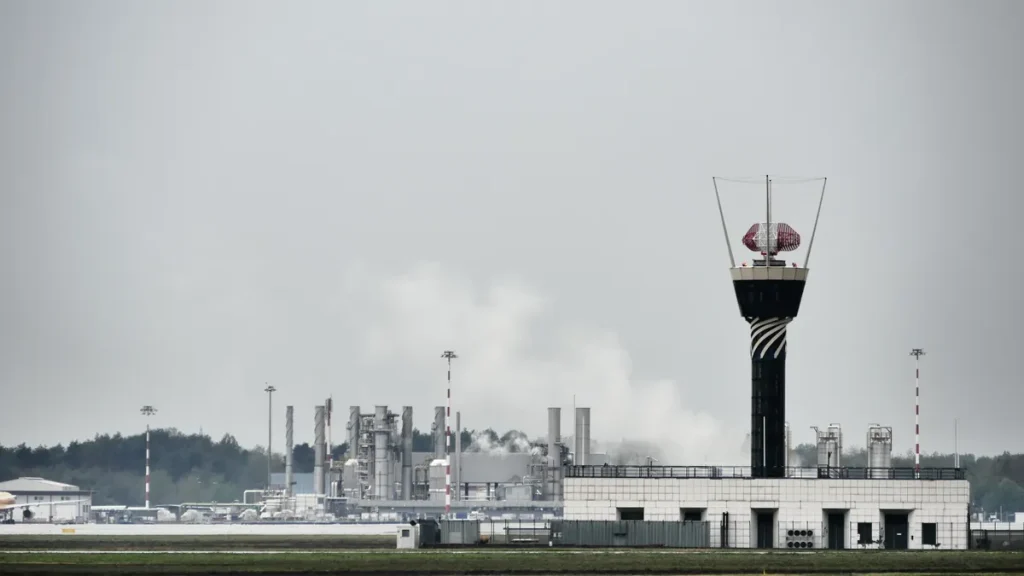

A NATS software defect outage on 8 September 2026 cancelled more than 1,000 flights by 8pm, according to The Guardian, as the air traffic control provider’s third major systems failure in just over three years exposed what airlines now openly call a structural resilience crisis at the heart of British aviation.
The disruption began at approximately 1pm and affected departing flights at Heathrow, Gatwick, Manchester, Birmingham, Edinburgh and Belfast. NATS announced a fix to its flight processing system at 4.40pm, nearly four hours after the fault emerged. British Airways cancelled or diverted more than 100 flights; Ryanair said more than 65,000 of its passengers were delayed and 50 flights cancelled. The knock-on effects spread across Europe.
What the NATS Software Defect Outage Actually Caused
An early afternoon count of at least 600 cancellations proved conservative. By 8pm, the figure had more than doubled. British Airways warned that disruption would continue through Wednesday, with free rebooking offered until Friday.
NATS’s preliminary report, published 18 September at Transport Secretary Heidi Alexander’s request, locates the root cause precisely. The fault sat in the London Area Control (LAC) centre at Swanwick, Hampshire, which handles airspace above 24,500ft across England and Wales. A manual request for a squawk code, the identification signal that lets ATC systems match an aircraft’s altitude, speed and direction to its flight plan, was interrupted mid-process by a higher-priority task. When the squawk allocation request resumed, a legacy software defect in the National Airspace System (NAS) meant the output was corrupted.
The report states: ‘Had the higher-priority request arrived even one millisecond earlier or later, the update would have completed normally.’ The entire sequence played out in a millisecond. Although the defect was confined to the LAC centre, restrictions had to be placed across the entire UK so the NAS could be restarted and flight data reloaded.
NATS CEO Martin Rolfe said in the report: ‘At no point last week was safety in question.’ He also confirmed a cyber-attack could be ruled out. A full report is due within 60 days of the incident.
A Pattern That ‘One in 15 Million’ No Longer Explains Away
The August 2023 NATS outage cost airlines £100 million and disrupted 700,000 passengers, after a flight plan containing two identically named waypoints triggered a fail-safe shutdown. NATS described that as a ‘one in 15 million’ event. A separate radar fault in July 2025 caused approximately 150 cancellations. Now a third distinct failure, from an entirely different software module, has grounded more than 1,000 flights.
Three failures, three different described causes. NATS insists each fault is unrelated to the others. That may be technically accurate and is beside the point. What the pattern reveals is a system with insufficient redundancy, insufficient testing of legacy code, and insufficient appetite for finding defects before passengers do.
The 2023 outage required an engineer who could not fix the fault remotely to spend three hours travelling to the site to intervene in person, according to Aerospace Global News. That detail alone should have prompted urgent investment in remote remediation capability. Apparently it did not.
This time, according to Airport Industry-News, the unnamed software supplier maintaining the NAS was called in for specialist support at 12:53. The supplier has since developed a permanent fix, currently undergoing testing before deployment. ‘Legacy and previously unknown defect’ is the official framing. The reasonable question is how many more legacy defects are sitting undiscovered in the NAS, waiting for their own one-millisecond trigger.
Ryanair called for Rolfe to resign. The airline’s chief operating officer, Neal McMahon, said: ‘Families travelling on holiday, people travelling for work and thousands of visitors to the UK have once again paid the price for Nats’ abhorrent failure.’ Wizz Air called NATS ‘simply not fit for purpose in its current form.’
Alexander, after meeting Rolfe, told BBC News that ‘I do not believe this issue was unavoidable’ and called for ‘tough questions about resilience of Nats systems’, including consideration of ‘consumer redress issues’. The government simultaneously confirmed it retained confidence in Rolfe, who has led NATS for 11 years. NATS is 49% government-owned, which means the government both oversees this infrastructure and is the entity that chose not to act after 2023.
In the weeks after 8 September, the Prestwick control centre, which handles roughly 42% of UK air traffic across northern England, Scotland and Northern Ireland, suffered its own technical failure. Ryanair said that second outage affected 140 of its flights and 25,000 passengers, according to BBC News.
The 60-day full report into the 8 September incident will be the moment of reckoning. If it identifies another isolated, legacy, previously unknown defect, the question for the Transport Secretary is simple: at what number of isolated incidents does a pattern become a policy failure?
