



Brent crude above $100 a barrel is back, and this time the reasons are harder to dismiss as temporary. The international benchmark topped $101 on Wednesday, rising more than 3% as the US-Iran conflict entered a new and more destructive phase: the deliberate targeting of oil tankers, a naval base, and cities in the same 48-hour window.
Brent Crude Above $100: The Supply Shock Behind the Number
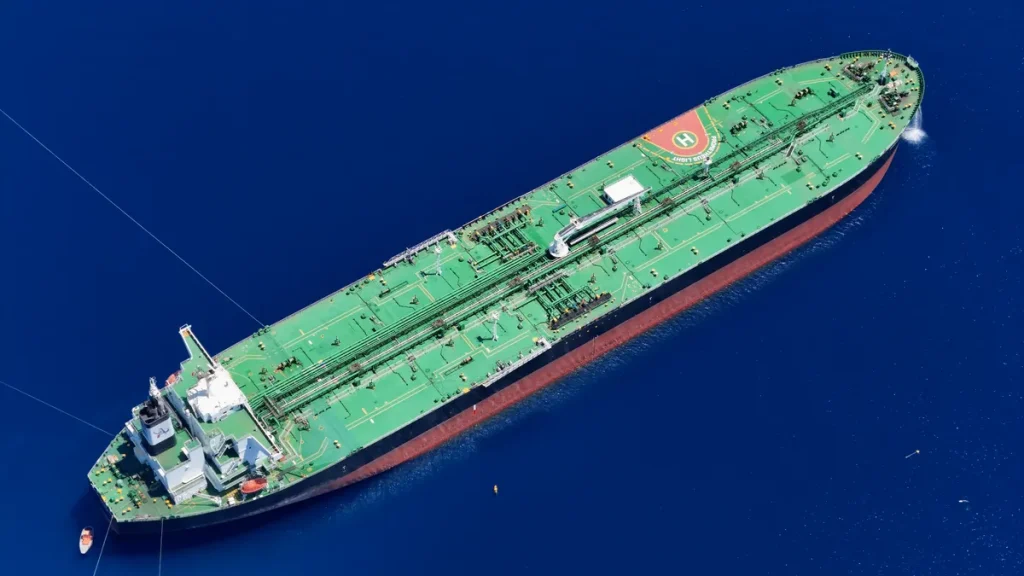
The immediate trigger was CENTCOM’s destruction of five Iranian crude tankers in the Gulf of Oman and near Kharg Island. Eastern Herald identified the vessels as M/T Kaviz, M/T Charminar, M/T Horizon 1, M/T Riesco, and M/T Derya. Crews were ordered to abandon ship before each was struck.
Kharg Island alone handles an estimated 90% of Iranian crude exports, which makes the strike on M/T Derya near that facility more than a tactical move. It is a direct threat to Iranian oil revenue at source.
US Secretary of State Marco Rubio, speaking in Colombia, was blunt. The Media Line, citing Reuters, quoted him as saying: ‘Every time Iran tries to attack US Navy ships, it will lose tankers.’ CENTCOM added that the five vessels were part of a network used to finance the IRGC and its proxies, and that the targeted US warship evaded both Iranian missile attacks with no American casualties.
Iran’s response came quickly. Its IRGC fired 20 ballistic missiles at the US military base Al-Azraq in Jordan. Anadolu Agency reported that Jordan’s air defences intercepted 18 of the 20; the remaining two landed in open areas with no casualties. The IRGC stated its attacks would continue until US aggression ends. In the same overnight period, Iran said it had attacked 10 ships, including two US vessels and eight oil tankers, in the Gulf and Strait of Hormuz, and threatened further strikes on tankers near Kuwait and Bahrain.
This is not a war that looks like it is winding down.
Petrol Pumps, Gas Bills, and the Inflation Problem Hiding in Plain Sight
The oil price trajectory since early August reflects an ongoing re-pricing of geopolitical risk. Brent has risen more than 60% this year. It peaked at $126.41 a barrel on 30 April 2026, according to Financial Times market data, before retreating as ceasefire hopes briefly took hold. The collapse of the US-Iran memorandum of understanding ended that.
Monthly average prices from the US Energy Information Administration tell the story of that round trip: Brent averaged $117.29 in April, fell to $83.76 in July as the MOU held, and has climbed back towards three figures since.
European gas markets moved sharply alongside oil. The Dutch TTF benchmark, which had already hit a 52-week high of €84.345 per megawatt-hour on 14 September, rose nearly 4% on Wednesday to €78.73 per MWh, its highest since January 2023. The British gas contract jumped 7.77p to 196.57p a therm, a level not seen since December 2022. Investing.com noted that European gas crossed €80 per MWh for the first time in more than two years on Wednesday.
For UK households, the pass-through is already visible. Petrol averaged 166.2p a litre on Tuesday, the highest in four years according to the AA. Diesel averaged 187.7p. Both have risen more than 4p since the August bank holiday. Ofgem’s energy price cap rises 4% in October; Andrew Goodwin of Oxford Economics has forecast a further 13% rise in January, with wholesale prices currently above the relevant observation window.
Bank of England governor Andrew Bailey told MPs on Tuesday that higher energy prices were pushing inflation risks upward. ‘The risks, I’m afraid, are on the upside,’ he said. ‘And that’s really the risks coming from energy prices.’
In the US, the Federal Reserve is expected to raise rates at least once more before the year is out. The energy shock is now feeding into monetary policy on both sides of the Atlantic simultaneously.
China, the world’s largest crude importer, is buying again after a summer hiatus. UBS Global Wealth Management commodity analyst Giovanni Staunovo noted: ‘Chinese crude imports recovered to nearly 9m barrels per day in August, up from the June low of 7.15m, but still lower compared to the [pre-conflict] February imports of 12.6m. It looks like the recovery trend could continue.’ That renewed Chinese demand narrows the buffer that had been keeping prices in check through the summer months.
Trading Economics models, as of 3 October 2026, place Brent at $106.60 by end of quarter. If the IRGC follows through on its threat to extend tanker attacks to Kuwaiti and Bahraini waters, that figure may look conservative well before December.
