


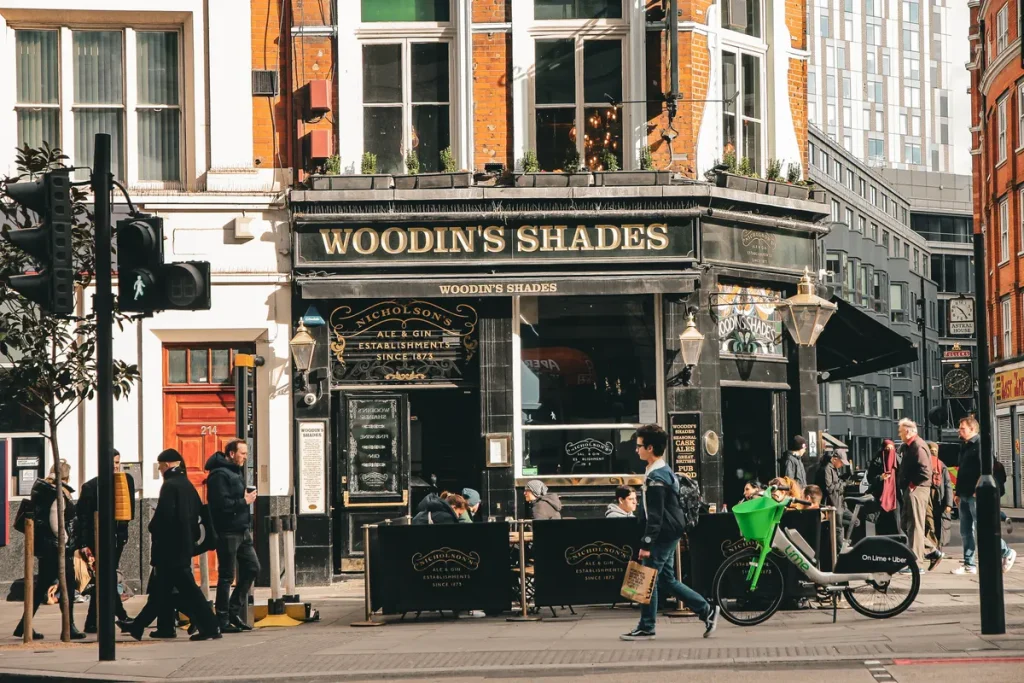

The Welsh Government has announced a Wales business rates cut of 30% for hospitality, leisure and retail venues, eclipsing the 20% reduction introduced for equivalent businesses in England and making the relief permanent rather than temporary.
First Minister Rhun ap Iorwerth confirmed the measure on 14 September 2026 during a visit to a Cardiff pub. It will replace the current temporary 15% Food and Drink Hospitality Rates Relief, with the new rate taking effect from 1 April 2027, subject to Senedd approval.
What the Wales Business Rates Cut Actually Covers
The eligible venues extend well beyond the pubs and hotels that dominate the headline. According to the Welsh Government press release, the cut applies to pubs, restaurants, cafés, bars, licensed clubs, hotels, gyms, cinemas and retail shops, all with a rateable value below £51,000.
That retail inclusion matters. Shops already benefit from a lower multiplier under the current system: Business Wales guidance confirms that for 2026-27 the retail multiplier sits at 0.350, against a standard multiplier of 0.502. The new permanent cut builds on that foundation rather than replacing it.
Regulations to implement the change will be brought forward in the autumn. Precise multiplier values for 2027-28 will be set during budget preparations, after the UK government’s own Autumn Budget.
Who Pays for It, and How
The relief is funded by a higher rate levied on the largest properties in Wales: those with a rateable value above £100,000, a category that catches some hotels alongside supermarkets and other large-footprint businesses. Finance Minister Elin Jones put the additional burden at around 1p in every £1, and ministers are insisting no local authority funding will be lost as a result.
The current temporary relief being replaced was itself capped at £110,000 per business across Wales. The new permanent scheme carries no such explicit ceiling in the Welsh Government’s announcement, though the £51,000 rateable value threshold acts as a structural limit on who qualifies.
For context on scale: the existing 15% temporary relief had been welcomed by the sector but widely regarded as insufficient. Phil Newbould, landlord of the Radyr Tap in Cardiff, welcomed the new cut but was blunt about its limits. Across two pubs, he said the saving would amount to £3,000 a year, adding that it was ‘not as huge as it sounds’.
Newbould pointed instead to the UK-wide campaign to reduce VAT for hospitality businesses, a lever controlled by Westminster rather than Cardiff Bay, and one he said would make a more material difference to running costs.
A Wider Cost Problem That Rates Relief Cannot Fix
David Chapman, director of UK Hospitality Cymru, welcomed the cut while cataloguing the pressures that remain. ‘You have massive amounts of taxation coming from all areas. We have a VAT problem besides business rates. We also have high inflation in the industry over the last few years. Energy costs have been high. Labour costs have gone up incredibly, really, with the National Insurance changes.’
He described keeping a hospitality business viable as ‘plate spinning when you’re riding an exercise bike.’ The rates cut was, in his words, ‘the beginnings of a change which I hope will permanently enable our businesses to look at growth and to look at further employment, and to start to plan ahead.’
Oliver Banks, who opened Cardiff wine bar and café Kindred five months ago, was more straightforwardly enthusiastic. He called the announcement ‘fantastic’ and said it offered ‘a little bit more wiggle room’ on food and drink costs, though he echoed the sector’s broader point: previous cost increases linked to inflation and minimum wage rises had already forced prices up, and ‘there’s only so much you can do as a business owner.’
Wales Versus England: A Deliberate Contrast
The comparison with England is one the Welsh Government is not shy about drawing. In July, Prime Minister Andy Burnham announced a 20% business rates cut for pubs, social clubs and live music venues in England, also from April 2027. Wales has now set its own rate ten percentage points higher, applied to a broader category of venues, and framed it as permanent policy rather than relief.
Ap Iorwerth said the change delivered on his government’s ‘promise to rebalance the way business rates work’ and would ‘bring more vibrancy into our high streets.’ The Senedd will need to approve the regulations this autumn before the measure can proceed.
The UK Government, for its part, noted that because business rates are devolved, its own 20% England cut generates additional Barnett formula funding for Wales, which Cardiff can allocate as it chooses.
Whether the 30% cut shifts the trajectory for Welsh high streets depends heavily on what happens to VAT, National Insurance, and energy costs: none of which sit within the Welsh Government’s powers. Senedd approval this autumn is the first hurdle. The next is whether the businesses that survive long enough to see April 2027 find the saving meaningful enough to invest, rather than simply absorb.
