


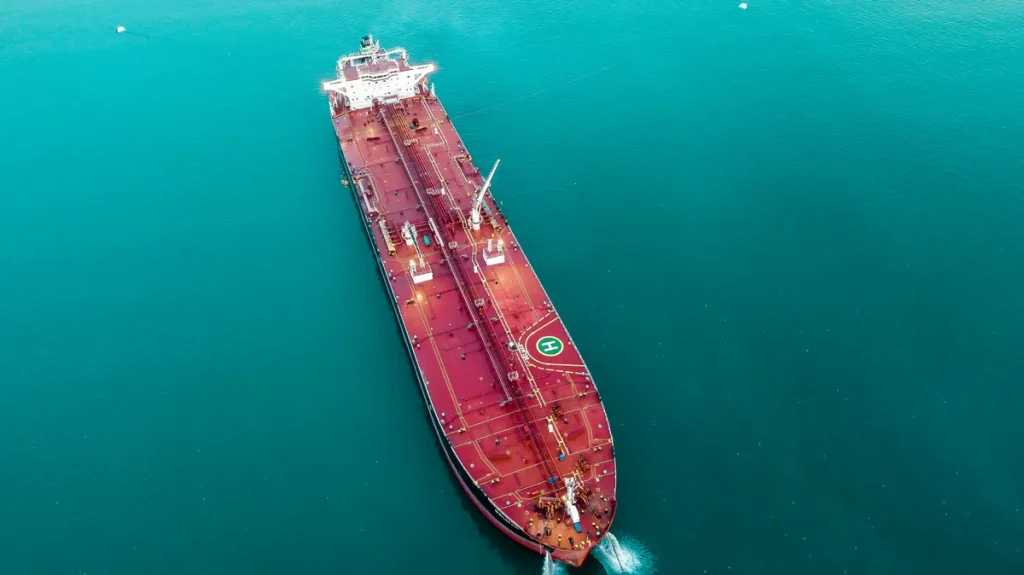

The boarding of a Russian shadow fleet tanker in the English Channel in the early hours of Sunday 15 June marks the first time the UK has led such an interdiction on its own, and the immediate aftermath suggests it rattled the vessels still moving Russian oil westward. Keir Starmer confirmed on Sunday that he had directed the operation personally.
Royal Marines and officers from the National Crime Agency boarded the crude oil tanker Smyrtos during a six-hour operation, taking control of the vessel as it attempted to sail through the Channel flying a Cameroonian flag. According to the MarineTraffic vessel database, the Smyrtos is now anchored off the Dorset coast near Weymouth, where authorities say it will be monitored for environmental and safety concerns.
What the Russian Shadow Fleet Tanker Smyrtos Actually Is
The Smyrtos (IMO 9389100) is a crude oil tanker built in 2009, measuring 243.8 metres in length with a beam of 42 metres, a gross tonnage of 58,667, and a deadweight of 106,969 tonnes. It is not a small coastal vessel.
According to the Ukraine GUR war-sanctions database, ownership and commercial management of the Smyrtos passed to Daira Shipping Ltd, registered in the Seychelles, in February 2025. The ISM manager is Crest Maritime Pte Ltd, based in Singapore. The tanker had been involved mainly since March 2025 in exporting Russian crude oil from the port of Kozmino in Russia’s Pacific region. The EU imposed sanctions on the vessel from 20 July 2025 for transporting Russian crude under irregular and high-risk shipping practices.
British authorities say the Smyrtos is one of some 700 vessels in the shadow fleet responsible for carrying 75% of Russia’s oil exports, which are subject to international sanctions. The fleet functions as a financial artery for Moscow, generating the revenue that sustains the war in Ukraine.
The UK government’s official press release states that the UK has now sanctioned almost 600 Russian shadow fleet vessels. The snippet’s figure of ‘more than 500’ is superseded by that official count. Russia’s oil and gas revenues fell 24% year-on-year in 2025, according to the Ministry of Defence.
The Operation, and What Comes Next
Forces News reported that the boarding was conducted by Royal Marines from 42 Commando, with the operation filmed by Royal Navy photographers. The Royal Navy’s official account describes it as the first UK Commando Force-led interdiction of a shadow fleet tanker in the Channel, with HMS Sutherland and HMS Ledbury on task alongside aircraft from the Maritime Air Group, a Merlin Mk4, a Wildcat, Chinooks, and an RAF P-8.
Crucially, the boarding was unopposed. According to Forces News, no Russian military vessels were present in the area. Al Carns, who resigned as armed forces minister on Thursday night, described the operation to the BBC in vivid terms: ‘While we were sleeping safely last night, there were marines and navy and air force personnel boarding helicopters, flying low level over the sea, rearing up before the ship, fast roping on to the ship, securing it, and then taking it into our territorial waters. An amazing operation, excellently prosecuted by our Royal Marines and others.’
Major General Buster Howes, a former Commandant General of the Royal Marines, endorsed the action directly: ‘Putin’s propensity to subvert the international order by a thousand cuts, he takes an inch and grabs a mile, so I think he needs to be challenged wherever we can challenge him.’
Dan Jarvis, who became defence secretary on Thursday after the resignation of John Healey, put it plainly: ‘Russia relies on its shadow fleet to fund their conflict in Ukraine and our interdiction delivers a blow to Putin’s illegal war.’
The deterrent effect appears to have registered quickly. BBC News reported that ship-tracking data showed multiple UK-sanctioned tankers altered course to avoid the English Channel after the Smyrtos boarding. A NATO official had previously told BBC Verify that the Russian warship Admiral Grigorovich had been assigned to escort sanctioned oil tankers through the Channel; on the night of the Smyrtos boarding, it was absent.
Britain also bars shadow fleet vessels linked to Russia from entering its ports and prohibits British companies from providing insurance, brokerage, or financial services to ships transporting Russian oil, according to Al Jazeera. Starmer granted the military authority to board sanctioned vessels passing through UK waters in March.
My read is that this operation was timed as much for deterrence as for the single vessel it seized. The fleet of course-diverting tankers that followed it suggests the calculus worked, at least for now. The question is whether the Russian naval escort returns, and whether that changes the conditions Carns described: ‘hitting the right parameters’ to make a boarding legally and operationally viable.
