


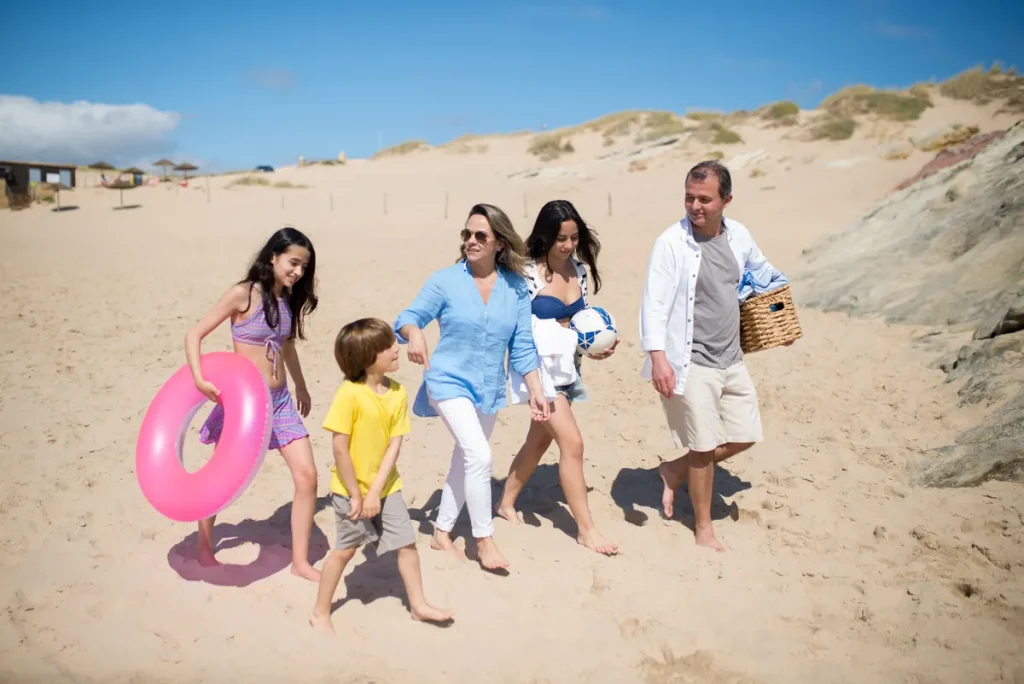

The Sheffield Family Holiday Fund marks 50 years of sending some of the city’s most vulnerable families to the seaside, and the case for what it does has never been easier to make. Founded in 1976, the charity gives families navigating illness, bereavement, domestic abuse, disability, and homelessness something that the welfare system rarely budgets for: a few days away from it all.
It is registered with the Charity Commission for England and Wales under charity number 505590, with its stated purpose being to provide holidays for disadvantaged Sheffield families referred by a welfare agent, whether that is a social worker, health visitor, doctor, or community figure. Fifty years on, the model remains essentially the same. The names of the destinations have not changed much either: Cleethorpes, Filey, Butlin’s in Skegness, and an annual pantomime trip to the Lyceum Theatre.
The Numbers Behind Sheffield Family Holiday Fund’s Half-Century
In 2025 alone, the charity supported 221 individuals across 57 families, including 113 children. Referrals came from frontline services: 22% went to young carers, 19% to families raising a child with Special Educational Needs, and 19% to those facing homelessness.
The national Family Holiday Charity, with which Sheffield Family Holiday Fund has partnered for over 20 years, reports that 62% of families it supports had never had a holiday before. Among those it helped, 93% reported an improvement in their children’s mental health. The charity’s own annual accounts go further: 80% of families supported reported improvements in wellbeing and family relationships, and 76% said they felt a renewed sense of hope.
Those are not trivial figures. They describe a population for whom a week in Skegness is not a treat but, by almost any reasonable welfare measure, an intervention.
What the Families Say
Chair David Meadows, one of 12 volunteer trustees who runs the charity, puts it plainly. ‘A holiday is not a luxury for a family in crisis; it is a proven intervention that repairs fractured relationships, boosts children’s confidence, and improves mental health.’
Meadows also points to a subtler social benefit: the return to school. ‘When teachers ask the class “what have you done over your holidays?” children can share those stories and feel really proud about what they’ve done with their peers,’ he said.
Brad and his eight-year-old daughter Skyla, who is autistic and has ADHD, were referred through the homeless charity Shelter after a relationship breakdown left him a full-time carer for both his daughter and his mother, and then a diagnosis of multiple strokes. They spent a week in Skegness for Skyla’s birthday. ‘It was just good to see my daughter smiling after all the stress we’ve had to go through,’ Brad said. Shortly after returning to South Yorkshire, the pair moved into their first permanent home.
Yemi, mother to four boys, and her husband Temitayo also travelled to Skegness through the scheme. It was the family’s first holiday, and the first time her boys had been on a train. Her youngest, Ayosubomi, was a lockdown baby who had struggled to interact with other children. ‘He came home from school and told me about how he’s been playing nicely with other children and sharing toys. His behaviour has improved so much, and I’m incredibly proud of him,’ Yemi said.
Helen Bolt, family services manager at Sheffield Young Carers, which refers families to the charity, describes the breaks as ‘transformative’. ‘They create space for positive shared memories, something many families may not otherwise have the opportunity to do. They help improve family functioning and emotional wellbeing long after the holiday ends.’
That last phrase carries weight. Sheffield Young Carers is one of several referral partners, alongside Sheffield City Council, Sheffield Shelter, and Zest. The BBC’s coverage of the anniversary traces the charity’s roots back to its 1976 founding, and the Giving is Great charity database confirms the registration details for anyone looking to refer or donate.
Fifty years of seaside trips, pantomimes, and first-time train journeys. The infrastructure of a good childhood is not complicated. The question for the next 50 years is whether statutory funding keeps pace with voluntary effort, or whether charities like this one keep doing the work the system has quietly outsourced to them.
