


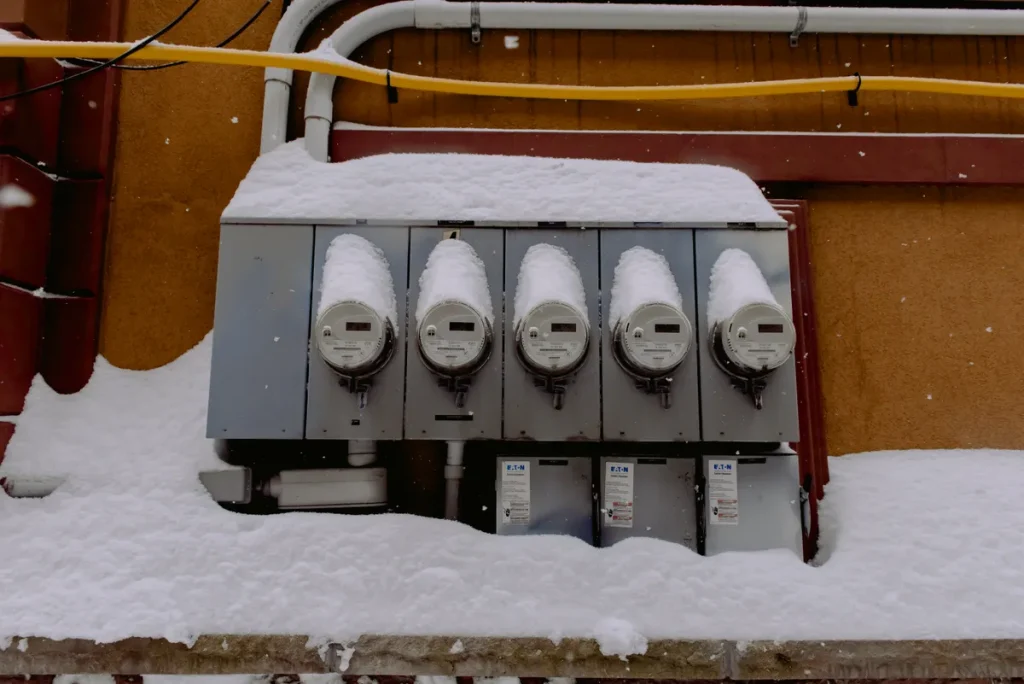

Energy bill rise fears are sharpening across some of the most deprived communities in England, as a 13.5% increase in the Ofgem price cap takes effect from 1 July, adding £221 to the average annual household bill.
At the ABD Centre in Bacup, in the Rossendale Valley, the anxiety is tangible. Jules Pritchard, who teaches an arts and crafts class to around 20 people there, did not reach for statistics to describe the mood. ‘They’re trying to survive and I think a lot of them are surviving rather than living, which is a very sad place to be,’ she said. ‘You’ve worked all your life, you shouldn’t just be surviving, you should be living comfortably and the way the world is at the moment, that’s not happening.’
Alison Grant, 61, from Weir, put it more simply. ‘I don’t know where the money will come from,’ she said. ‘I have a meter and a smart meter, but you might as well call it an anxiety meter. You’re watching it constantly to see how much is on the meter until your next payday.’
Energy Bill Rise Fears Hit Hardest in Deprived Communities
Bacup has the highest levels of deprivation in the Rossendale Valley, according to the English Indices of Deprivation 2025. The picture across Lancashire County Council‘s area is one of concentrated disadvantage: 14.5% of neighbourhoods in Lancashire fall within the most deprived 10% of all neighbourhoods in England, and on the measure of local concentration of deprivation the county ranks 35th out of 153 upper-tier local authorities, according to GOV.UK’s English Indices of Deprivation 2025 statistical release.
Into that context, the July cap lands heavily. The headline figure of £1,862 per year, cited by Ofgem as its benchmark, applies to customers paying by Direct Debit in England, Scotland and Wales using a typical amount of gas and electricity. Those on standard credit will face a higher annual bill of £2,005, up 13% from £1,772, while prepayment customers, disproportionately represented in lower-income areas, will pay £1,812, up 13% from £1,597, according to BBC News.
Prepayment meters are common in areas like Bacup precisely because landlords and tenants default to them when credit histories are thin. The people watching their meters most anxiously are paying the highest rates for the privilege.
The July rise is not an isolated shock. Bills are now 79% higher than they were before the energy crisis began in winter 2020/21. The proximate cause of the latest increase is higher wholesale costs feeding through to suppliers, with the conflict in Iran adding pressure to global energy markets and complicating the Bank of England’s inflation targets.
The Cost of Living Squeeze Shows No Sign of Easing
Energy bills are one front in a broader battle. Towards the end of May 2026, 66% of households in Great Britain reported their cost of living had increased in the previous month, the highest share since late 2022, according to Statista, citing ONS survey data. The most commonly reported pressures: food shopping, fuel, and gas and electricity bills.
‘My food’s gone up, the petrol for my car to get me to work,’ Alison said. ‘It’s relentless.’ June Divine, who runs a weekly luncheon at which people can eat at cost price, framed it more bluntly: ‘Whoever you are your shopping bill has gone up. Everything has just rocketed.’
Pritchard’s concern is primarily for the elderly. ‘It will affect a lot of people in Bacup, particularly the elderly,’ she said. The energy bill rise fears she witnesses each week in that arts and crafts class are not abstract. They are people in their sixties and seventies recalculating whether they can afford to heat their homes through the summer, let alone next winter.
A government representative pointed to measures including removing £150 of costs from energy bills for the years ahead, extending the Warm Home Discount to around six million households, freezing fuel duty and rail fares, increasing the minimum wage, and cutting VAT on family activities and children’s meals. ‘Tackling the affordability crisis is its number one priority,’ the representative said.
That may well be true as a political statement. Whether it is true as an experienced reality in Bacup is a different question, and the answer will come with the first bills of autumn.
