


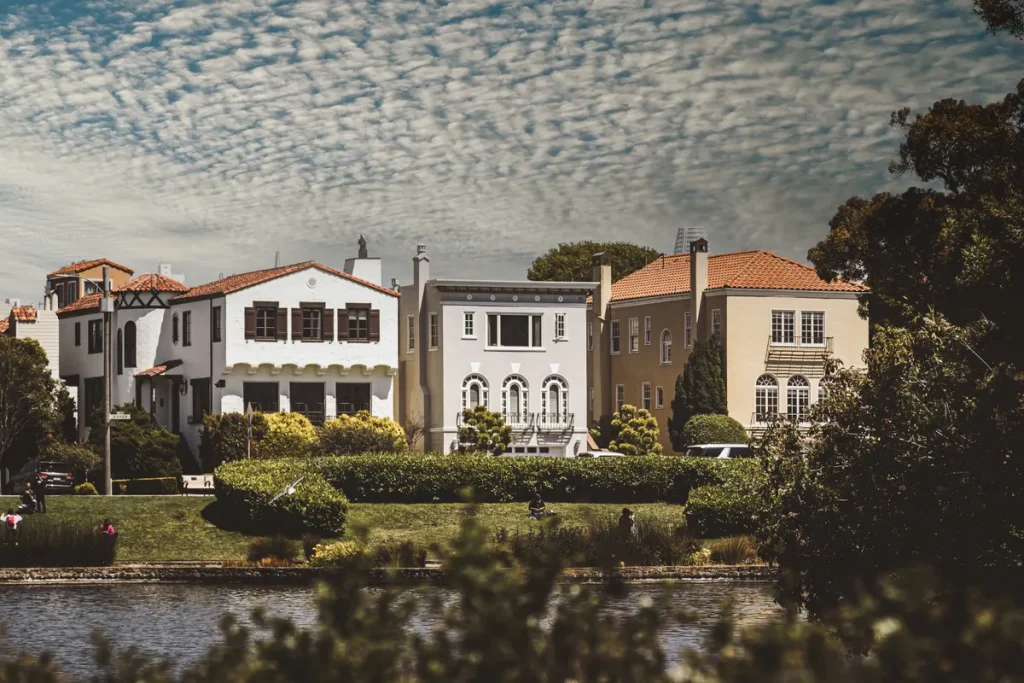

San Francisco house prices have reached levels that would have seemed implausible even three years ago, and the force behind them is increasingly difficult to ignore: the extraordinary personal wealth being minted by employees of OpenAI and Anthropic, the two AI giants that have made the city their home.
The median sale price in San Francisco hit $1.76 million in May 2026, according to Redfin’s San Francisco County data, which also shows a three-month median of $1.8 million for the period ending that month. The national figure, by comparison, was $398,771 in May, per Redfin’s US housing market tracker. That gap (a city median more than four times the national one) tells you most of what you need to know about the scale of the distortion underway.
Prices rose 19% year-on-year in March, then 14.5% in April and 14.1% in May. The luxury end is running even hotter: the luxury market median sale price reached $6,808,561 in early 2026, the highest for that time of year, with luxury sales up 22%, according to a BusinessWire report. The median days on market across all property types is now approximately 14 days, and San Francisco ranked second nationally for the fewest listings with a price reduction as of early May, according to Haven Group SF citing Redfin data. Sellers are not budging because they do not need to.
How AI Share Sales Flooded the Market With Cash
The mechanism is not mysterious. In October 2025, more than 600 current and former OpenAI employees sold combined shares worth $6.6 billion in a secondary tender offer conducted at a valuation of approximately $500 billion, according to CNBC. A separate figure of $400 billion was cited by some outlets, but CNBC’s reporting is preferred here. OpenAI had authorised up to $10.3 billion in shares for that sale, an increase from an original $6 billion target, though only around two-thirds changed hands.
The average payout across participants was $11 million. More striking still: more than 75 employees cashed out the maximum permitted amount of $30 million each, a cap that had been tripled from a previous limit of $10 million after OpenAI acknowledged that ceiling had frustrated top researchers and engineers eligible to sell more, according to Yahoo Finance citing the Wall Street Journal.
At Anthropic, the picture is similar. The company launched an employee share sale in February 2026, with between $5 billion and $6 billion lined up for eligible staff, with shares priced at a valuation of approximately $350 billion, matching the level of the company’s most recent fundraising round, according to Bloomberg. The tender wrapped up in early April 2026 at that same $350 billion pre-money valuation, per Sahm Capital.
That is, in rough terms, more than $12 billion distributed between two companies’ employee bases, much of it concentrated in one city, over roughly six months. The San Francisco property market is not large enough to absorb that without consequence.
San Francisco House Prices and the People They Leave Behind
‘They are just astronomical,’ Daryl Fairweather, chief economist at Redfin, told the BBC. ‘People are flush with cash and ready to buy.’ She points to the steep jump in luxury zip code prices across the wider Bay Area since OpenAI launched ChatGPT in late 2022, a trend absent in cities with less AI wealth concentration.
The personal consequences are already visible. One family with school-aged children managed to buy in the desirable neighbourhood where they had rented for years, but only after one parent sold OpenAI shares in October. They describe feeling ‘conflicted and self-conscious’ about how AI money made it possible. Another family, deriving no income from tech, had to move to a suburban Bay Area town to the north. ‘We wouldn’t have left if we could have afforded to stay,’ the mother said.
The Duboce Triangle apartment that was accepting AI stock in lieu of cash sold for $3.2 million, $200,000 above asking. Whether the deal ultimately involved shares in OpenAI or Anthropic was not disclosed.
Enrico Moretti, a professor of economics at the University of California, Berkeley, argues it is still ‘very early’ in the AI boom. He notes that population and employment levels remain below pre-pandemic peaks, and that the lion’s share of wealth from any future stock market flotations will go to investors rather than employees, distributed globally. There are structural counterweights too: large tech layoffs elsewhere, and an AI industry gradually shifting from high-premium innovation to more commoditised execution.
Those forces may eventually cool the market. But with full IPOs from both OpenAI and Anthropic widely expected later this year or in 2025, the next wave of employee liquidity events is already on the horizon. Today’s bidding wars may yet look like bargains.
