




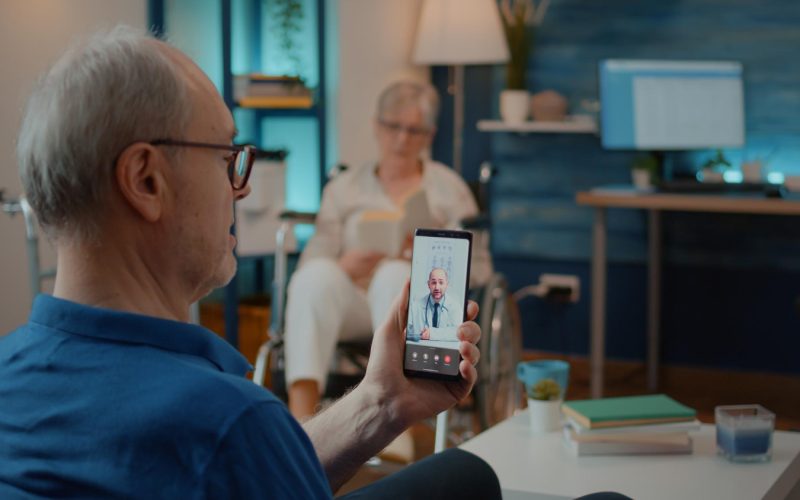

Patients have become remarkably accustomed to receiving care with just a few phone taps in recent years. Online prescription reviews, smartwatch-based vitals sharing, and same-day consultation scheduling have all become routine routines. This approach has demonstrated exceptional efficacy for both chronic and preventative care by fusing convenience with medical precision.
Providers can now identify problems before they become more serious by using remote tools like virtual blood pressure cuffs and continuous glucose monitors. Readmissions to hospitals are greatly decreased by this proactive approach, especially for patients with diabetes or hypertension. This change, which replaced tense commutes with empowering digital check-ins, has been especially helpful for many.
| Element | Description |
|---|---|
| Definition | A blended model combining in-person care with digital health tools |
| Core Components | Telehealth visits, remote patient monitoring, AI-powered communication |
| Strategic Benefits | Enhances patient engagement, access, and proactive healthcare delivery |
| Common Technologies | Wearables, secure messaging apps, real-time vitals sharing tools |
| Healthcare Institutions | LifeBridge Health, Elevance Health, Sheba Medical Center |
| Emerging Concerns | Trust building, data security, emotional connection gaps in virtual care |
| Source Reference | www.lifebridgehealth.org/blogs/how-hybrid-care-is-transforming |
However, trust is still a delicate issue. Using a screen to establish rapport can feel a little flat. Certain nuances vanish in the absence of a handshake and nonverbal clues like posture or tone changes. The doctor’s empathy during a virtual consultation I watched was genuine, but there were a few blunders in the conversation due to the video delay. It served as a reminder that connections, no matter how digital, still yearn for physical presence.
Some systems have responded by purposefully switching up visit formats through strategic scheduling. Following a virtual intake, there may be a hands-on follow-up before returning to digital updates. This rhythm maintains efficiency while preserving intimacy. This hybrid loop has significantly increased patient satisfaction and provider responsiveness at LifeBridge Health.
Hybrid systems have become extremely effective at providing individualized care by utilizing structured follow-ups and AI-assisted triage. Through safe apps, patients can record their symptoms, allowing their doctors to respond promptly. This approach is especially novel since it combines algorithmic insight with empathy to identify early warning indicators.
Hybrid models also benefit doctors when it comes to burnout. Many now combine home-based telehealth shifts with in-clinic hours. In addition to increasing their capacity, this flexibility has revitalized their interactions with patients. Internal medicine teams at Sheba Medical Center, for instance, oversee “virtual beds,” keeping an eye on patients while they recuperate at home. This arrangement is surprisingly cost-effective for healthcare systems.
These techniques became crucial during the pandemic. However, they have assimilated into contemporary care practices rather than fading after the crisis. These days, people anticipate quick communication, flexible scheduling, and a sense of continuity that reflects their own messaging preferences.
I spoke with a diabetic patient who explained that her weekly check-ins felt more like chats than appointments. It greatly increased her confidence in handling insulin adjustments to have direct text access to her doctor. Her experience resonated with other case studies; she felt more in control after receiving hybrid care.
Health teams can spot behavioral patterns and modify treatment before symptoms worsen by incorporating real-time analytics. As part of Elevance Health’s strategy, wearable data is used to identify sleep irregularities and direct mental health interventions. Compared to conventional clinic-bound diagnostics, these customized responses are substantially quicker.
Despite its potential, the model has flaws. Elderly patients frequently require assistance using various platforms. Some people miss the physical comfort of having a face-to-face consultation with their doctor. Furthermore, privacy concerns are still valid, particularly when it comes to third-party tech integrations.
These difficulties are, nevertheless, being actively tackled. Clearer data-sharing protocols, training sessions for senior citizens, and virtual empathy coaching for clinicians are becoming more popular. The emphasis is still very much on making sure that digital doesn’t lessen human.
Hybrid wellness care is anticipated to grow even more in the upcoming years, becoming the norm rather than a specialty. The distinction between virtual and physical care will become increasingly hazy as platforms become more user-friendly and infrastructure more reliable.
Doctor-patient relationships are being strengthened and maintained as a result of this evolution. There is now more room for meaningful engagement thanks to the combination of accessibility, frequency, and convenience. Patients feel regularly heard instead of having to wait months between hurried visits. Additionally, doctors can support more lives with more care because they have access to better tools and data.
Not only is hybrid wellness care changing our relationship with medicine, but it’s also redefining how we establish trust, promote communication, and maintain harmony.
Once a representation of conventional care, the waiting room is slowly disappearing from the public consciousness. Care increasingly starts with a ring tone rather than a receptionist. Relationships between doctors and patients are gradually changing as a result of hybrid wellness care, which combines online consultations with in-person assistance.
Patients have become remarkably accustomed to receiving care with just a few phone taps in recent years. Online prescription reviews, smartwatch-based vitals sharing, and same-day consultation scheduling have all become routine routines. This approach has demonstrated exceptional efficacy for both chronic and preventative care by fusing convenience with medical precision.
Providers can now identify problems before they become more serious by using remote tools like virtual blood pressure cuffs and continuous glucose monitors. Readmissions to hospitals are greatly decreased by this proactive approach, especially for patients with diabetes or hypertension. This change, which replaced tense commutes with empowering digital check-ins, has been especially helpful for many.
However, trust is still a delicate issue. Using a screen to establish rapport can feel a little flat. Certain nuances vanish in the absence of a handshake and nonverbal clues like posture or tone changes. The doctor’s empathy during a virtual consultation I watched was genuine, but there were a few blunders in the conversation due to the video delay. It served as a reminder that connections, no matter how digital, still yearn for physical presence.
Some systems have responded by purposefully switching up visit formats through strategic scheduling. Following a virtual intake, there may be a hands-on follow-up before returning to digital updates. This rhythm maintains efficiency while preserving intimacy. This hybrid loop has significantly increased patient satisfaction and provider responsiveness at LifeBridge Health.
Hybrid systems have become extremely effective at providing individualized care by utilizing structured follow-ups and AI-assisted triage. Through safe apps, patients can record their symptoms, allowing their doctors to respond promptly. This approach is especially novel since it combines algorithmic insight with empathy to identify early warning indicators.
Hybrid models also benefit doctors when it comes to burnout. Many now combine home-based telehealth shifts with in-clinic hours. In addition to increasing their capacity, this flexibility has revitalized their interactions with patients. Internal medicine teams at Sheba Medical Center, for instance, oversee “virtual beds,” keeping an eye on patients while they recuperate at home. This arrangement is surprisingly cost-effective for healthcare systems.
These techniques became crucial during the pandemic. However, they have assimilated into contemporary care practices rather than fading after the crisis. These days, people anticipate quick communication, flexible scheduling, and a sense of continuity that reflects their own messaging preferences.
I spoke with a diabetic patient who explained that her weekly check-ins felt more like chats than appointments. It greatly increased her confidence in handling insulin adjustments to have direct text access to her doctor. Her experience resonated with other case studies; she felt more in control after receiving hybrid care.
Health teams can spot behavioral patterns and modify treatment before symptoms worsen by incorporating real-time analytics. As part of Elevance Health’s strategy, wearable data is used to identify sleep irregularities and direct mental health interventions. Compared to conventional clinic-bound diagnostics, these customized responses are substantially quicker.
Despite its potential, the model has flaws. Elderly patients frequently require assistance using various platforms. Some people miss the physical comfort of having a face-to-face consultation with their doctor. Furthermore, privacy concerns are still valid, particularly when it comes to third-party tech integrations.
These difficulties are, nevertheless, being actively tackled. Clearer data-sharing protocols, training sessions for senior citizens, and virtual empathy coaching for clinicians are becoming more popular. The emphasis is still very much on making sure that digital doesn’t lessen human.
Hybrid wellness care is anticipated to grow even more in the upcoming years, becoming the norm rather than a specialty. The distinction between virtual and physical care will become increasingly hazy as platforms become more user-friendly and infrastructure more reliable.
Doctor-patient relationships are being strengthened and maintained as a result of this evolution. There is now more room for meaningful engagement thanks to the combination of accessibility, frequency, and convenience. Patients feel regularly heard instead of having to wait months between hurried visits. Additionally, doctors can support more lives with more care because they have access to better tools and data.
Not only is hybrid wellness care changing our relationship with medicine, but it’s also redefining how we establish trust, promote communication, and maintain harmony.