


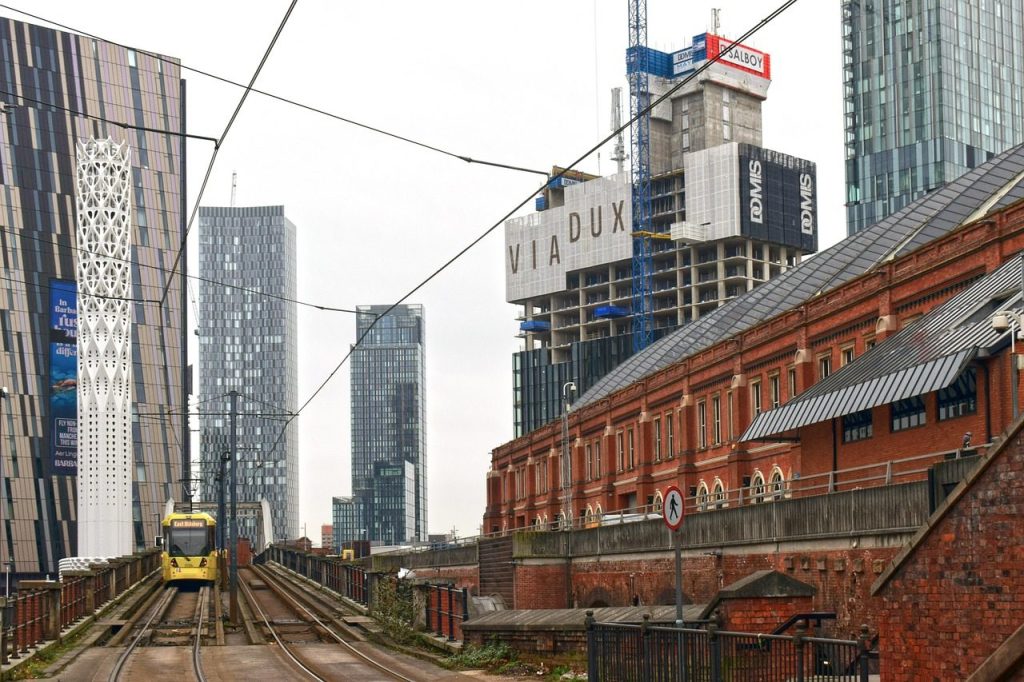

Contributed content: this article was written by a third-party contributor and does not necessarily reflect the views of Columnist24. Editorial and Advertising Policy
Ask almost anyone in later life where they want to live as they get older and the answer is the same: at home. Not in a care home, not in a flat they’ve never seen, but in the house they know, on the street they know, near the people they know. Greater Manchester has made that ambition official. Its Age-Friendly Strategy, published in March 2024 and running to 2034, sets out a decade-long plan to make the city-region a good place to grow old as well as grow up.
The difficulty is that a lot of Greater Manchester’s homes were never designed with growing old in mind. Many were built more than a century ago for working families, with steep, narrow staircases, an upstairs-only bathroom and very little room to adapt. As the population ages, that mismatch between the people and the buildings they live in is becoming one of the quieter pressures on health, care and family life across the region.
An ageing city-region
Greater Manchester’s own housing framework for older people, published by the Combined Authority, puts the number of residents aged over 65 at around 454,000. The fastest growth is among the older old: the number of people aged 75 to 84 is projected to rise by more than 57% between 2018 and 2043. The number of over-65s living on their own is expected to climb by around a third by 2035, and almost one in three older residents is expected to have a long-term illness that limits their day-to-day activities a lot.
Put those numbers together and the picture is clear. More people are living longer, more of them are living alone, and more of them are managing health conditions that make everyday movement around the home harder than it used to be.
Homes built for a different era
Housing in the North of England is older than in most of the country. Research published in 2024 by the University of Liverpool’s Heseltine Institute, drawing on earlier work by the Smith Institute, notes that around 24% of homes in the North were built before 1919. In Greater Manchester, that legacy is visible on almost every street: rows of Victorian and Edwardian terraces in places like Levenshulme, Gorton, Moss Side, Rochdale, Oldham and Salford, alongside interwar semis and post-war council housing.
These are homes with a lot of character, and a lot of steps. Stairs in older terraces are frequently steeper and narrower than anything built today, often with a tight turn at the top or bottom and a single bathroom upstairs. Condition is a problem too: the same Heseltine Institute research cites estimates that around a quarter of private rented homes in Greater Manchester are classed as non-decent, and the Combined Authority’s own framework notes that more than half of homes in need of improvement nationally are headed by someone over 55.
None of this matters much at 40. At 80, with arthritic knees, a heart condition or the after-effects of a fall, a steep staircase can turn half of a much-loved home into somewhere that feels out of reach.
What happens when the stairs win
When climbing the stairs becomes hard, people rarely announce it. They adapt quietly. A bed comes downstairs into the front room. Washing happens at the kitchen sink. The bedroom, the bathroom and the spare room full of family photos gradually stop being used. It can feel like a sensible compromise, but it tends to lead to less movement, weaker muscles, worse sleep and more isolation, all of which raise the risk of a fall somewhere else in the house.
For families, the first sign is often small: a parent who has stopped going upstairs to change, a hesitation on the top step, or a phone call after a near miss. The decisions that follow, about moving, care, or adapting the home, are far easier to make calmly before a fall than in a hospital corridor after one.
Adapting the home you already have
The good news is that a great many Greater Manchester homes can be adapted far more easily than people assume, and staying put is often the right answer.
The starting point is usually an occupational therapist assessment, arranged through the local council’s adult social care team or a GP. An OT can look at how someone actually moves around their home and recommend changes, from grab rails and better lighting to a level-access shower or a stairlift. For those who qualify after a means test, the council’s Disabled Facilities Grant can help with the cost of larger adaptations.
Tenure matters here too. According to the Combined Authority’s framework, 42.4% of homes occupied by over-65s in the city of Manchester are socially rented, more than double the national figure of 19.8%. For council and housing association tenants, the landlord is usually the first port of call for adaptations, and it’s worth raising the question early rather than waiting until a crisis.
For homeowners, or for anyone facing a long wait for an assessment, arranging a stairlift privately is often the quickest route. The common worry is that older, narrower staircases can’t take one. In practice, many of the straight flights found in Victorian terraces and interwar semis are well suited to a standard straight stairlift, and modern designs typically fold away to leave the stairs usable for everyone else in the house. A home survey is the only reliable way to know for sure, which is why it makes sense to talk to a local installer covering stairlifts manchester homes who can look at the actual staircase, measure it properly and give an honest view of what will work.
Small changes that help straight away
Not every home needs a major adaptation to become safer. A few low-cost changes make a real difference:
- Brighter bulbs on the stairs and landing, with a light switch at both the top and bottom.
- A firm handrail on both sides of the staircase, running the full length of the flight.
- Stairs kept completely clear of post, laundry and shoes.
- Worn or loose stair carpet fixed or replaced.
- Night lights on the route between the bedroom and the bathroom.
- A medication review with a GP or pharmacist for anyone feeling dizzy or unsteady.
Making age-friendly mean something at home
Greater Manchester’s ambition to be an age-friendly city-region is a good one, and much of the work behind it rightly focuses on neighbourhoods, transport, public spaces and services. But for most older people, the most important place in that picture is their own front door, and the staircase just behind it.
Helping people stay safely in homes built for a different century isn’t glamorous work. It’s handrails, lighting, honest conversations within families, and the right adaptation at the right time. Done early, it means more people living independently for longer in the places they’ve chosen, which is exactly what an age-friendly city should be aiming for.
