


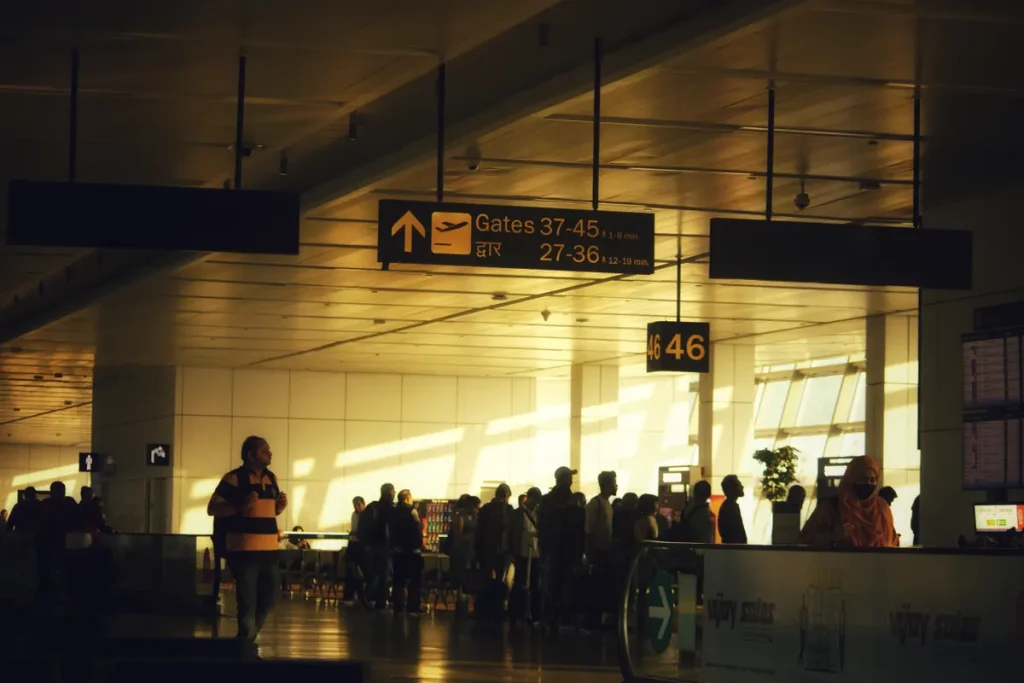

The EU EES border checks that Brussels promised would modernise Schengen travel have instead produced a summer of fingerprint failures, phantom overstays, and queues stretching up to five hours.
The Entry/Exit System launched its progressive rollout on 12 October 2025 and became fully operational at all Schengen external borders on 10 April 2026, according to the European Commission’s Migration and Home Affairs page. It requires non-EU citizens to be photographed and fingerprinted at every arrival and departure from the Schengen zone, building a digital record of their 90-in-180-day allowance.
Getting here took the best part of a decade. The European Parliament’s legislative tracker shows EES was originally expected to launch in 2020, before being pushed back repeatedly; a 2023 target also slipped. The system that finally arrived was, by many accounts, nowhere near ready.
‘It’s pretty shambolic, and I think people missing their flights because of it is just not acceptable, especially when there’s no recourse; it’s not your fault.’ That was Nadia, a solicitor from Greater Manchester, describing her July experience at Frankfurt airport, where queues ran so long that border staff abandoned fingerprinting altogether.
She is not alone, and neither are the passengers. Europe’s leading aviation bodies sent an open letter to Commission President Ursula von der Leyen warning that the EU EES border checks are causing waiting times of up to five hours during peak periods, urging the Commission to allow complete temporary suspension of the system whenever passenger volumes exceed border control capacity, according to International Airport Review.
Brussels said no. The Commission told travel industry representatives that a full suspension was ‘not needed’ and ‘not possible’, a position communicated roughly one week before the peak summer holiday season, according to ETIAS.com.
What the EU EES Border Checks Actually Do to Your Travel Record
The numbers convey the scale of the undertaking. Since the gradual rollout began in October 2025, EES has recorded around 110 million border crossings and prevented more than 44,000 people from entering the Schengen area, mainly because they lacked correct documents, according to TravelPirates. European airports were expecting roughly 40 million more passengers in July and August than they handled in the two preceding months: a surge the system was always going to struggle to absorb.
When it does struggle, the errors it leaves behind are not trivial. Martin Farrall, a 67-year-old retired professor from Warwickshire, exited Schengen via Dunkirk-Dover on 30 June, 55 days after entry. His exit was never registered. He watched his remaining allowance drain to zero before the system eventually corrected itself weeks later, leaving him with 34 days and his wife, inexplicably, with 90. ‘I wonder how many other people who were waved through because of the hold-ups may also be in the same position,’ he said.
The EU’s official EES FAQ states that once registered, travellers should not need to re-enter biometric data at each crossing. The experience on the ground has been different. Ed Griffiths, a 67-year-old retired IT specialist from Buckinghamshire, was registered in Prague last September and again in Milan in March. Each time, the system ignored his previous record.
The Opt-Out That Expires in September
Border police have had one release valve: an opt-out allowing them to relax requirements when queues become unmanageable. Nine EU countries asked Brussels to extend it. The Commission declined, according to Wego. That opt-out expires on 6 September 2026.
After that date, there is no formal mechanism for border police to step around a system the industry considers unfit for purpose. Travellers with older or drier skin have found fingerprint scanners refuse to register their prints. Visually impaired passengers cannot always follow the machine’s instructions. Long-stay visa holders are routinely misdirected into tourist queues.
The biometric data collected is not ephemeral, either. The Yale University International Toolkit notes that EES data is stored for three years after a traveller’s last entry or exit, extended to five years for anyone recorded as an overstayer. Refusing to provide biometric data results in denied entry.
My read is that this was a system launched to a political timetable, not an operational one. Brussels has run out of get-out clauses after 6 September. What happens when the queues hit five hours again and there is no opt-out left will be the real test of whether the Commission’s confidence was ever warranted.
