


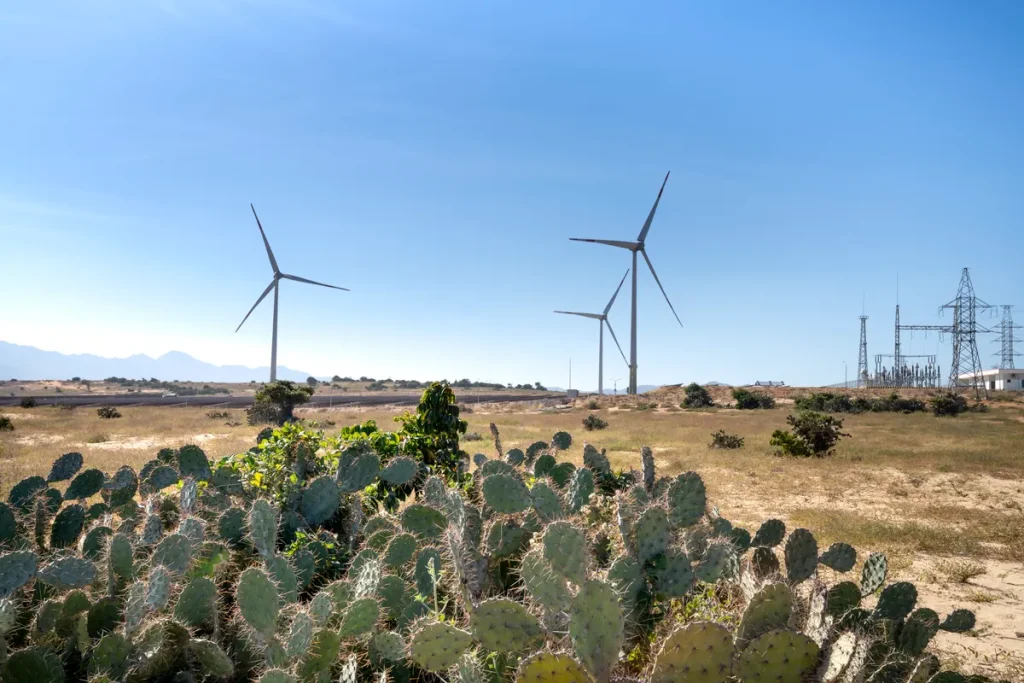

The Iran-linked UK power plant attack that shut down a small British energy generator for four days last month is being treated in some quarters as a minor incident. It should not be.
A spokesperson for the Department for Energy Security and Net Zero confirmed the basics: ‘This story refers to an incident impacting a small-scale energy generator, and at no point was there a risk to the wider energy system. The UK has a highly resilient energy system. We work closely with the energy sector to protect infrastructure and ensure the highest security standards.’
True, as far as it goes. But the framing understates the problem considerably.
What the Iran-Linked UK Power Plant Attack Actually Revealed
According to ComplianceHub analysis of the NIS Regulations threshold, this appears to be the first successful attack of its kind to take UK energy generation offline. That detail matters, regardless of scale. And the attribution, it should be said, rests on press reporting rather than any formal government or National Cyber Security Centre (NCSC) statement. Neither body has publicly named Iran or any specific threat group.
What we do know is that the Department for Energy Security and Net Zero briefed energy company chief executives in the days following the initial reports, and wrote to companies advising them on next steps. It is also updating its cybersecurity regulations as a result. That is not the behaviour of a government that regards this as trivial.
Energy Minister Michael Shanks said the government and industry were taking the incident seriously and working with regulators and the NCSC to assess the threat. The government briefed industry executives on protective measures the Monday after the story broke, according to Industrial Cyber.
The BBC reports that the UK grid depends on a number of smaller gas generators to provide short-term power when needed. A new energy resilience strategy is expected later this year. The generator that went down for four days was one of those.
The Geopolitical Context Is Not Reassuring
The timing is not incidental. The UK has allowed the US to launch so-called defensive operations against Iran from British bases since the start of the war, while declining to participate in offensive strikes. Andy Burnham, who took over as prime minister, was notified last week that the agreement with Washington is being extended. Iran’s Islamic Revolutionary Guard Corps (IRGC) warned last month that ‘any base used for aggression against Iranian territory constitutes a legitimate target for our forces.’
The NCSC Annual Review 2025 assessed that throughout early 2025, Iran highly likely concentrated its cyber operations in support of its military and wider geopolitical objectives, and that this threat highly likely extends to UK entities. The NCSC’s separate alert to UK organisations states that Iranian state actors ‘almost certainly currently maintain at least some capability to conduct cyber activity,’ and advises readiness against distributed denial-of-service attacks, phishing, and industrial control system targeting.
On 7 April 2026, updated 22 July 2026, the US Cybersecurity and Infrastructure Security Agency (CISA) joined the FBI, NSA, the Environmental Protection Agency, the Department of Energy, US Cyber Command, and the Treasury in issuing advisory AA26-097A, warning that Iranian-affiliated actors are actively exploiting internet-facing programmable logic controllers across critical infrastructure sectors including energy. Operational disruption and financial loss at multiple victim organisations were confirmed.
The group known as CyberAv3ngers, which US agencies allege compromised at least 75 devices across multiple infrastructure sectors in 2023, is part of this picture. In December 2025, leaked internal records reportedly confirmed direct infrastructure overlap between CyberAv3ngers and the Moses Staff operation, formally connecting what had been treated as separate Iranian cyber personas into a single coordinated effort directed by the state, according to NCSC guidance on Iran-linked hacktivist risk.
Conservative energy spokesperson Claire Coutinho called the incident ‘a new kind of warfare’, arguing that Britain needed to prioritise ‘cheap, reliable energy’ and that ‘the world is getting more dangerous, which is why we need to prioritise our energy security.’ Whatever one thinks of the opposition’s broader energy agenda, the framing is not wrong.
My read is this: a government that is extending its basing agreement with the United States while Iran’s military designates those bases as legitimate targets should not be surprised when the retaliation finds a softer vector. The question is whether the new energy resilience strategy, expected before the year is out, will close the regulatory gap that left a generator offline for four days before anyone with formal oversight responsibilities knew about it.
