


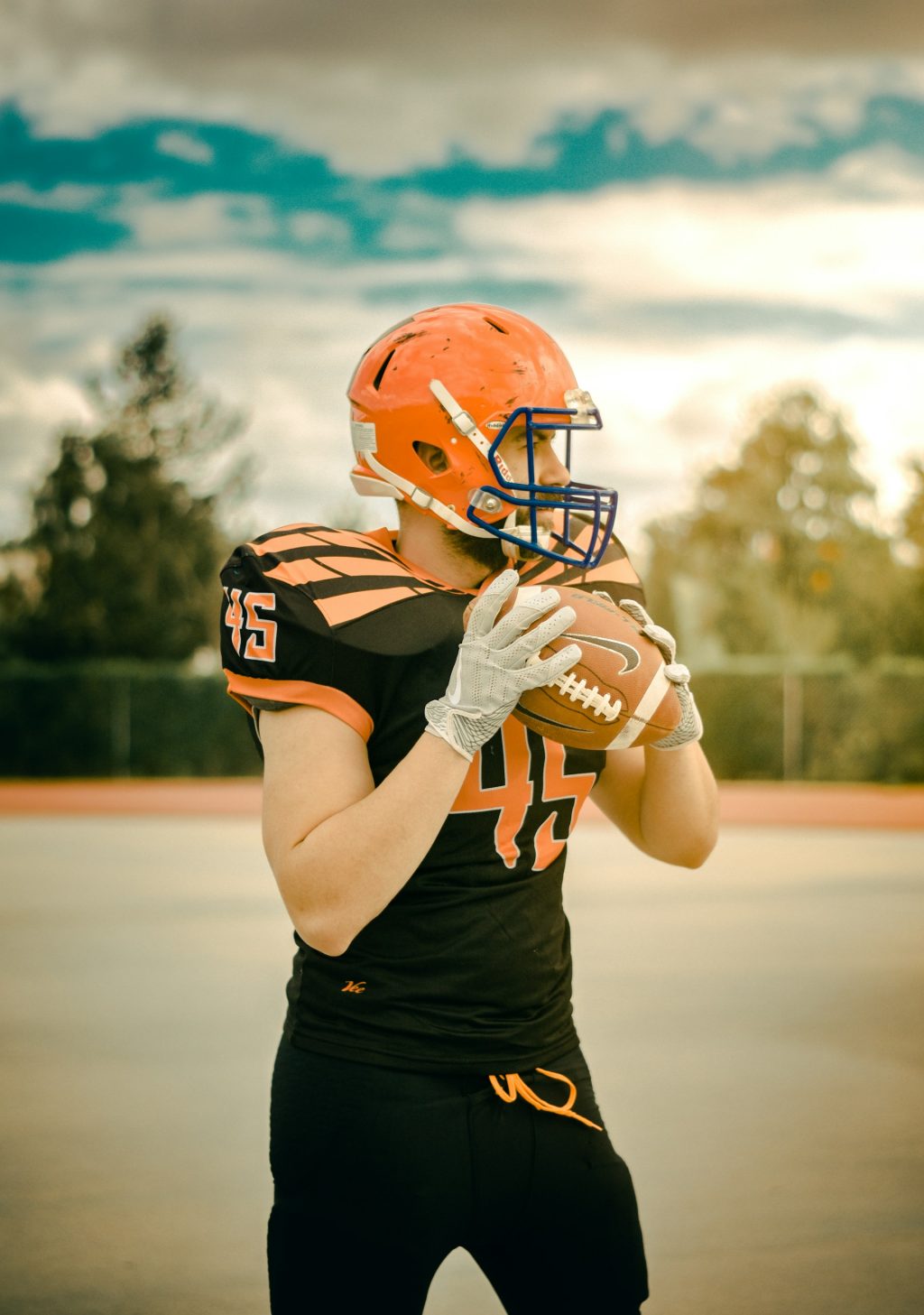

As a volunteer youth football coach, Jeffrey Kallister emphasizes the importance of fundamental skills. One of the keys to success on the gridiron is simply catching the ball when it heads in one’s direction. This is not as simple as it seems. After all, quite often, an offensive player runs at full speed, trying to break free from a defender while anticipating where the ball will be thrown.
One vital element in catching is ensuring proper alignment. The shoulders should be square, and the receiver should face the quarterback as much as possible. When the ball is in the air after the quarterback passes it, the receiver tracks its trajectory and works to align the body so that it’s directly in the path of the oncoming projectile. Proper alignment not only puts the receiver at a spot to meet the ball but allows for the absorption of impact.
It’s also essential to keep the eyes open and focused on the ball at all times when it’s in the air. It’s natural to allow the gaze to wander when a defender is in close pursuit, but timing is everything in hauling in a pass on the run. With eyes on the ball, the receiver is constantly assessing trajectory, speed, and whether the ball is in a tight spiral. Even after the catch is made and when tucking the ball as close to the body as possible, it makes sense to keep sight of the ball. This reinforces ball-hand connection at a pivotal moment when the defensive back will be trying to knock it out of one’s grasp.
Hand positioning is another critical element. In general, the key is soft hands, fingers outstretched and at the ready to control and manage a projectile that can attain a velocity as high as 70 miles per hour. The elbows should be slightly bent so that they give a little, cushioning the ball. Inflexible or rigid hands will simply result in the ball ricocheting away.
The fingers should be spread to maximize exposure to the ball’s surface, with the catch centered on the fingers, instead of the palms. As one NFL coach puts it, when catching, imagine snatching the ball out of the air, rather than passively receiving it.
Finger exercises help build tensile strength through equipment such as squeezed hand grippers. Pulling motions toward the chest with resistance bands activates the specific arm muscles used in catching, while using a weighted ball for passing and receiving in practice increases forearm and hand strength.
Hand positioning is variable, depending on the angle and height at which the pass arrives. In general, with passes above the waist, the receiver extends the arms, forming a diamond shape with the pointer fingers. When the ball is thrown low, the pinkies come together and the hands settle into a cupping position. These hand positions remain constant, whether the ball is thrown directly to the receiver or to the side. Coaches such as Jeffrey Kallister encourage players to practice in a high-and-low pass drill. This is basically playing catch but alternating trajectories every few passes.