


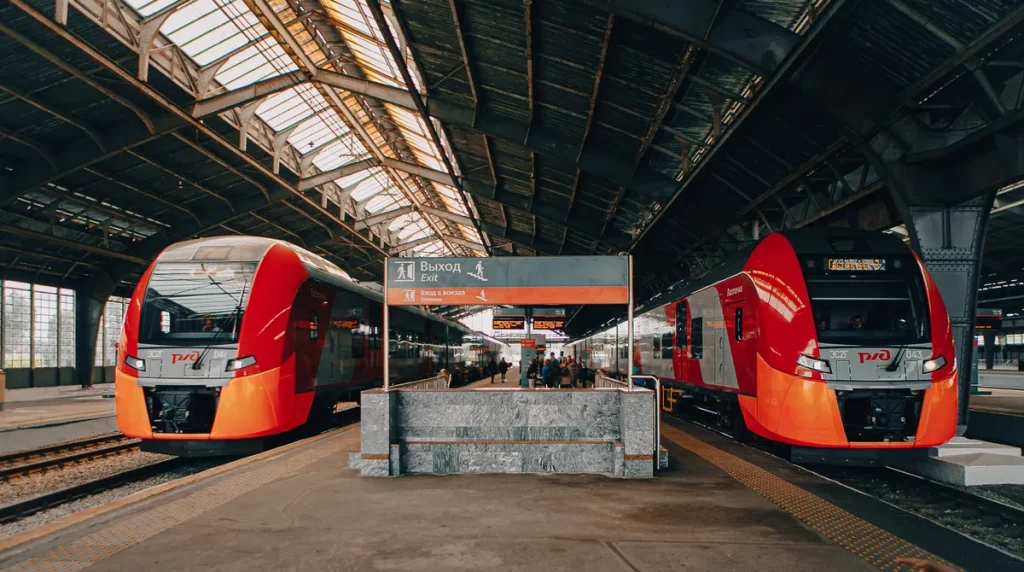

The CrossCountry power cut disruption that began on Saturday paralysed virtually the entire operator’s network on Sunday 24 August, after a loss of power at its Birmingham control centre knocked out the systems used to manage the railway.
Services on routes stretching from Glasgow to Edinburgh, Manchester to Birmingham, Newcastle to Edinburgh, and Cheltenham to Cardiff were withdrawn until further notice. Trains to Plymouth and Penzance were also affected, with BBC News reporting that passengers on those routes were directed to Great Western Railway as a replacement operator.
The sole surviving CrossCountry corridor was the Peterborough to Cambridge to Stansted Airport route, which the operator said would run a near-normal service. A rail replacement bus was running between Leicester and Peterborough.
What passengers could do during the CrossCountry power cut disruption
CrossCountry confirmed that Sunday tickets would remain valid on its own services until Wednesday 26 August. National Rail also confirmed that affected customers could use London Underground services at no extra cost, as well as West Midlands Metro services between Wolverhampton and Birmingham New Street.
Chiltern Railways added services between Birmingham Moor Street and Oxford and said it would accept all CrossCountry tickets via any reasonable route. LNER said it would do the same to help get affected customers to their destination. Passengers delayed by 30 minutes or more are entitled to claim compensation through the delay repay scheme; those choosing not to travel at all can request a full refund.
Transport Secretary Heidi Alexander said: ‘I am concerned to hear about a power outage affecting CrossCountry rail services today, which I know will be very frustrating to passengers. I’ve asked publicly owned operators to lay on extra services where possible. We’ve also sent Network Rail power teams who are onsite and working to restore power and systems as soon as possible.’ According to Sky News, CrossCountry expected to resume a full service on Monday.
A troubled operator’s numbers were already bad
The outage is the kind of single-point-of-failure event that a well-run operation can absorb. CrossCountry has not been giving itself much margin for error.
The Transport Focus Rail Customer Experience Survey, which covered October 2025 to March 2026 and surveyed 100,982 passengers, found CrossCountry to be the worst-performing train operator in the country. Overall satisfaction among CrossCountry passengers was 77% for that period, against a national average of 87% across all operators. The snippet cited a 79% figure for CrossCountry; Transport Focus data indicates that relates to an earlier survey period, with the more recent reading lower still.
The crowding picture is worse. According to the Transport Focus survey, only 63% of CrossCountry passengers said they were satisfied with the level of crowding, the lowest of any operator surveyed. Between January and March this year, just 71.9% of CrossCountry’s recorded station stops arrived on time, and its cancellation rate stood at 7%, according to Rail Business Daily‘s reporting on the same survey.
Transport Focus has already put CrossCountry on notice. In June, the passenger watchdog urged the operator to reduce delays, improve passenger information during disruption, and address overcrowding. Sunday demonstrated that at least one of those three failings, communication during disruption, can rapidly tip from a chronic problem into an acute one.
A CrossCountry spokesperson said: ‘While we will run as many trains as possible, passengers should expect significant reductions to services and cancellations across almost all CrossCountry routes throughout the day. We are sorry to passengers affected by this significant and unforeseen disruption. We are working closely with relevant partners and will provide further updates as soon as possible.’
The apology is the easy part. CrossCountry’s management has known since at least June that its relationship with its own passengers was in a worse state than any of its competitors. A single power cut should not ground a national rail network for a full day. The question of why it did is one that will outlast the service resumption on Monday morning.
