



The UK gilt yield highest since June 2008 is not a statistic that arrives in isolation: it lands on the same morning that Brent crude pushes past $91 a barrel, that Japan’s government bond yield clears 3% for the first time in a generation, and that a strait carrying a significant share of the world’s energy exports has been effectively shut since February. Markets are not overreacting. They are doing the arithmetic on a supply shock that keeps compounding.
The yield on the 10-year gilt jumped 7 basis points to 5.223% on Tuesday 1 September 2026, its highest since June 2008. Germany’s 10-year Bund yield rose 2 basis points to 3.34%, a fresh 15-year high. Japan’s equivalent hit 3%, the first time it has done so since September 1996. This is a global repricing, not a localised UK problem.
Why the UK Gilt Yield Highest Since 2008 Matters Now
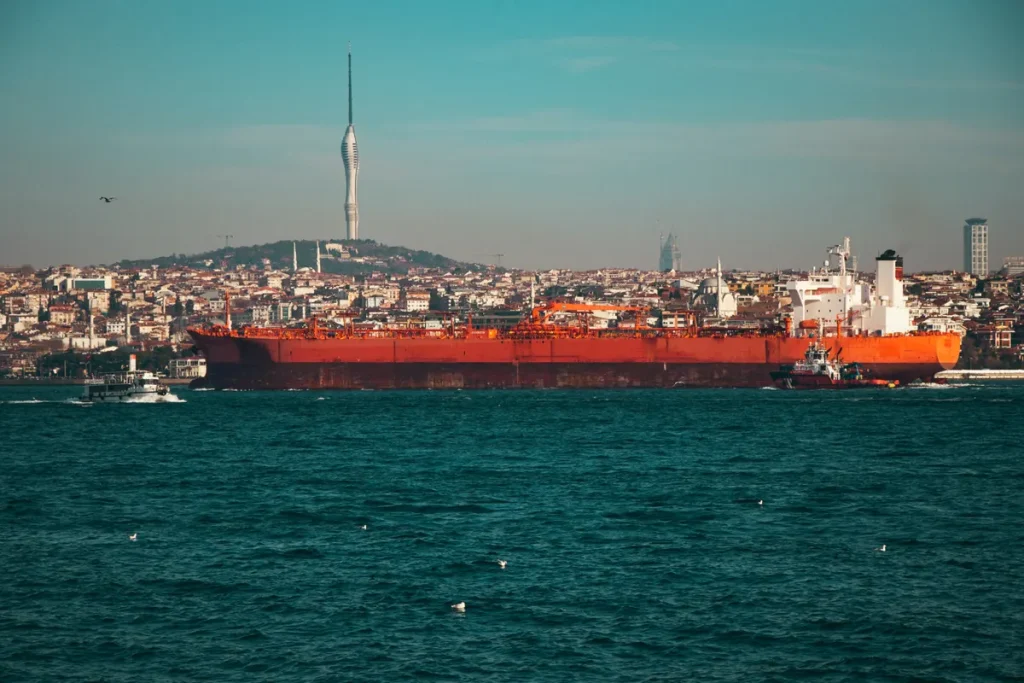
The proximate cause is oil. Brent crude was up 1.3% at $91.69 a barrel on Tuesday morning, having dropped 2.7% on Monday before buyers returned. US West Texas Intermediate added 0.77% to $86.42. The driver is the Strait of Hormuz, which Iran has kept functionally closed since the US and Israel began striking Tehran on 28 February.
The scale of the disruption is becoming clearer. Kpler reports that no LNG tankers have crossed the strait since 11 July 2026, with 21 LNG carriers currently stranded inside the Middle East Gulf: 13 in ballast, five laden, and four berthed, including two at Qatar’s Ras Laffan export terminal. On Monday, just five commodity vessels transited the strait, below the 10-day average of 14, and none were liquid tankers.
Analysts at Australia and New Zealand Banking Group warn that despite satellite data suggesting roughly 6 million barrels a day are still flowing through Hormuz, that figure is well below pre-conflict levels, and the buffers the global oil market has been relying on are becoming exhausted. US inventories are nearing minimum operational levels. China’s ability to keep imports low will be tested as seasonal demand picks up.
Reuters reports that Iran has resumed discussions with Oman on managing the strait, though no deal has materialised. Transits through the Bab el-Mandeb, the other major maritime chokepoint, were running at approximately 31 commodity vessels, roughly in line with recent averages.
Monday’s escalation added to the pressure. The US and Iran exchanged fire for the first time in a month, with missiles and drones targeting Iranian rocket launchers on an island in the strait, prompting Iranian counter-strikes at US military bases in Jordan and the UAE. Donald Trump told Fox News: ‘We’re going to hit them hard.’ The United Kingdom Maritime Trade Operations agency separately reported on Tuesday that a tanker was struck by three projectiles while sailing out of the strait, without casualties or environmental impact.
Bond markets were already under pressure from a surge in corporate issuance, as technology companies raise capital to fund AI infrastructure, competing directly with government paper. Rate expectations have tightened accordingly. Markets are pricing in a hike in New Zealand on Wednesday. The European Central Bank is widely expected to raise rates by 0.25 percentage points at its 10 September meeting. Traders also see a better-than-even chance of hikes in both the US and Japan this month. The Bank of England is not expected to move until late in the year, with markets pricing in a quarter-point increase to 4% around November or December.
Shein’s Hong Kong Debut: A Bruising First Day
Shein’s long-awaited stock market debut in Hong Kong ended its first session 4% below its offer price, at HK$46.62, after an intraday fall of 10%. The company had priced its shares at HK$48.56, near the midpoint of a marketed range of HK$47.60 to HK$49.50, raising approximately HK$13.6 billion (around $1.73 billion) in total proceeds, according to Reuters. That values the business at just over $26 billion, a far cry from the nearly $100 billion valuation once attached to the company in private markets.
Cornerstone investors, led by existing shareholders Boyu Capital, Tiger Global and General Atlantic and also including Tencent, subscribed for approximately $383 million of shares. Around 80% of IPO proceeds are earmarked for technology improvements and brand expansion, per Shein’s prospectus.
The financial backdrop makes the timing uncomfortable. Yahoo Finance reports that Shein’s full-year 2025 revenue rose to $41.8 billion, up from $38.7 billion in 2024, but net income fell 38.7% to $2.064 billion. In Q1 2026 alone, the company swung to a loss of $99 million against net income of $395 million in the same period a year earlier, after the US ended its de minimis duty exemption on small packages.
China-origin goods shipped to US customers now face import tariffs of between 10% and 87.5%, according to FashionNetwork, citing the draft prospectus. The EU has introduced a €3 duty on small parcels imported from outside the bloc. The UK has said it will follow by October 2028. The path to a Hong Kong listing was itself cleared only on 10 July 2026, when China’s Securities Regulatory Commission granted approval, removing the last major regulatory hurdle after New York and London listings both fell away.
The question now is whether Shein’s European and rest-of-world growth can offset what is structurally a collapsing US business. If the US tariff regime holds, the model that built the $100 billion valuation no longer exists. Markets priced that in on day one.
