


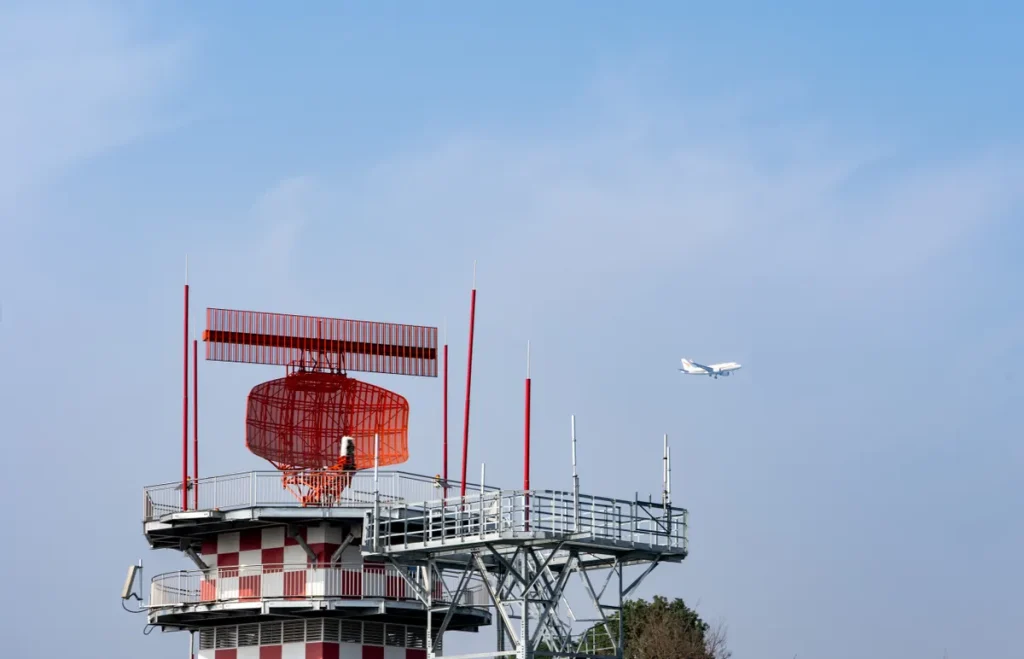

The NATS air traffic control failure that paralysed British skies on 8 September was, at its technical core, the work of a millisecond. A software defect in the system that handles flight data caused corrupted output in less time than it takes a human eye to blink. What followed lasted two days and touched more than 2,200 flights.
That gap, between the brevity of the fault and the scale of the fallout, is the story the passengers stranded on tarmacs, in Edinburgh flats, and on Moroccan hotel sofas cannot easily square.
What the NATS Preliminary Report Actually Says
According to Airport Industry-News, Transport Secretary Heidi Alexander requested the preliminary report, with a full account due within 60 days of the incident. The findings, published by NATS itself, are instructive.
The fault occurred when a manual request for an aircraft code was being processed. The system received a message for a higher-priority activity, causing the original request to pause. When processing resumed, a software defect meant it did not resume correctly, producing corrupted output that affected subsequent flight data updates. All of this happened within a single millisecond.
Critically, the problem directly affected only higher-level flights operating mainly above 24,500ft in the London Area Control centre. But restrictions had to be placed across the entire UK so that the National Airspace System could be restarted and flight data reloaded. A contained technical fault became a nationwide shutdown by operational necessity.
Travel Weekly reports that the Civil Aviation Authority (CAA) has been ordered to conduct an independent review into the failure. According to The Guardian, Alexander believes the glitch was avoidable, though the government has said it retains confidence in NATS chief executive Martin Rolfe while requiring him to report back within a week.
The Passengers Who Paid for Someone Else’s Millisecond
Daniel Garrick, 32, a software engineer, sat on the asphalt at Heathrow for seven hours before being released into what he describes as “absolute chaos”. His luggage was still aboard his British Airways plane. He located it only because a fellow passenger had an AirTag in their bag. An announcement eventually confirmed the airline would not be retrieving all luggage that night.
At the time the original report was filed, Garrick had still not recovered his case, a week’s worth of clothes inside. British Airways sent a mass email apology at around 9pm on Tuesday, then automatically rebooked him for a flight 48 hours after his original departure. The Uber to a friend’s house in Surrey cost him over £100.
Melanie Thompson, 71, was 40 minutes from Heathrow after a 14-hour return from Tokyo when her pilot diverted to Edinburgh. She and her son were left, in her words, ‘to our own devices’ to find accommodation in a city where every hotel and Airbnb had already filled. They eventually secured a flat for £500, then travelled to London by train the following morning because no flights were available.
Thomas Reilly, 55, a freelance geopolitical adviser living in Marseille, found out his British Airways flight from Marrakech to Gatwick was cancelled only when he arrived at the airport. BA’s customer services line was closed due to volume. There was no email address. The chatbot could not help. ‘It is Kafkaesque,’ he said. When he eventually reached BA, he says the airline told him it would not refund the Heathrow-to-Marseille leg of his disrupted journey.
Keith Sessions, 74, and his wife had been booked on Virgin Atlantic from Heathrow to Tahiti via Los Angeles. After five and a half hours on the tarmac, their flight was cancelled. They were offered water and snacks but no meal. The rebooked itinerary adds an 11-hour stopover at LAX and has cost the couple an additional £340 in taxis and seat reservations. ‘Communication from Virgin has been very poor, diabolical,’ Sessions says.
BA says it has rebooked more than 60,000 customers and operated almost 80% of its full schedule since the disruption. It described the situation as ‘entirely out of our control’. Virgin Atlantic offered a similarly worded apology.
This is not the first time NATS has left passengers counting the cost. The CAA’s independent review into the August 2023 NATS failure found that more than 700,000 aviation passengers suffered considerable distress during that earlier outage, which was caused by a different sub-system entirely.
Ryanair chief executive Michael O’Leary has, according to Aerospace Global News, stated that Rolfe’s position as NATS CEO is ‘untenable’ and called for his dismissal. It is not O’Leary’s first such demand: he has made the same call after the 2023 outage review, after staffing shortages at Stansted in early 2025, and again after further Stansted delays in May 2025. The government has declined each time.
The 60-day full report will either vindicate that patience or make it very hard to sustain. For now, the passengers who paid over the odds for Edinburgh flats and Surrey Ubers are waiting for someone to explain why a millisecond cost them so much.
