


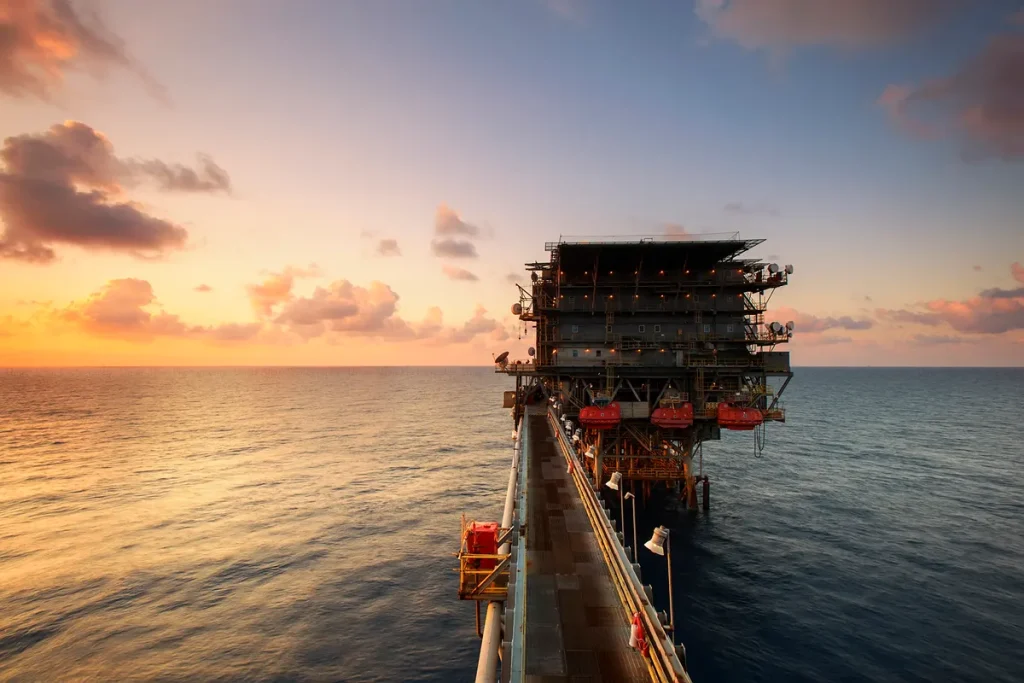

The case for Jackdaw gas field approval has been reduced to a stark arithmetic: the UK holds roughly eight days of gas storage, and the field 150 miles east of Aberdeen could be ready to supply 6% of national demand by 1 October. That is the argument Adura chief executive Neil McCulloch made from the platform itself, speaking to BBC News as engineers ran final checks on a project that has so far cost around £1.5 billion.
Adura is a joint venture between Shell and the Norwegian state energy firm Equinor. The original consent for the Jackdaw field was granted by the previous Conservative government and the North Sea Transition Authority (NSTA) in summer 2022. That consent did not survive legal scrutiny.
In January 2025, the Court of Session ruled it unlawful. Lord Ericht’s 57-page judgment found the consenting process had failed to account for the climate impact of burning the extracted gas. Crucially, he held that the public interest in having the decisions remade on a lawful basis outweighed the interests of the developers, given the effects of climate change. In the full court opinion, BG International Ltd, not Shell directly, was named as the First Interested Party for the Jackdaw consent.
Adura has since submitted revised environmental impact assessments. The regulator had identified several areas inadequately addressed in an earlier submission, beyond the court’s own requirements. On 7 July 2026, Adura lodged a further information response under the Offshore Oil regulations with the UK government, document reference D_4260_2021. The NSTA is now considering that material alongside the revised assessments for both Jackdaw and Rosebank.
Eight Days of Storage, and Not Much Else
McCulloch’s warning is built around a vulnerability the UK has long preferred not to dwell on. Eight days of gas storage is a thin buffer. A prolonged anticyclone, suppressing both wind and solar output, combined with any interruption from what he called ‘foreign threat actors’, could expose that gap fast.
‘If I were the secretary of state for energy security and net zero, I’d be looking closely at where’s my next source of energy security, and you’re standing on it,’ McCulloch said from the platform. ‘The wells are drilled, they’re hooked up. We’re just readying the systems. It will be ready for the 1st of October.’
Adura says the gas from Jackdaw could supply 1.4 million homes. Environmentalists counter that it will only cover 2% of the country’s annual gas demand across the full lifetime of the field. Both figures can be true simultaneously, which is part of what makes this debate so resistant to resolution.
Adura’s updated climate assessment, submitted to regulators, characterises the climate effects as ‘minor’, on the grounds that the UK operates a ‘well-regulated industry, with targets and commitments that are aligned with the expectations of the Paris Agreement’. Adura also states that Jackdaw would account for less than 0.02% of annual global greenhouse gas emissions across its lifetime. Greenpeace’s UK chief scientist Doug Parr dismissed that figure as ‘self-serving’ and called approval ‘reckless and indefensible’.
Tessa Khan of campaign group Uplift was blunt: ‘It would be a huge betrayal of the British public for the UK government to approve new oil and gas fields at a time when ordinary people are suffering so much as a result of these record-breaking heatwaves.’
McCulloch’s reply was measured: ‘Jackdaw should not take that on its shoulders, or it should take a very small portion of that. It’s a very, very small proportion of the total global emissions.’
A Decision That Falls to Miliband
If the NSTA approves the revised assessments, the final call on Jackdaw gas field approval goes to Energy Secretary Ed Miliband. His position has been consistent: oil and gas will remain in the mix for decades, but no new fields should be explored. ‘Drilling every last drop will not take a penny off bills,’ he argued in an April speech, adding that it ‘cannot give us energy security’ either.
The International Energy Agency’s head, Fatih Birol, appeared to support that scepticism in April, telling the Guardian that Jackdaw and Rosebank ‘would not make any significant difference’ to the energy crisis and ‘would not change the price of oil and gas’.
Yet Labour is under pressure. Andy Burnham, preparing for Downing Street, faces calls from trade unions, former prime minister Sir Tony Blair, and Westminster’s energy committee to expand North Sea drilling and stabilise the 78% levy on production. The Aberdeen South by-election result, where the Conservatives gained the seat from the SNP three weeks ago and pushed Labour into fourth, sharpened that pressure considerably. Tory leader Kemi Badenoch called the vote ‘a referendum on oil and gas’.
\p>The broader backdrop is an industry in structural decline. North Sea output peaked in 1999 at 4.5 million barrels of oil equivalent per day; by 2024 it had fallen to just over one million. The Energy Transition Institute at Robert Gordon University projects around 1,600 offshore job losses per year over the coming decade. Its director, Professor Paul de Leeuw, put it plainly: ‘Oil and gas is declining faster than many of us were expecting, but the renewables industry is simply not ready to take all the jobs.’
Jackdaw approval or not, that underlying dynamic does not change. Miliband’s decision on the field will not resolve it; it will only signal which side of the tension the government is currently willing to stand on.
