


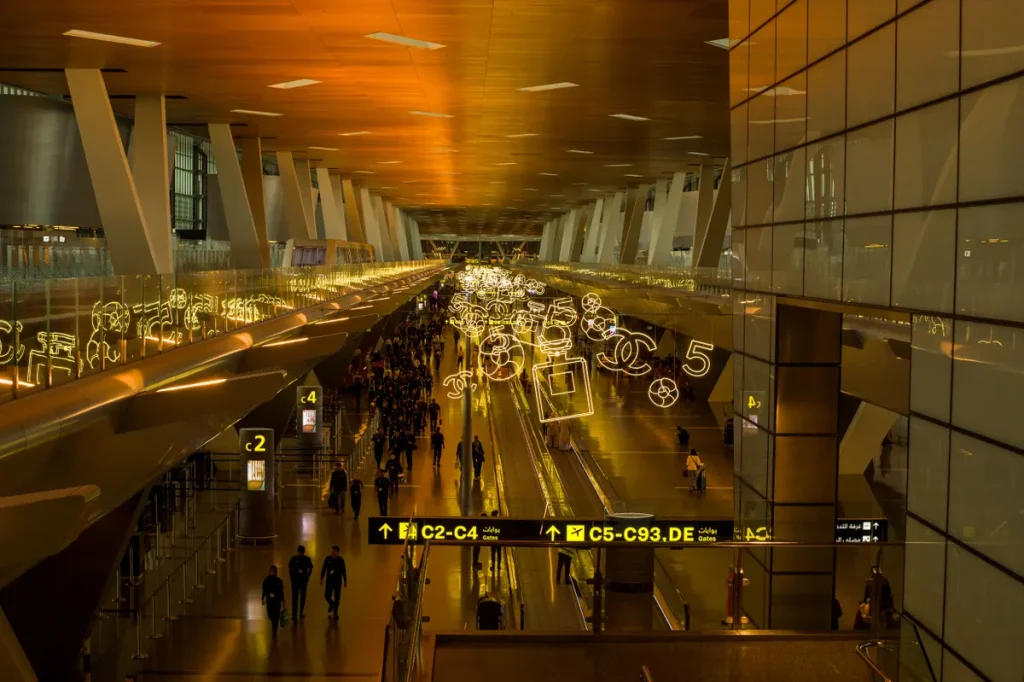

The Gatwick Airport water outage that struck on Sunday morning, 27 July 2026, shut every bar and restaurant across both terminals for the better part of a day, leaving thousands of leisure travellers with nowhere to eat, limited access to working toilets and no clear information from staff. By Monday morning, Extra.ie reported that all facilities had reopened and the airport was operating normally. The question is why it took so long to get there.
A power failure at Bough Beech that cascaded into chaos
The trigger was a power failure at Bough Beech Water Treatment Works in Surrey, operated by SES Water. The failure cut supply to both Gatwick’s North and South terminals, and to postcodes across Kent (TN8 and TN11), parts of Surrey (RH1, RH6 and RH10) and, according to Central Jersey, also West Sussex, a slightly wider area than the airport initially acknowledged.
SES Water said the power problem was fixed fairly quickly. The trouble, as anyone who knows how water treatment works could have told them, is that fixing the power does not instantly restore the water. The supply still had to be treated before it could be returned to the network. SES Water warned that as the network came back to life, customers might notice some discolouration or slower flows, describing this as ‘perfectly normal’.
In practice, the gap between ‘power restored’ and ‘water flowing’ stretched the disruption across most of the day. ABC News reported that water pressure was only beginning to return in the evening, approximately eight hours after Gatwick had first apologised for the disruption.
The Gatwick Airport water outage that did not cancel a single flight
Here is the one thing the airport can legitimately point to: Reuters reported that Gatwick confirmed no flights were affected by the outage. Extra.ie subsequently confirmed that all flights on the day departed as scheduled. Given that the incident happened at the height of the summer season, when the airport is dominated by leisure travellers on package holidays with hard-deadline connections, that is a meaningful operational achievement.
It is also where the good news ends. For the passengers inside the building, the experience was, by multiple accounts, a small but avoidable shambles.
Passenger Ian Bubb, flying to Alicante with British Airways, put it plainly: ‘Absolute disgrace at Gatwick – total lack of contingency planning for such an event.’ He had booked a lounge and was refused entry. Former MP and ex-chief executive of UK Music Michael Dugher went further on social media, urging the airport to ‘at least allow people to use the chairs in all the closed restaurants and bars’. His full complaint: ‘No water is one thing but depriving people of somewhere to sit is another… families are having to sit on the floor.’
\p>Dugher’s point is not trivial. Closing food and beverage outlets for hygiene reasons when there is no running water is the correct call. Refusing people access to seating in those same closed outlets is not a hygiene decision; it is a policy decision, and a poor one.
Passenger Paul Lee reported hearing no announcements and seeing no bottled water being distributed, despite the airport’s assurances that both were happening. Roger Wood, arriving to meet friends before a flight from the South Terminal, found Wetherspoon, Nando’s and the rest entirely shut, with staff on every door turning customers away. The only food available came from packaged-goods outlets like Pret and Itsu.
SES Water was prioritising deliveries of bottled water to customers on its priority services register: those with particular medical or accessibility needs. That is the right allocation. Whether the wider distribution inside the terminal matched the airport’s public statements is harder to judge from passenger accounts.
EasyJet adjusted its operation, temporarily moving bag-drop opening to two hours before departure rather than the standard three, and explicitly told passengers not to arrive early. That is sensible, reactive airside management.
This is not the first time Gatwick has had a water problem. In July 2022, a burst water main caused low pressure that closed toilet facilities at the airport and affected around 1,200 homes in the surrounding area. Four years on, the contingency response inside the terminals appears not to have improved materially.
By AOL UK‘s account, the airport was back to normal by Monday morning. The next question is whether Gatwick and SES Water use the intervening months, before next summer, to work out a faster route from ‘power restored at the treatment works’ to ‘passengers can wash their hands’.
