



The CXMT Shanghai Stock Exchange debut delivered one of the most explosive first-day performances in recent memory: shares in ChangXin Memory Technologies surged more than 470% on 27 July 2026, pushing the chipmaker’s valuation to around 3.3 trillion yuan ($487.3bn; £364.9bn) and handing it the title of mainland China’s most valuable listed company.
The scale of the move was partly mechanical. Anna Macdonald, investment strategy director at Hargreaves Lansdown, told the BBC’s Today programme: ‘The reason for the extraordinary bounce this morning is that only 7% of the shares are available for trading.’ When demand vastly exceeds the freely traded float, arithmetic does the rest.
A Record-Breaking STAR Market IPO Built on Doubled Ambition
The numbers behind CXMT’s listing are worth dwelling on. The company raised approximately 57.9 billion yuan ($8.55bn) at an IPO price of 8.66 yuan per share, according to Reuters, with the potential to reach 66.6 billion yuan if the over-allotment option is fully exercised. That final fundraise doubled CXMT’s original target of 29.5 billion yuan ($4.35bn).
Caixin Global reported the listing as the largest in the STAR Market’s history, with a pre-debut valuation of approximately 580 billion yuan at the IPO price. The previous record holder was Semiconductor Manufacturing International Corporation (SMIC), which raised 52.3 billion yuan on the same board in 2020, according to Chosun. CXMT has now surpassed it.
The company, founded in 2016 by chairman Zhu Yiming and headquartered in Hefei, Anhui Province, plans to direct most of the IPO proceeds into expanding memory chip production and research and development.
CXMT’s Market Share Is Growing Fast, But Its Revenue Base Tells a Story
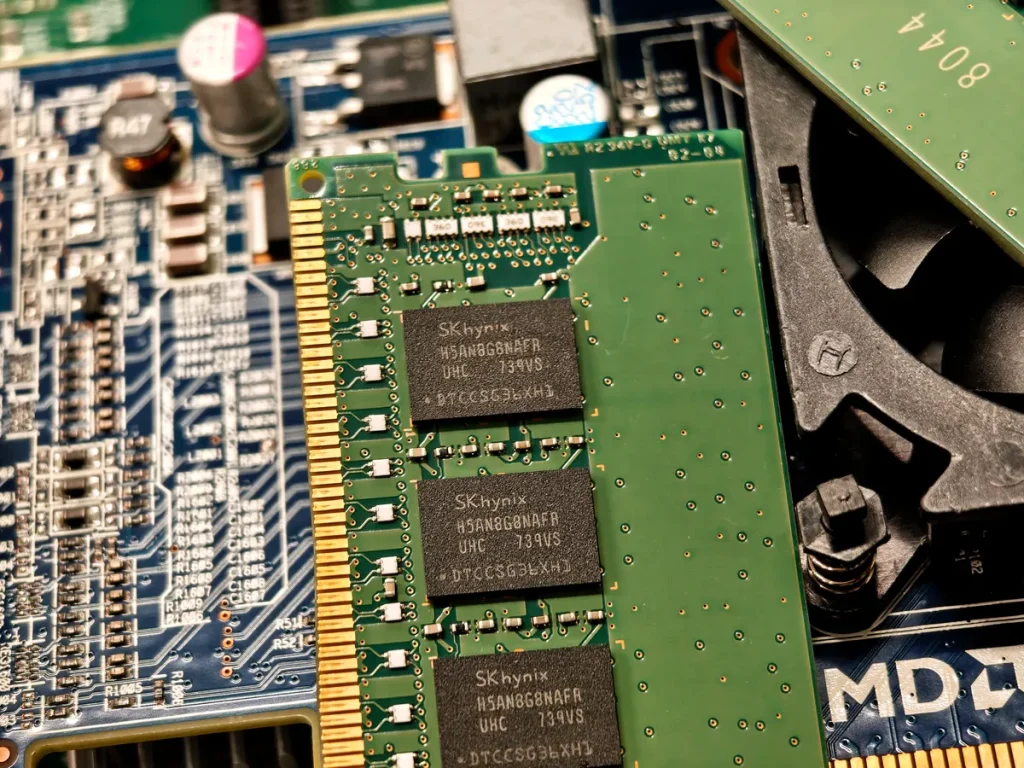
CXMT manufactures dynamic random-access memory (DRAM) chips for AI data centres, mobile phones, PCs, tablets and other devices. Its product range spans DDR4, DDR5 and low-power DRAM (LPDDR), with production lines in both Beijing and Hefei.
According to its prospectus as cited by the Shanghai Stock Exchange, LPDDR products contributed 66% of revenue in the most recent reported year, with DDR products accounting for 32%. Overseas sales excluding Hong Kong amounted to just 3% of total revenue. That near-total dependence on the domestic market cuts both ways: it insulates CXMT from US export controls in the short run, but it also means the company has yet to prove itself in competition for global customers.
The growth trajectory is hard to dismiss, however. Chosun reported that CXMT’s global DRAM market share reached 8% in the first quarter of 2026, more than doubling from approximately 3% in the same period a year earlier. First-quarter revenue was 50.8 billion yuan, a 719% increase year-on-year. Those are not the numbers of a company that is merely aspirational.
Nomura Greater China semiconductor analyst Donnie Teng told Reuters that memory supply remains insufficient to meet unprecedented AI-driven demand, and that CXMT’s mega IPO would not drain market liquidity. It is the right macro backdrop for a debut of this size.
Still, context matters. South Korean giants Samsung Electronics and SK Hynix, alongside US-based Micron, collectively account for around 90% of global DRAM production. CXMT sits fourth, and the distance between fourth and first is not measured in quarters.
The CXMT Shanghai Stock Exchange debut lands in the same fortnight as SK Hynix’s landmark US listing, which raised $26.5bn (£19.8bn) on the Nasdaq by selling 177,900,000 American depositary shares at $149 each, according to SK Hynix’s F-1 filing with the Securities and Exchange Commission (SEC). SK Hynix holds a 56.4% share of the high-bandwidth memory (HBM) market, per its SEC filing as reported by Quartz. The two listings, one in Shanghai and one in New York, frame the same underlying reality: memory chips are now a geopolitical asset class, and investors on both sides of that divide are paying up for access.
For Beijing, the IPO serves a purpose beyond capital formation. Chinese investors’ appetite for a homegrown chipmaker reflects the government’s push for technological self-reliance. An 8% global market share is a credible start. Whether CXMT can close the gap with the incumbents will depend on whether it can convert domestic revenue into an internationally competitive product. The first test of that ambition is the next earnings report.
