


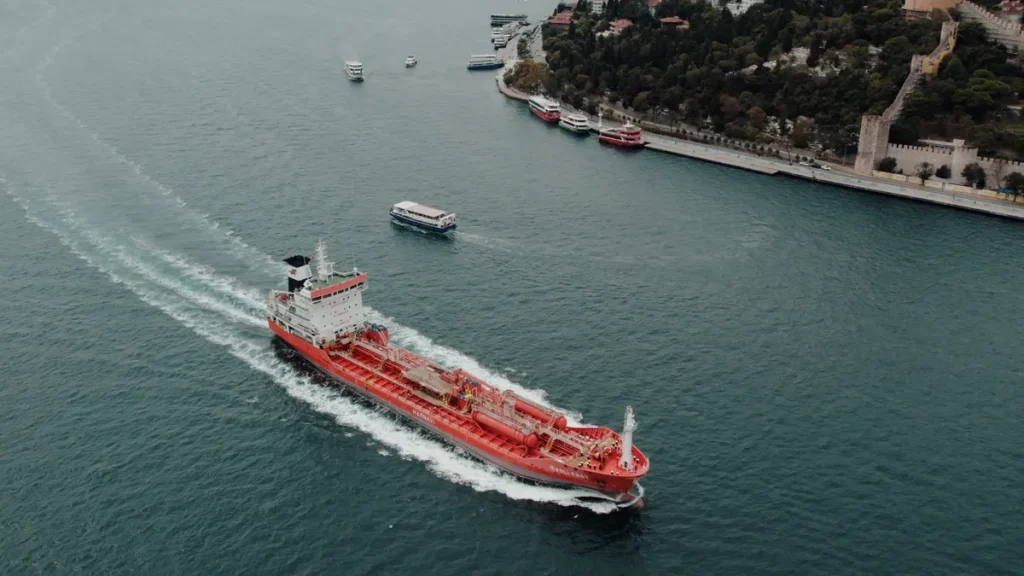

The oil tanker threat in the Middle East has reached its most severe point since the conflict with Iran began on 28 February 2026, as simultaneous crises in both the Strait of Hormuz and the Red Sea squeeze global crude supply from opposite ends. Analysts and shipping industry figures are no longer talking about one chokepoint under pressure. They are talking about two.
An Oil Tanker Threat on Two Fronts
‘In terms of threat to the trade of crude, we’re at the worst period that we’ve been in since this crisis began,’ said Matthew Wright, an analyst at ship-tracking firm Kpler, speaking to Reuters.
The numbers bear him out. Before Iran closed the Strait of Hormuz at the start of the war, between 130 and 140 ships transited the waterway each day, according to Reuters, a higher baseline than the commonly cited pre-war figure. By Sunday, that had collapsed to just eight vessels, with 11 on Saturday. On Tuesday 5 August, Kpler counted eight transits: five tankers and three bulk carriers.
Before the conflict, the strait carried roughly 20% of the world’s oil and gas. A brief peace deal struck in early June pushed numbers back up, but the resumption of strikes a month later has reduced traffic to a fraction of normal levels. Many ships have been ‘going dark’ when they do cross, switching off their transponders to avoid detection.
The Red Sea was supposed to be the pressure valve. For much of the war, Saudi tankers had been rerouting oil along an alternative lane between the kingdom and west Africa, bypassing Hormuz entirely. That option is now closing.
On 20 July, Yemen’s Houthi fighters declared a naval blockade of Saudi Arabia’s Red Sea ports. Al Jazeera reported the Houthis cited what they called ‘an unjust and oppressive siege’ imposed by Saudi Arabia for nearly 12 years as justification. Two days later, Houthi military spokesman Yahya Saree claimed the group had struck Saudi tankers named the ‘Encelia’ and ‘Layla’ for violating the blockade. On 5 August, Saree claimed a further strike on the Saudi tanker ‘Daisy’ in the Gulf of Aden using a ballistic missile, according to FDD’s Long War Journal. A separate vessel north of the Bab el-Mandeb Strait was attacked by an uncrewed surface vessel the same day, caught fire, and sank, with the crew rescued by local authorities.
According to Reuters, analysts have estimated that a full closure of the Bab el-Mandeb strait could reduce global oil supply by 7%. The strait has not closed entirely, but the direction of travel is uncomfortable. On Saturday, 28 commodity vessels transited the waterway; six of them had their transponders switched off. On Tuesday 5 August, just 20 vessels crossed.
‘Not only is the ongoing situation in the Strait of Hormuz constraining oil flows, but now a big factor that was helping to balance the market is now also under threat. It’s a problem stacked on top of a problem,’ Wright said.
Escalating Incidents and Uncertain Diplomacy
The UKMTO Advisory Update 080, published 4 August 2026, documented multiple incidents around both chokepoints. On 23 July, a tanker was struck by an unknown projectile while transiting outbound through the Strait of Hormuz; the crew abandoned the vessel. The same day, a Saudi-flagged products tanker was hit on its starboard side in the Southern Red Sea, though the crew were safe and the fire was extinguished. On 2 August, two tankers in Omani territorial waters within the strait received VHF threats claiming to be from the Sepah Navy, causing at least one vessel to reverse course toward Dubai.
Tim Wilkins, managing director of Intertanko, the trade body for tanker owners, described the industry as ‘facing a broadening, deteriorating, and increasingly complex security situation.’ He added: ‘We now have the high-risk area going up to Saudi Arabian waters and extending into parts of the Red Sea.’
The number of ships loading crude oil for export to Asia that pass through the Red Sea has dropped to about four per day, the lowest point since the war began, according to Kpler.
Diplomatically, the picture is murky. Iran has denied it is in talks with the US over reopening Hormuz but has acknowledged discussions with Oman. Its foreign ministry spokesman Esmaeil Baqaei said any agreement would not lift current restrictions while US ‘aggression’ continued. Wright warned that talks with Oman could prove a ‘false start’ without concessions from at least one side.
Hapag-Lloyd said some vessels were still transiting the Red Sea but that it would ‘monitor developments closely and will adjust the network if circumstances change.’ Its spokesperson added that even if Hormuz reopened, restoring normal cargo flows would take ‘three to four months,’ given suspended services and redeployed ships.
Oil markets offered a brief respite: Brent crude fell 4.4% to $84.05 a barrel after Donald Trump signalled he would cancel planned strikes on Iran pending the possibility of talks, having fallen as low as $81.55 intraday. Whether that relief holds depends entirely on whether negotiations move beyond Oman’s waiting rooms and into something both Washington and Tehran can sign.
