




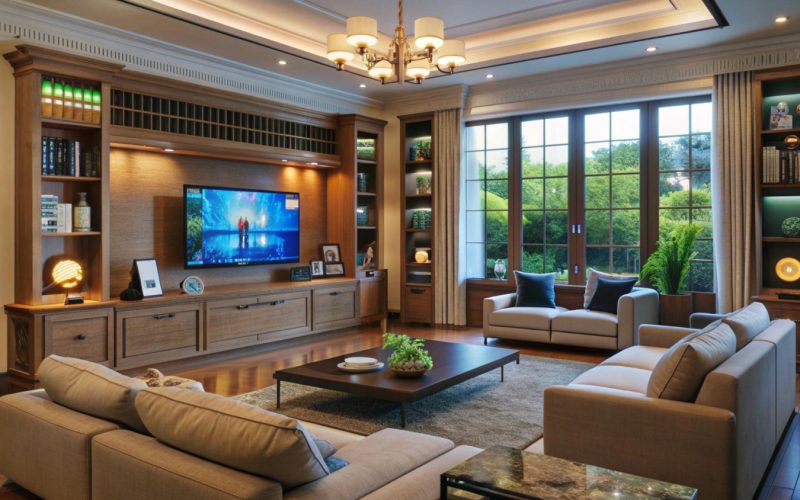

The most sophisticated luxury homes have a specific kind of quiet that results from technology operating in the background. This quiet is deliberate and thoughtful. Depending on the time of day, the lights change. The climate reacts to your presence. Without interruption or command, music follows you. These residences are listening, not boasting.
Intelligent systems that anticipate needs rather than just carrying out commands have drastically changed what it means to live a high-end lifestyle in recent years. Voice control was only the first step. Without a single cue, entire homes now learn routines, modify surroundings, and maximize experiences in real time. As a result, luxury and reason are strikingly well balanced.
| Topic | Details |
|---|---|
| Focus | Tech-enhanced luxury living and its growing market appeal |
| Key Trends | AI personalization, wellness integration, hidden tech, biometric security, eco-smart systems |
| Value Impact | Stronger resale value, lifestyle differentiation, buyer attraction |
| Buyer Demand | Seamless, intuitive automation blended with design-led architecture |
| Market Outlook | Accelerating adoption across high-end real estate, notably in urban and resort markets |
Personalization is the first step toward this new standard. AI systems examine wearable device data on stress levels, lighting preferences, and sleep cycles. A bedroom may cool down before you walk in. Depending on if it’s Monday or Sunday, a morning playlist may change. Additionally, a circadian lighting system gently directs your energy from dawn to dusk.
Among high-end consumers, this degree of personalization has recently transcended novelty and become expected. Customers want ecosystems that control energy, mood, and even wellness in addition to gorgeous kitchens. These demands are encouraging innovation in the building itself, not just its furnishings, for developers.
This change is especially novel because of how imperceptible it has become. Today’s smart homes rely on hidden sensors, motorized mechanisms, and architecture-integrated controls rather than touchscreen panels covering every wall. The built-in speakers disappear into the ceiling. Although they don’t interfere with design, hidden cameras use facial recognition technology. The technology serves as the foundation rather than the focal point.
The difficulty for medium-sized developments is frequently keeping up without making things too complicated. Customers desire both peace and control. The most effective systems achieve that equilibrium, producing homes that seem both wise and calm.
Additionally, wellness is now a philosophy rather than a feature. These days, homes are made to protect, soothe, and heal. Real-time pollution detection and removal is possible with air purification systems. At the point of use, water quality is continuously monitored and filtered. Interactive mirrors and biometric trackers that provide personalized workouts based on performance data collected over weeks are features of fitness centers.
I once went to a place where the bathroom mirror served as a wellness dashboard that displayed skin analysis, sleep insights, and hydration levels. It was futuristic but unobtrusive, like a personal coach integrated into your daily routine that offered gentle guidance without ever speaking up.
Homeowners benefit from convenience and confidence when biometric entry and AI-based surveillance are combined. These systems do more than just lock doors; they also identify visitors, examine behavior patterns, and provide real-time alerts for anomalies. Fundamentally, they are extremely effective gatekeepers concealed in complex code.
The entertainment industry has also changed. These days, media rooms automatically change their settings based on whether you’re hosting a dinner party or watching a movie. Ambience, lighting, and sound all change with ease. Systems for high-resolution projection retract into cavities in the ceiling. With a single command, entire rooms can be transformed from calm reading areas to movie theaters.
Smart homes are becoming especially advantageous for long-term value and environmental impact in the context of sustainability. These days, solar systems communicate directly with home servers to optimize energy use according to weather forecasts, power grid demand, and time of day. Rainfall and plant species are taken into account by smart irrigation. Without requiring additional work from residents, homes can turn conscience into action by tracking their own carbon footprint and suggesting monthly efficiencies.
Previously considered an afterthought, garages have undergone a complete transformation. Smart garages with integrated chargers, climate controls, and adaptive lighting are becoming more and more popular as the use of electric vehicles increases. Some even include automated inventory management for collectors or revolving car platforms. Today, a well-designed garage provides the same level of accuracy and sophistication as the kitchen or spa.
This shift to intelligent living is about integration, not just about technology. Every component interacts with the others to form a living system that works as a cohesive whole. When done correctly, this cohesiveness is both emotionally and technically striking. The house has a sense of awareness, alignment, and vitality.
We’ll probably witness even greater cooperation between AI and architecture in the years to come. Without human intervention, homes will adapt to seasonal changes. Dynamic surfaces that change in tone and texture can be found on walls. AI concierges could take care of anything from energy audits to grocery replenishment, gradually picking up on patterns and preferences.
During a peaceful tour of a hillside property one afternoon, I observed the glass walls gradually shading themselves as the sun sank. Just a home responding, no remote control, no instruction. I found that one detail to be far more opulent than any marble slab or gold-plated faucet.
Although luxury has always changed, function is now its frontier. Buyers are now interested in a home’s behavior rather than just what they can see. Though subtle, the change is extremely important. These are now partners in living, not just places to call home.
Tech-enhanced homes are elevating daily routines and giving them a sense of purpose by utilizing responsive systems and intelligent design. Convenience is no longer the only factor; now, it’s about living in harmony with your surroundings.
The boom is accelerating rather than merely occurring. Together, developers, architects, and technologists are redefining what home is. Additionally, entering these areas can be an unexpectedly emotional experience. Because a home feels more like a haven and less like a building when it knows you well enough to care.