




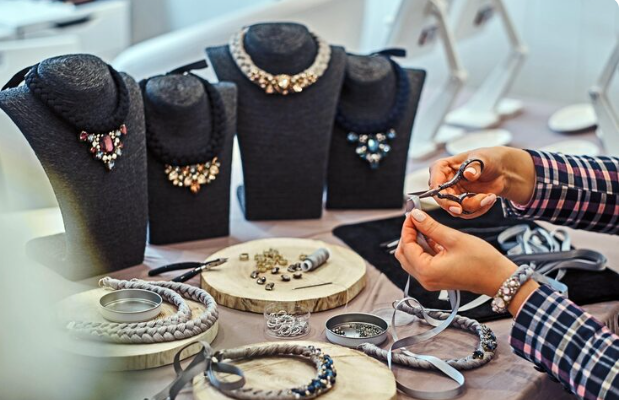

Luxury used to feel like a race, rapid fashion with a glamorous edge. In an attempt to grab attention before the next scroll, brands released collections at an alarming rate. However, there has been a discernible downturn recently in one specific area: expensive jewelry. That slowing down feels deliberate, almost contemplative, in contrast to other areas.
Last spring, during a private presentation in Paris, a legacy maison revealed a single ring—just one—made over six months with hand-carved coral and Burmese rubies. There was no hashtag campaign or fanfare to go along with it. Just silent appreciation. That instance encapsulated a trend I’ve repeatedly observed: a change in how people interact with priceless jewelry.
Key Context Behind the High-End Jewelry Renaissance
| Category | Details |
|---|---|
| Consumer Shift | Younger buyers prioritize ethics, storytelling, and heirloom value over trends and labels. |
| Sustainability Focus | Vintage sourcing, recycled metals, and ethically mined gems are increasingly preferred. |
| Cultural Significance | Jewelry now serves as both personal expression and generational memory. |
| Economic Resilience | Despite luxury market slowdowns, high-end jewelry remains both emotionally and financially valuable. |
| Design Evolution | Genderless silhouettes, bold shapes, and rare gemstones are being embraced across age groups. |
| Digital Engagement | Jewelry houses are using virtual showcases, AR try-ons, and blockchain provenance tools. |
| Market Outlook | High jewelry is experiencing sustained demand amid economic uncertainty and trend fatigue. |
| Reference |
A slight change has taken place during the last five years. Surprisingly, costly jewelry is making a comeback among millennials and Gen Z, who are sometimes characterized as digital minimalists or debt-conscious pragmatists. However, this jewelry box is not their grandparents’. These consumers are selecting sustainably sourced, narratively rich items with a sense of reverence that is both timeless and contemporary. A mass-produced diamond tennis necklace that screams “algorithmic trend” has significantly less emotional significance than an antique Cartier bracelet passed down through the generations.
Meaning is more important to these younger collectors than marketing. They inquire about the source of the metal, the person who cut the stone, and the source of inspiration. They want items that do more than glitter; they want items that have history. Their purchases are motivated by personal resonance rather than social competition. Notably, a lot of people are gravitating toward vintage, particularly from periods characterized by elaborate craftsmanship and symbolic design.
They are making better decisions by selecting fewer pieces. Today’s typical premium jewelry buyer curates meaning rather than quantity. Customers are developing stronger bonds with the clothing they wear through inheritance, auction discovery, or custom commissioning. Restored and adjusted, a family crest ring serves as a daily reminder of ancestry. Inspired by an ancient poetry, a unique pendant transforms into a portable form of intimacy.
Perhaps more gracefully than other luxury categories, the maisons themselves are changing as a result of this cultural recalibration. Jewelry has maintained its sanctity while watches and handbags are questioned due to brand dilution and skyrocketing pricing. Even the most recognizable brands, like Van Cleef, Buccellati, and Boucheron, are opting for moderation over domination. By reviving methods that are completely resistant to mass manufacturing, like as hand filigree, granulation, and gem intarsia, they are leaning towards tradition.
It’s surprising that technology hasn’t weakened this area. It has improved it. Brands are opening their ateliers to new audiences by using AR try-ons and immersive digital storytelling. In an era of concerns about greenwashing, blockchain-based credentials provide provenance transparency, bolstering trust. Additionally, this hybrid experience—history combined with innovation—is especially appealing to the generations that grew up with digital devices.
I saw a twenty-eight-year-old buyer outbid an experienced collector for a 1920s art deco emerald ring at a Sotheby’s estate jewelry sale last autumn. She wasn’t there to hide it in a vault or flip it. She claimed it made her think of her grandmother’s green silk robe when she wore it out that evening. I was reminded of the intimate connection between memory and substance by that seemingly little detail.
High-end jewelry maintains its appeal due to its uniqueness, durability, and craftsmanship, while more general luxury markets strive to prove their worth. Superb jewels are still hard to find. It’s hard to replace artisanal goldsmiths. Additionally, the attraction of something real and incredibly enduring is incredibly stabilizing for consumers navigating a digital environment full of transient novelty.
Additionally, design itself is evolving. Gender is no longer a factor in bold pieces. Unisex cuffs with personal mantras etched on them, thick chains on ladies, and pearls on men have all grown in popularity. Today’s jewelry declares rather than whispers. It is part of the wearer’s story and does not fit into any certain category.
An further layer is added by the investing angle. Hard assets clearly appeal in uncertain times. A fine diamond doesn’t lose value in a drawer like clothing or electronics do. If anything, old gems are in greater demand than ever, particularly those with artisan settings and traceable origins. Wealth managers are keeping an eye on things and discreetly counseling their customers to add tangible assets that will last for generations to diversify their portfolios.
According to this perspective, luxury jewelry is not only enduring but also astonishingly successfully evolving. It’s encapsulating our need for stability, roots, and timeless beauty. It’s an artistic statement to some. A potential family heirloom for others. For many, it’s just a way to express themselves quietly and defy the disposable nature of our culture.