


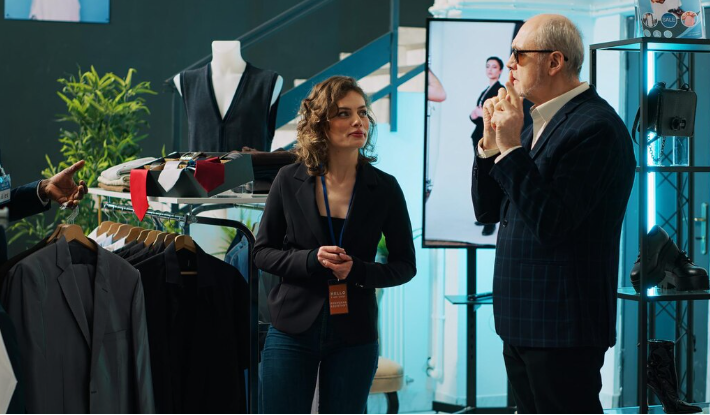

During a recent visit in a quiet showroom on Bond Street, I was informed by a boutique manager that they now keep track of the number of online interactions a consumer has had prior to making an item request. Not only views, but also saved posts, WhatsApp inquiries, and newsletter openings. She remarked, “People aren’t walking in by accident anymore.” “They came with a purpose.” That remark stuck with me because it felt remarkably familiar, not because it was unexpected.
Impulsive luxury shopping used to be very popular. A grandiose window display or a last-minute weekend indulgence might once result in significant sales. Customers now show up more like curators than actual customers. They have already viewed ten review videos, looked up pricing abroad, and determined which influencer did the greatest job styling it. The thrill of feeling hasn’t disappeared; it’s just taken on a more calculated form.
| Key Shift | Description |
|---|---|
| Consumer Behavior | More intentional, research-driven, and aligned with values |
| Primary Influence Channels | Social media, peer feedback, sustainability narratives |
| Digital Engagement | Buyers interact with up to 15 touchpoints before committing |
| Demographic Impact | Millennials & Gen Z driving over 40% of luxury purchases by 2025 |
| Brand Strategy Pivot | Shift toward storytelling, personalization, and omnichannel experiences |
This change is evident throughout the upscale retail industry. Today’s consumers are substantially more tied to values than symbols, considerably less impulsive, and better informed. In particular, Gen Z and younger Millennials view luxury more as a personal statement than as a trophy. For them, purchasing a $2,500 handbag is a philosophical choice as much as a financial one.
That change is the result of a wonderfully intricate interplay between anticipation and access. Customers now have a comprehensive understanding of luxury because to well curated Instagram feeds, clear pricing tools, and behind-the-scenes company information. They understand the meaning of a restricted production run. They have viewed the tours of the factories. They want to know if the packaging is biodegradable or if the leather has been vegetable-tanned. Once uncommon, these inquiries are now commonplace.
Due to their intense concentration on meaning, luxury consumers have started to reinterpret the very function of prestige. The loudest voice in the room is no longer Logos. The reason that heirloom-quality craftsmanship, understated branding, and quiet luxury are being praised is because they seem classic rather than ostentatious. Status is no longer the primary incentive; self-expression is now. You wear The Row to subtly communicate your priorities rather than to brag.
The way brand storytelling currently takes the role of traditional marketing in many upscale settings is quite creative. Luxury shops are attempting to produce something that feels emotionally multidimensional, not simply visually wealthy, as evidenced by Gucci’s intricate heritage-driven advertisements and Bottega Veneta’s unwillingness to use social media, which positions silence as scarcity. Context is what buyers desire, not just content. They seek for stories that are lived, not merely rehearsed.
I witnessed a young professional at a pop-up debate between two purses in Paris earlier this fall. Color was not on her mind. She was discussing whether or not the brand shared her views on circular fashion. She declared, “I don’t want to wear a contradiction.” In the past, such remarks might have come across as performative. It’s just usual now.
Selling for premium brands now begins with the message rather than the show. Long before they enter the store, buyers start their adventure. Retail researchers claim that before making a purchase, consumers in some market sectors increasingly interact with brands via 10 to 15 distinct digital or social media platforms. They are researching labor procedures, comparing resale value, and observing unboxings. Additionally, via community rather than exclusivity, kids are developing emotional bonds.
A premium marketing strategist once described it as follows during a recent interview: “Impulse hasn’t disappeared, it’s just been relocated.” It now exists earlier—during the research stage, when credibility and inspiration collide. This change in timing explains why online sentiment is increasing while showroom foot visits may be declining.
Brands have begun to recognize that this is a reciprocal connection by incorporating sustainability reports, product histories, and immersive content into the purchasing experience. Gatekeeping no longer wins loyalty. It is based on openness and confidence. Smaller labels that rely more on cultural cachet than legacy will especially benefit from it.
Personally, I’ve observed that even my preconceptions about luxury have evolved. I used to think that price and confidence were synonymous, but now I see how consumers value longevity, provenance, and if a brand seems like it fits with who they are as well as who they want to be.
Additionally, this change has been economically advantageous. Even wealthy consumers are considering the emotional return on each purchase due to inflationary pressures, global uncertainty, and changing income patterns. The question is, “Is it worth it—financially, ethically, personally?” rather than, “Can I afford it?” In order to pass the wallet check, luxury must now pass the mirror exam.
In response, retail spaces have changed. Instead of serving as merchandise warehouses, storefronts increasingly serve as hubs for experiences. Customers may come in for a maintenance consultation, a perfume class, or a well planned event that tells the brand’s narrative. Meaningful engagement that extends well beyond the transaction is provided by these encounters. They promote conscientious loyalty, foster bonding, and prolong memory.
Brands that previously relied on legacy are regaining their relevance by adopting multichannel design and digital-first storytelling. Those who don’t adjust run the risk of becoming obsolete—not because they lack prestige, but rather because they aren’t in the minds, emotions, and decision-making processes of consumers.