


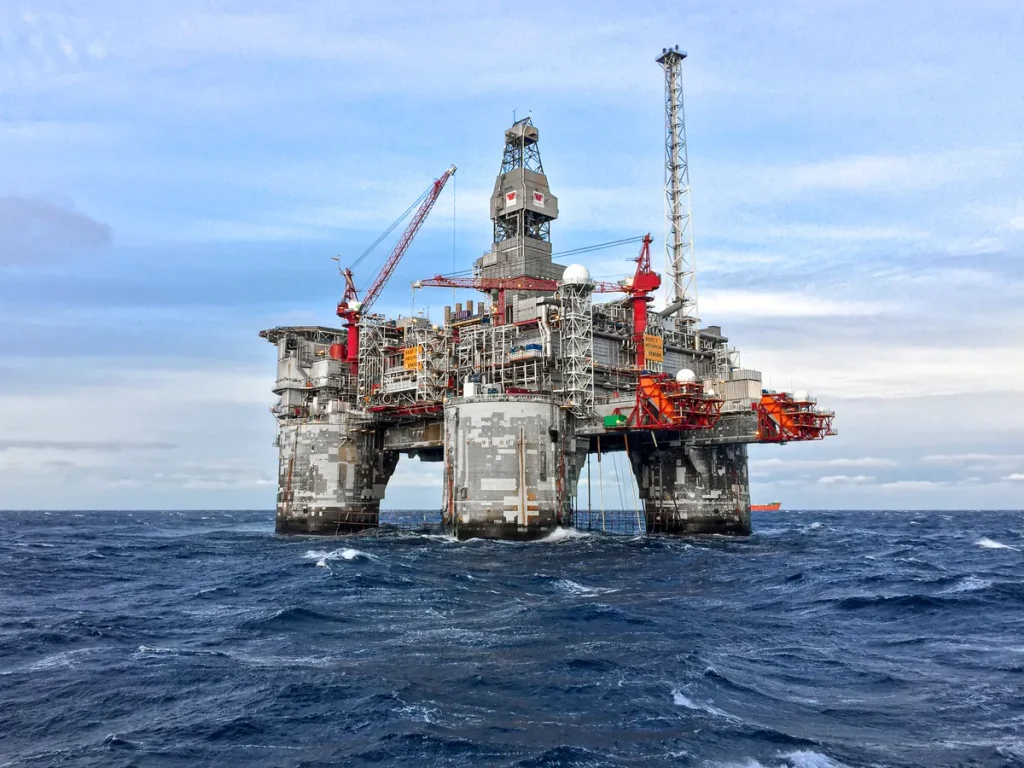

The North Sea oil decline that politicians across the spectrum refuse to acknowledge in plain terms just got harder to ignore. On 31 July 2026, BP launched a formal process to sell its entire North Sea business, with chief executive Meg O’Neill stating the company believes the assets ‘will be better positioned as part of another company.’ Six decades of BP in the basin, gone. That is not a footnote. That is a verdict.
The Numbers That Should End the Debate
The facts are not ambiguous. Since drilling began in the 1960s, 47.7 billion barrels of oil equivalent have been extracted from the UK continental shelf, according to The Guardian. What remains, per the North Sea Transition Authority, is 2.9 billion BOE in reserves, plus an estimated 6.2 billion BOE of contingent resources not yet commercially viable. At peak output, around the turn of the century, the basin produced 4.4 million barrels a day. By 2030, it will produce roughly 15% of that.
BP’s North Sea operations produced just 117,000 barrels of oil equivalent per day in 2025, according to the BBC: a fraction of the company’s global daily output of 2.3 million barrels. Two industry sources told Reuters the portfolio might fetch around $2 billion, with decommissioning liabilities adding complexity. ExxonMobil, Chevron, ConocoPhillips, Shell, TotalEnergies and Eni have all already reduced or exited their North Sea positions. BP is not a pioneer here. It is the last major to leave.
Against this backdrop, Donald Trump’s claim that the North Sea holds ‘500 years of oil and gas reserves’ is not merely wrong. It is the kind of wrong that requires effort. Steve Pye, professor of energy systems at University College London, put it plainly: ‘The North Sea basin has been in decline since 2000. There are no credible prospects of reversing this.’
North Sea Oil Decline and the Politics of Nostalgia
None of this has discouraged Reform UK’s Nigel Farage, Conservative leader Kemi Badenoch, or, apparently, the new prime minister Andy Burnham. Farage wants the UK ‘self-sufficient in gas.’ Badenoch promises an oil and gas industry that will ‘ensure our energy security for generations to come.’ Burnham, who last year backed an international fossil fuel phase-out treaty as Manchester’s mayor, now speaks of a ‘pragmatic’ approach to drilling. Energy secretary Miatta Fahnbulleh has signalled similar flexibility.
My read is that this is politics dressed as pragmatism. The government’s own consultation document states that further licensing ‘would not reverse the basin’s natural decline nor change the UK’s status as a net importer of oil and gas,’ and that the vast majority of future production will come from fields already licenced, per GOV.UK. Carbon Brief’s analysis adds that even with further licences, North Sea gas output still falls 97% by 2050, compared with 99% without them, and oil output falls 91% versus 94%, as the Carbon Brief factcheck sets out. These are not the numbers of an energy security solution. They are the numbers of managed decline with a political ribbon tied around them.
The jobs argument fares no better under scrutiny. The House of Commons Library notes that Offshore Energies UK counted 121,000 direct and indirect oil and gas jobs in 2023, a 51% fall from 2014. The Office for National Statistics, using a broader sector definition, estimated 61,225 direct jobs, a figure that conflicts with the approximately 27,000 cited in some coverage, the difference reflecting different ONS definitions and survey dates rather than a genuine discrepancy between the agencies. Either way, the direction of travel is identical: down, sharply, regardless of how many new licences previous governments issued. Aberdeen City, once the beating heart of the boom, now has 13% of its jobs in oil and gas, according to ONS estimates cited by the Commons Library. That figure will not be rescued by a few more wells.
What a Genuine Transition Would Look Like
The renewables alternative is not speculative. North Sea wind already provides around 18% of UK electricity. In 2025, renewables supplied 50.4% of the UK’s electricity, against 31.8% from fossil fuels. The LSE Grantham Research Institute has examined what more drilling actually delivers for energy supply. Carbon Brief finds that new wind and solar from recent government auctions would produce six times more electricity by 2030 than new drilling licences would.
The legitimate grievance is not whether to drill but whether the transition is actually reaching workers. Connor Watt of Platform argues that the three expected wins from the renewable transition: jobs, cheaper energy, and public revenue, ‘have not materialised.’ Norway’s sovereign wealth fund, now worth more than $2 trillion, was built on the same oil Britain largely handed to private corporations. Analysts suggest a UK equivalent could now be worth around £850 billion. That gap between what was possible and what happened is the real North Sea story.
The BP sale will sharpen the question that Burnham and Fahnbulleh cannot defer indefinitely: does Britain use the basin’s final productive decades to build something lasting, or spend them relitigating a boom that ended a generation ago?
