



The British Steel nationalisation has drawn an official broadside from Beijing, with China’s commerce ministry declaring it ‘firmly opposes and is strongly dissatisfied with the British government’s decision’ to take the Scunthorpe steelworks into public ownership.
The ministry’s statement, issued on Friday, said the move ‘seriously infringed upon Jingye’s legitimate rights and interests and severely undermined the confidence of Chinese companies investing in the UK’. It called on Britain to ‘faithfully fulfil’ its obligations under the UK-China Bilateral Investment Treaty of 1986.
Beijing added that it would monitor developments closely and support Chinese firms in protecting their rights. What that support might look like in practice was left unspecified.
The timing could hardly be more awkward. Andy Burnham becomes prime minister on Monday, and the nationalisation drops a live diplomatic dispute straight into his in-tray before he has even formed a cabinet.
The Cost Behind the British Steel Nationalisation
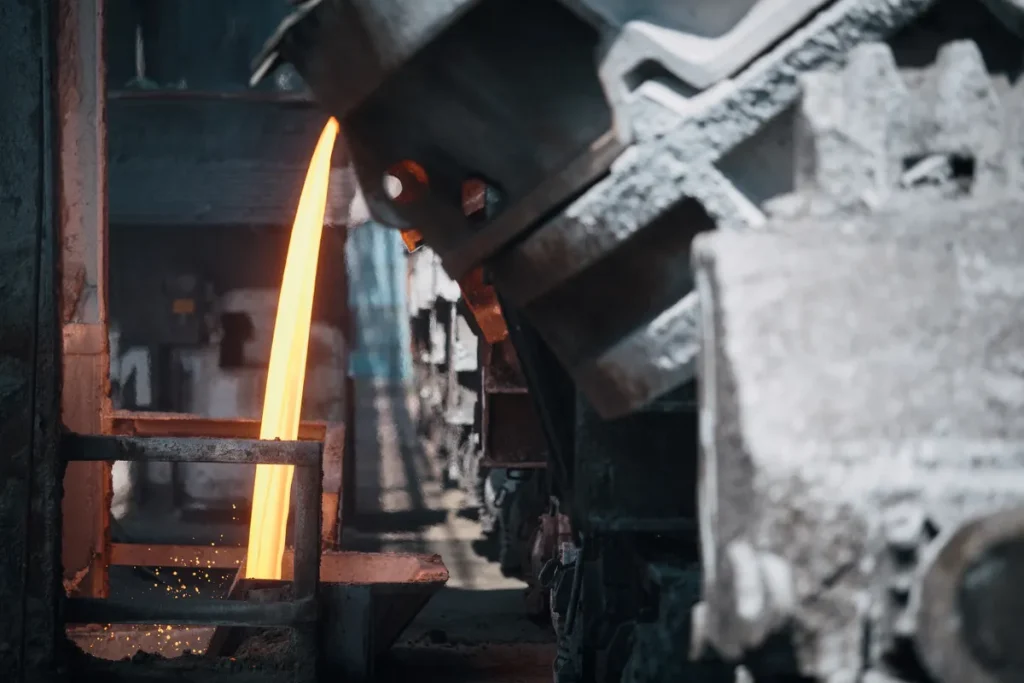
The public case for nationalisation rests on jobs and strategic supply. The government argued that the blast furnaces supply steel to critical customers including Network Rail, making the Scunthorpe plant a matter of national interest rather than a commercial call.
The financial reality is considerably less comfortable. According to the National Audit Office (NAO), the government had already spent £377 million by the end of January 2026 to keep the site running: £359 million went directly to British Steel for raw materials, payroll and energy, with a further £15 million paid to external advisers between April 2025 and January 2026.
The NAO’s investigation report projected total spending would reach £615 million by June 2026, with no budget set at the 2025 Spending Review and no end date for the intervention. Business Secretary Peter Kyle told the BBC the government would cover running costs ‘for the immediate future’. If the current burn rate continues, the NAO warned, the bill could exceed £1.5 billion by 2028.
It is worth recalling what the alternative looked like. In March 2025, the government offered Jingye £500 million to support conversion of the Scunthorpe blast furnaces to electric arc furnaces. Jingye did not accept. Had that offer been taken up, the public exposure would almost certainly have been lower than the trajectory the NAO now describes.
Jingye, for its part, had previously said the business was losing £700,000 a day under its ownership. The government, once it took operational control last year, has been running up costs it now puts at around £1.3 million a day, according to the NAO’s March figures.
A Treaty Clause That Could Tie London’s Hands
China’s invocation of the 1986 bilateral investment treaty is not merely rhetorical. The treaty was formally signed on 15 May 1986 and was designed to promote and protect investments between the two countries. Beijing urged the British government as early as 11 June 2026 to ‘make decisions prudently’ and to ‘respect the wishes of firms and market principles, and avoid the abuse of administrative coercive measures’, according to Reuters.
Whether that treaty provides Jingye with a viable legal route is another matter. Legal analysis published on the Kluwer Arbitration Blog notes that the UK-China BIT, in common with most Chinese bilateral investment treaties, limits the scope of investment arbitration to disputes ‘concerning an amount of compensation’. That restriction raises a potential jurisdictional hurdle: the government’s intervention involved taking operational control of the plant rather than a formal transfer of ownership, which may complicate any claim Jingye tries to bring.
In other words, the treaty Beijing is citing may not give Jingye the straightforward arbitration route it might want. The legal landscape is contested territory, and any proceedings could take years.
For the incoming Burnham government, the core dilemma is familiar but newly urgent. China is the world’s second largest economy; fraying that relationship carries real costs. Yet allowing a foreign state-linked owner to run a plant Parliament has deemed strategically vital was its own form of exposure. The Chinese commerce ministry described the nationalisation as dealing ‘a severe blow to Chinese companies’ confidence in investing in the UK’. Whether Burnham chooses to absorb that diplomatic damage or seek a negotiated settlement with Jingye on compensation will be one of his first genuinely consequential foreign-economic decisions.
The blast furnaces are still running. The bill, and the argument with Beijing, are both growing.
