


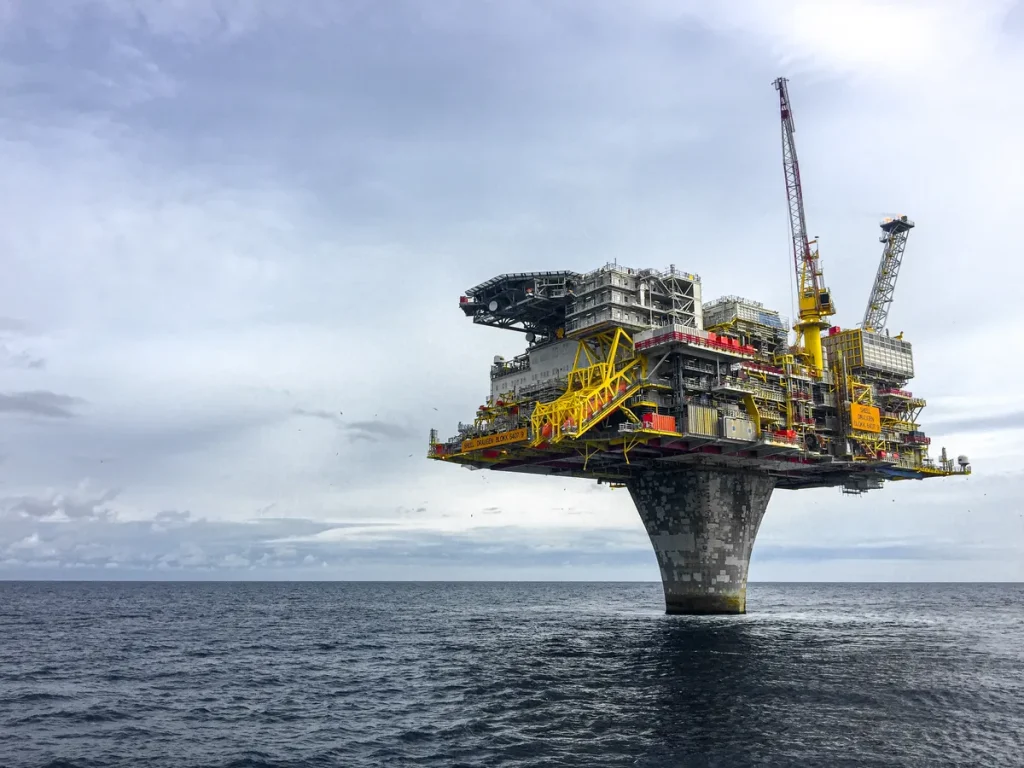

Andy Burnham’s North Sea energy policy will be defined not by drilling rights but by a levy that barely features in the headlines dominating his first days in Downing Street. The arguments over Rosebank, Jackdaw, and exploration licences are politically vivid. The Energy Profits Levy (EPL) is where the real economic stakes sit.
What Burnham Has Actually Committed To
Labour’s deputy leader Lucy Powell spelled out the position on Sunday. Burnham will honour the 2024 Labour Party manifesto pledge: no new oil and gas licences. But there will be, in Powell’s words, a ‘change of emphasis.’
‘We’ve been absolutely clear that North Sea gas and oil is an important part of that transition,’ she said. ‘It’s an important part of the mix, and I think what Andy’s talking about is taking a more pragmatic approach and working with the industry to make sure that it can contribute to that [energy] transition and to the mix that is needed over the long term.’
That is not nothing. But it is also not a policy. It is a disposition, dressed in language careful enough to avoid breaking anything written in the manifesto.
Burnham’s North Sea Energy Policy Runs Into the Rosebank Problem First
The two decisions generating most heat are Rosebank and Jackdaw. Both fields received approval under the previous Conservative government. Both are being reconsidered following a successful legal challenge by Greenpeace and Uplift, who argued ministers failed to account for the full climate impact of burning the fossil fuels those fields would produce.
Environmental critics have claimed that Rosebank alone would produce CO2 equivalent to 70% of UK annual emissions, according to reporting by Perspectivemedia. The field has been valued at £8.7 billion, with the public consultation on its future closing on 17 August 2026, according to Adura.
Jackdaw is a Shell-operated gas field. Uplift’s consultation response, published on the UK Government’s publishing service, confirms Shell as the developer of that project.
Both consultations close in August. Any government attempt to pre-empt those processes would invite immediate legal challenge. Burnham is not going to do that on day one, or day ten.
The process is being managed by the Offshore Petroleum Regulator for Environment and Decommissioning (OPRED), which is now in its final stages. Jumping ahead of it would be legally reckless and politically incoherent for a government still presenting itself as one that respects due process.
The Levy Nobody Is Campaigning About
Strip away the licence debate and the Rosebank drama, and the EPL is where Burnham has the most room to move and the most to gain. The levy carries a headline rate of 78%, applied regardless of whether oil and gas prices are high or low. The industry’s case that this makes the North Sea one of the least competitive investment environments in the world is backed by a visible decline in capital spending during the years the levy has been in place.
It is due to be replaced in 2030 by a successor windfall mechanism that operators broadly prefer, because it rises with prices and falls back when prices drop. But 2030 is four years away. The question is whether Burnham accelerates the transition, modifies the current levy, or leaves it as is while talking up pragmatism.
Scrapping or reforming the EPL fits neatly into Burnham’s reindustrialisation agenda. Investment in the North Sea brings supply-chain contracts, skilled jobs, and infrastructure spending. Those are the metrics a prime minister focused on economic renewal should want to move. Environmentalists are unlikely to march against a change to a tax rate.
The irony of the current debate is that the industry is largely uninterested in new exploration licences for untouched blocks. The oil supermajors, including BP, Shell, and TotalEnergies, have spent recent decades selling assets to smaller operators. Those operators are focused on extraction from known fields, not speculative exploration requiring enormous capital outlay into genuinely unknown geology.
So Burnham’s room for manoeuvre is more constrained than the rhetoric suggests, but it is not zero. His test comes when the Rosebank and Jackdaw consultations close in August. What he says after 17 August will tell us whether the ‘pragmatic approach’ Powell described is a real change in direction or a talking point for a difficult first week.
